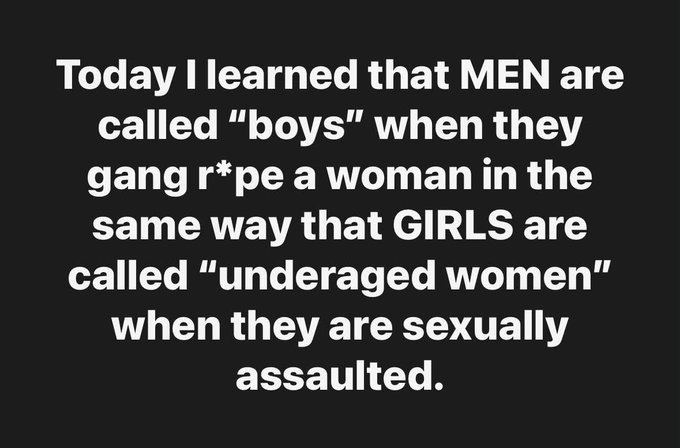
12 ways women are pressured, persuaded, and sometimes punished for refusing to organize their lives around men. Women are human beings in our own rig
12 ways women are pressured, persuaded, and sometimes punished for refusing to organize their lives around men.
Women are human beings in our own right. Yet across cultures, religions, families, institutions, and political movements, women are repeatedly taught to understand themselves through their relationships with males.
A woman may be someone’s daughter, wife, mother, sister, girlfriend, or caretaker. But none of those relationships establishes her humanity. She was already a complete human being before any man entered her life.
And when women refuse to make male approval, access, comfort, or expectations central to their decisions, the consequences can range from ridicule and social exclusion to economic punishment, discrimination, threats, and violence.
Here are twelve ways this pressure operates.
1. 💍 Marriage is presented as proof of a woman’s success
Women are encouraged to measure their accomplishments against whether a man has chosen to marry them. A woman may build a meaningful life, contribute to her community, and achieve financial independence, yet still be asked why she has no husband.
The punishment: Being called undesirable, selfish, bitter, or a failure. In some communities, unmarried women also face economic and social disadvantages.
2. ❤️ Women’s sexual and romantic refusal is treated as a personal offense
A woman’s lack of romantic interest in a man may be interpreted as cruelty, arrogance, discrimination, or an insult rather than an ordinary exercise of personal choice.
The punishment: Harassment, reputation attacks, intimidation, stalking, or violence. Women are sometimes encouraged to soften refusals to manage men’s reactions.
A woman does not owe romantic consideration to prove she is a decent human being.
3. 🌈 Lesbians are pressured to explain their lives in relation to men
Lesbians may be told they have not met the right man, that their sexuality results from trauma, or that they are deliberately rejecting men. Some experience pressure to date or marry men to satisfy family, religious, or cultural expectations.
The punishment: Family rejection, social isolation, employment discrimination, threats, and, in extreme cases, sexual violence intended to change their sexual orientation.
Lesbian relationships do not require male participation, approval, or explanation to be legitimate.
4. 🏠 Women’s independence is framed as a threat to the family
Women who choose to live alone, remain unmarried, decline motherhood, or establish households without men may be accused of undermining family values.
The punishment: Family estrangement, financial pressure, social stigma, or exclusion from community support.
The existence of an independent woman is not an attack on families.
5. 👶 Motherhood is treated as an obligation rather than a choice
Women are often told that their greatest purpose is to bear children, preferably within a relationship with a man. Women who do not want children may find their decisions repeatedly questioned.
The punishment: Being described as unnatural, immature, selfish, or incomplete. In some settings, reproductive decisions are also constrained through law, family control, or coercion.
A woman’s reproductive capacity does not establish a debt to anyone.
6. 🧹 Women’s caregiving is expected to extend to adult men
Women are frequently expected to provide emotional support, domestic labor, conflict management, and personal care for men, even when those responsibilities are not reciprocated.
The punishment: Accusations of being cold, unloving, difficult, or insufficiently feminine when they decline.
Kindness is a human virtue. Compulsory service is something else.
7. 🗣️ Women’s criticism of male behavior is recast as hatred of men
When women identify patterns of harassment, violence, exploitation, or institutional neglect, attention may shift from the conduct being criticized to whether women have sufficiently reassured men.
The punishment: Public shaming, accusations of bigotry, professional backlash, and pressure to withdraw legitimate concerns.
Criticizing behavior is not the same as denying someone’s humanity.
8. 🚪 Women’s privacy and safety boundaries are treated as negotiable
Women may be expected to justify why they want privacy when undressing, sleeping, receiving intimate care, or recovering from violence. Instead of first evaluating the women’s needs, institutions may prioritize objections raised against their boundaries.
The punishment: Complaints, disciplinary proceedings, loss of services, public accusations, or pressure to accept arrangements they consider unsafe.
Privacy, dignity, and safety deserve serious consideration. Competing rights and needs require workable safeguards, not automatic dismissal of women’s concerns.
9. 👗 Women’s appearance is judged by its appeal to men
Women are told to be attractive but not provocative, feminine but not artificial, youthful but respectable. Women who refuse these expectations may be treated as having failed at womanhood.
The punishment: Workplace discrimination, bullying, sexual harassment, ridicule, and social exclusion.
This pressure can be especially pronounced for lesbians, tomboys, and women perceived as masculine.
10. 💼 Women’s ambitions are expected to accommodate men’s careers
Women may be encouraged to relocate for a husband’s career, reduce their working hours, sacrifice advancement, or assume most childcare responsibilities.
The punishment: Relationship conflict, accusations of neglecting family responsibilities, lost income, and reduced career opportunities.
Women’s work and aspirations do not become secondary simply because a man has ambitions too.
11. ⚖️ Women’s credibility is measured against their treatment of men
Women reporting abuse may face questions about whether they provoked the perpetrator, damaged his reputation, threatened his future, or failed to preserve the relationship.
The punishment: Disbelief, retaliation, institutional abandonment, reputational harm, and sometimes further violence.
A man’s reputation should never become the standard by which a woman’s right to protection is measured.
12. 🤝 Women’s solidarity is criticized when it does not prioritize male inclusion
Women who organize around female experiences, establish women-centered networks, advocate for lesbians, or direct resources toward women and girls may be asked why men are not equally centered.
The punishment: Withdrawal of support, accusations of exclusion, funding pressure, reputational attacks, or attempts to redirect the organization’s mission.
Not every gathering, initiative, discussion, or resource must center men to have social value.
The question beneath all twelve
Notice how often a woman’s independent decision becomes something she must defend in relation to a man.
If she does not marry, what about men who want wives? If she is a lesbian, what about men who desire her? If she refuses sex, what about his feelings? If she wants privacy, what about someone else’s demand for access? If she organizes for women, why aren’t men at the center?
These are not all identical forms of coercion, and their consequences vary considerably. But they reveal a recurring social expectation: Women are asked to demonstrate that their choices sufficiently account for men before those choices are respected.
Women can love men, marry men, raise sons, work alongside men, and care deeply about men’s well-being. They can also choose not to do any of those things.
Neither path makes a woman more or less human.
A woman’s humanity is not a relationship status. Her independence is not a punishment inflicted on men. Her refusal is not an act of aggression. And her life does not require a male beneficiary to have purpose.
Women are not human beings by association.
We are human beings. Full stop.
Women Are Human Beings Outside of Their Relationships With Males – WE Survive Abuse