Is the conversation still about the concern, or has it become about the person who raised it? There are a lot of accounts online that
Is the conversation still about the concern, or has it become about the person who raised it?
There are a lot of accounts online that are mostly female-oriented content. The avatars are women. Most of the shared content is feminist, radical even.
But about once a week they do this thing. They post something that targets women’s fears and tells them what they should really fear instead. The account tells women who to fear, not to keep them safe, but to control a political narrative.
Historically, in spite of all the untold violence against women, women have been laughed at and told that we were imagining all of it. Now, when men want to use it for their own purposes, such as to depict another group of men as “more” violent…then all becomes clear. But not for women’s benefit. Not to make anything better for women. Just to give men more advantages.
But back to making women feel “silly” for all these safety measures that we take. “Don’t y’all feel silly?”
The…..”And She Lived Happily Ever After” Story
The seemingly radical feminist account may say something like this. At work, the women’s-toilet restroom is being upgraded. So we all went into the same bathroom. And guess what, we all acted like adults. Then accounts with people no one knows agree. Thousands of likes later, young people start doubting themselves. (Look for scenarios that sound like a fairytale, but also, few women doubted that men who did not want to lose their job might behave okay for a few hours.)
**I knew they were telling a lie when they said the women’s restroom was being upgraded.
Or the exploitation of statistics. Like one who said something like, “Women are most at risk from someone they are in relationship with. (TRUE) So, not (insert the team they’re rooting for more than women and girls) not (that team they’re rooting for more than women and girls.) The call is coming from in the house.”
Here is what is true:
The Intimate Partner Reality: More than 1 in 3 women will experience physical violence, contact sexual violence, or stalking by an intimate partner in their lifetime.
BUT
As a woman, being MORE at risk from one group doesn’t mean that there is no risk from any other group. It doesn’t mean she can romp around with the other groups of men because ONLY the other men are a risk to her.
An account will post a picture of a household bathroom with a caption that reads: “All home bathrooms are gender neutral. “Then ask the social media folks to discuss it.
Or a single bathroom on a plane and write, “This is a gender-neutral bathroom.” Nothing to be afraid of. Discuss.
Or show a porta potty and declare that no one cares about “safety” when it is time to go here. This one is strange. A lot of people have written about the importance of women going in pairs and not allowing distractions. Even further, I know this is a lie because my kin works on these sites, and men get fired for going into the ones designated for women (who go in pairs as tradeswomen). Those rich but small businesses are not taking any chances on men who want to play stupid.
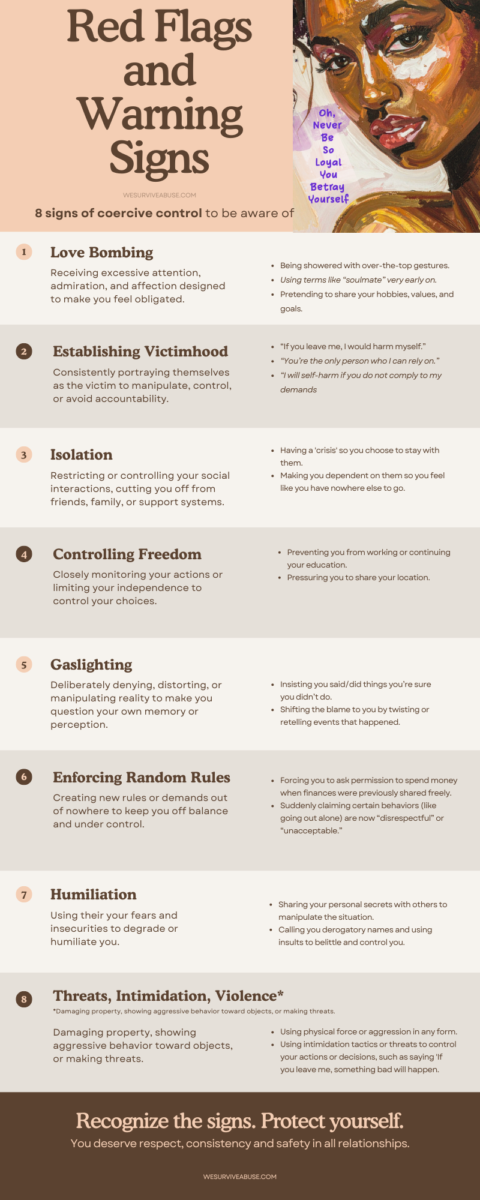
One of the most insidious, ancient gaslighting tactics used against women: the deliberate weaponization of their intuition and fear to make them look irrational.
Historically, if a woman points out a threat, she is framed as “hysterical” (emotionally out of control) or “stupid” or perhaps “silly” (incapable of reading a situation). It is a perfect trap designed to make women second-guess their own eyes and ears.
This systematic undermining of a woman’s judgment works through several distinct cultural tactics:
The Pathologizing of Fear: For centuries, the medical and social establishments literally categorized women’s normal emotional and survival responses as psychological disorders. The word “hysteria” comes from hystera, the Greek word for uterus. If a woman was anxious, loud, or hyper-vigilant about danger, it was treated as a personal, internal defect rather than a rational reaction to an external threat.
The “Damned If You Do, Damned If You Don’t” Trap:
If a woman acts cautious around a stranger or sets a firm boundary with an acquaintance, she is called paranoid, rude, a tease, or man-hating.
If she lets her guard down to avoid being rude and is subsequently harmed, the narrative instantly flips to blaming her: Why was she there? Why did she trust him? How could she be so stupid?
Social Compliance as a Safety Hazard: Girls are heavily socialized from childhood to be polite, accommodating, and to not “make a scene.” This grooming works directly against survival instincts. When a woman senses danger, the pressure to avoid looking “silly” or “mean” often overrides her urge to run or scream. Predators know this and actively exploit a woman’s fear of being socially awkward.
Discrediting the Witness: By framing women as inherently unreliable, overly emotional, or unable to understand “how the world works,” society has historically excused itself from investigating their claims. It keeps the power dynamics firmly in place by ensuring that a woman’s perception of her own safety is never treated as objective truth.
When women are told who to fear by a political narrative, or told not to fear someone because “he’s a good guy,” it is just a modern version of that same old control mechanism. It says: Don’t trust yourself. Let us tell you what reality is.