One of the reasons that I am not a feminist is because it does not make room for my reality. It asserts that "last names" are no big deal and that is
One of the reasons that I am not a feminist is because it does not make room for my reality. It asserts that “last names” are no big deal and that is not everyone’s reality. 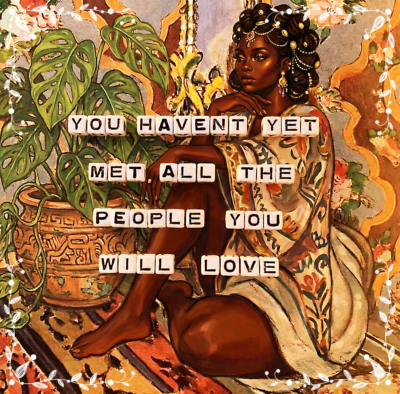
“I keep seeing feminists critique women—like Rihanna—for giving their kids the father’s last name. But we need to talk about the racial privilege inherent in that critique. In this life, theory is a luxury. For many of us, a last name isn’t about ‘honoring’ a man; it’s about making sure that if a Black father takes his child to the ER, he isn’t met with a security guard and an interrogation before the child gets a doctor.
Mainstream feminism often positions the choice of a last name as a symbolic battleground for autonomy. But for many, especially Black women, this “choice” isn’t about theory—it’s about tactical protection. To suggest that last names “don’t matter” is to speak from a place of immense privilege. It assumes a world where your presence is never questioned, your parenthood is never doubted, and your skin color isn’t a “red flag” to a system looking for a reason to intervene (read-pounce or harass …..at a minimum.)
Mainstream feminism can ask: ‘Why are you giving him the credit?’
Womanist mothers must ask: ‘Is our child safe if he’s at the hospital alone?’ This question is about is about the village.”
The Rihanna Paradox: Blackness Overrides Celebrity
When feminists questioned Rihanna’s choice to give her children A$AP Rocky’s last name, they ignored a fundamental truth: No amount of wealth or global fame erases Blackness. As a mother, your first thought is the safety of your children. If Rihanna weren’t in the room, her children would be in the care of a Black man in a society that historically views Black fathers with suspicion.
A shared last name acts as a “credential.” It is a shield meant to prevent a hospital administrator or security guard from delaying life-saving care while a Black father is forced to “prove” his biological link. In an emergency, every second spent defending your fatherhood is a second taken away from your child’s survival.
The “Burden of Proof” as a Racial Tax
The ability to have a mismatched last name without being stopped by security or interrogated by a doctor is a form of racial privilege.
In the Classroom: A shared name prevents the subtle “othering” by teachers who might otherwise view a Black father as an “outsider” to the family unit.
In the ER: While any child will receive emergency stabilization, parents have specific values, preferences, and specialists they trust. If a father’s authority is questioned because his ID doesn’t match the child’s chart, his ability to advocate for those specific preferences is paralyzed. (Let the harassment begin and dismiss his panic as “aggression”)
We make these decisions because we must. We are already under a microscope; adding a “mismatched” name is simply inviting a biased system to harass us.
The Cost of Delay: Lessons from History
This isn’t just about children; it’s about the legal “friction” that can destroy a family in a crisis.
The Power of Advocacy: Whether it’s a spouse or a co-parent, a shared name or a clear legal link is often the only thing that keeps a biased gatekeeper from blocking your partner’s access to your bedside. A delay doesn’t just “take you out of a meeting”; it can mean your medical advocate-especially when you are disabled, Black, Indigenous, poor, young, speak a different language, or have a history of mental unwellness- locked out of the room while critical, life-altering decisions are being made without their input. Terrifying.
“If These Walls Could Talk 2”: This reality was poignantly captured in the film’s segment set in 1961. When a woman’s lifelong partner dies, she is treated as a total stranger by the hospital and the family. She is denied the right to see her partner, make arrangements, or even keep their shared home. While that story focused on a lesbian couple, the core theme is universal to the marginalized: If the system doesn’t recognize your “label,” it will erase your rights.
In reality, Black women are choosing survival. We cannot wait for “the system” to change while our children and partners are currently at risk. We don’t “refuse to let you in”; we refuse to sacrifice our families’ immediate safety on the altar of a particular created aspect of feminist theory that wasn’t built to protect us in the first place.
| Theory | The Womanist Reality |
| Last names are a patriarchal “label” of ownership. | Last names are a tactical credential for survival. |
| Choosing your own name is a win for autonomy. | Ensuring the father can’t be questioned is a win for the family. |
| The system should be “changed” through protest. | The system must be navigated to ensure safety now. |
| Asks: “Why are you submitting?” | Asks: “Is my child and their father safe in this room?” |