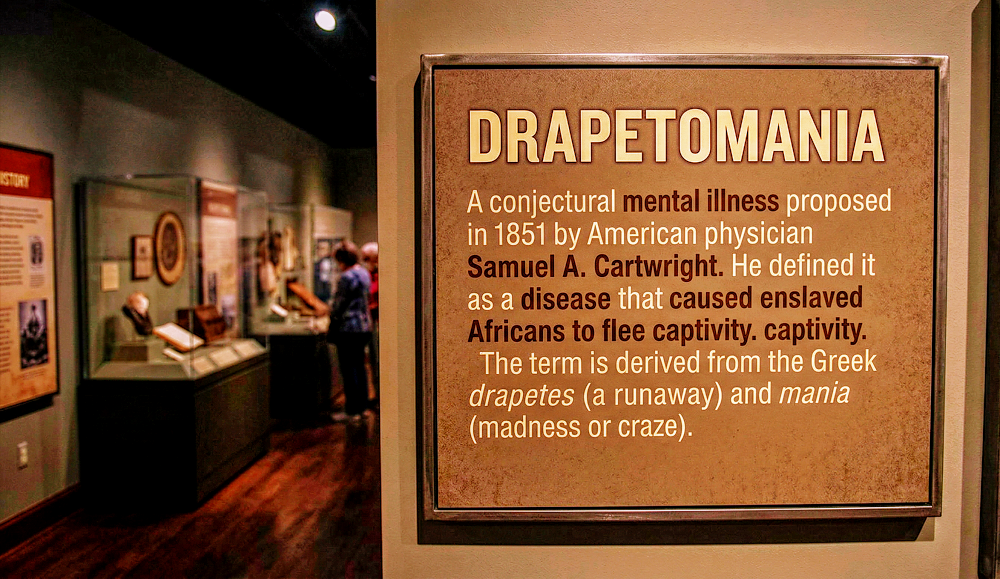
When a group has been treated as property, their boundaries are never automatically recognized —they have to be asserted, defended, and reasserted ac
When a group has been treated as property, their boundaries are never automatically recognized
—they have to be asserted, defended, and reasserted across generations. That takes energy and labor.
1. Sexual violence is not incidental in genocide. It is used as an intentional strategy.
In the Rwandan Genocide, hundreds of thousands of women were raped, often publicly.
Rape was used to terrorize, fracture communities, and deliberately spread HIV.
Women’s bodies were treated as battlegrounds, not collateral damage.
This is organized harm, not chaos.
2. Forced pregnancy has been used to alter or erase identity.
During the Bosnian Genocide, women were held in rape camps and forced to carry pregnancies.
The goal was domination through lineage and humiliation through motherhood under violence.
The impact doesn’t end at birth. It lives in identity, belonging, and grief.
3. Indigenous women in North America were targeted through sterilization and child removal.
In the 20th century, many Native women were sterilized without consent through programs tied to the Indian Health Service.
Native children were removed into boarding schools and foster systems designed to erase language and culture.
Recovery is not a simple timeline. These policies disrupted entire generations.
4. Entire Indigenous populations of women have disappeared.
The Tasmania Aboriginal population was nearly wiped out during colonization.
Women were killed, exploited, or absorbed into violent systems that erased identity.
There are cultures where the original women are gone. Not metaphorically. Literally.
5. The transatlantic slave trade reshaped the lives and bodies of Black women globally.
Millions of African women were captured, trafficked, raped, and forced into reproductive labor.
This system created generations born under coercion, with no autonomy over body or family.
The aftereffects show up today in health disparities, maternal mortality, and inherited trauma patterns.
6. Enslaved Black women’s reproduction was controlled as economic policy.
In the United States, enslaved women were forced to bear children to increase slave populations.
Sexual violence was normalized and legally unpunished.
This was policy. Not hidden. Not accidental.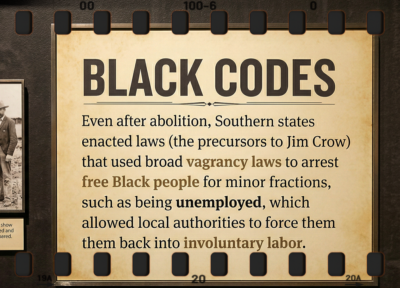
7. Some Black and Indigenous populations were reduced so drastically they cannot recover demographically.
Certain tribes in the Americas lost over 90% of their populations due to violence, disease, and forced displacement.
Some African ethnic groups were permanently fractured through slave raids and colonial violence.
When numbers drop that low, recovery isn’t just difficult. It becomes mathematically fragile.
8. Emotional trauma is carried across generations, even when the original violence is no longer visible.
Descendants of genocide survivors often show higher rates of anxiety, grief, and hypervigilance.

This is studied in descendants of Holocaust survivors and also observed in Indigenous and Black communities.
The body remembers what history tries to summarize.
9. Cultural knowledge held by women is often lost first and hardest.
Women are often the keepers of language, foodways, healing practices, and child-rearing traditions.
When women are targeted, entire systems of knowledge collapse.
That loss cannot be replaced by archives. It lives in practice.
10. Asian populations have also experienced gendered genocide and mass violence.
During the Nanjing Massacre, tens of thousands of women were raped and killed.
Korean and other Asian women were forced into sexual slavery as “comfort women” under imperial systems.
These women carried silence for decades because speaking brought stigma.
11. Women who survive are often punished for surviving.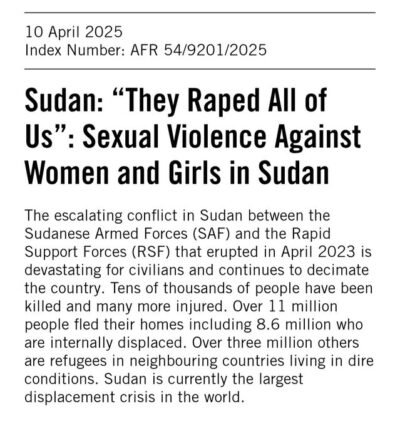
Survivors of sexual violence in genocide are frequently shunned, blamed, or isolated.
Some are rejected by families or communities that cannot hold the truth of what happened.
So harm continues after the violence ends.
12. “Recovery” is often declared by outsiders long before women feel safe, whole, or restored.
Governments and institutions may mark an “end” to genocide.
But women continue to live with:
Chronic illness
Reproductive harm
Loss of children and lineage
Cultural disconnection
Ongoing violence in unstable regions
There is no clean ending point.
13. Women from targeted groups are still treated as “accessible.”
Black women globally are still stereotyped as sexually available, rooted in slavery-era control over their bodies
Indigenous women in the U.S. and Canada face disproportionately high rates of sexual violence, with perpetrators often assuming they will not be protected or believed
In multiple regions, women from historically violated groups are approached, touched, or spoken to as if boundaries are optional
This is not random behavior.
It is learned permission.
14. Boundary-setting is often punished or pathologized.
When these women assert limits, they are labeled “angry,” “difficult,” “ungrateful,” or “hard to work with”
The expectation is compliance, because historically they were denied the right to refuse
So even basic self-protection can trigger backlash.
15. Assimilation is still demanded long after survival.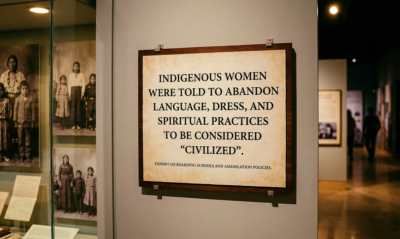
Indigenous women were told to abandon language, dress, and spiritual practices to be considered “civilized”
Black women are still pressured to code-switch, soften, or shrink cultural expression in professional and social spaces
Women across colonized regions are often told success requires distance from their own people
Survival wasn’t enough.
Now they are told to blend in.
16. Cultural expression is policed while also being extracted.
Hairstyles, clothing, and traditions are labeled “unprofessional” or “exotic” on the women themselves
The same elements are then adopted, marketed, and celebrated when detached from them
So women are punished for what others profit from.
17. Protection systems often fail the same women repeatedly.
Cases involving Indigenous and Black women are less likely to receive media coverage or sustained investigation
Violence against them is often treated as routine rather than urgent
This reinforces the message: your safety is negotiable.
18. Economic vulnerability keeps boundaries under pressure.
Women from historically targeted groups are more likely to face wage gaps, unstable housing, or limited access to resources
That vulnerability can force proximity to unsafe environments or people
So the right to say “no” is constantly under strain.
19. Intimacy is shaped by historical harm.
Some women are expected to be endlessly giving, nurturing, and forgiving
Others are fetishized or approached through harmful stereotypes
Even in personal relationships, history is present.
20. Silence is still encouraged—just in more polished language.
Instead of overt threats, women are told to “be strategic,” “don’t make it a big deal,” or “think about your future”
Speaking up can risk social exclusion, career loss, or community backlash
The message is softer.
The pressure is not.
21. Generational teaching includes both strength and caution.
Mothers and elders pass down survival knowledge: how to read danger, how to move carefully, how to endure
Alongside that comes inherited vigilance, sometimes hyper-awareness that never fully turns off
This is wisdom.
And it is also a weight.
22. Healing is often expected to happen without structural change.
Women are encouraged to “heal,” “be resilient,” or “move forward”
Meanwhile, the conditions that created harm remain intact
So the burden shifts back onto the survivor.
23. Women who refuse assimilation are often isolated—but also become anchors.
Those who keep language, style, spiritual practices, or truth-telling intact may be pushed to the margins
Yet they often become the very people who preserve culture and clarity for future generations
What is rejected in one moment becomes foundation in the next.
24. The fight for bodily autonomy is ongoing, not historical.
From reproductive rights to protection from violence, women from these communities are still negotiating control over their own bodies
The same core issue remains: who is allowed to decide what happens to them
That question was never fully settled.
This is not new.
What is new is the opportunity to stop pretending it is.
And once that truth is faced, something shifts:
The question is no longer just “when did this start?”
The question also becomes “why was it allowed to continue?” In the same places. Over and over again.
This truth stretches across African women, Indigenous women, women across the entire Black diaspora, women from many Asian cultures, and others whose histories carry the mark of organized harm.