For abusive persons, there are few human beings perfect enough to be worthy of justice. Tonya GJ PrinceWhen Survivors speak, they talk about
For abusive persons, there are few human beings perfect enough to be worthy of justice. Tonya GJ Prince
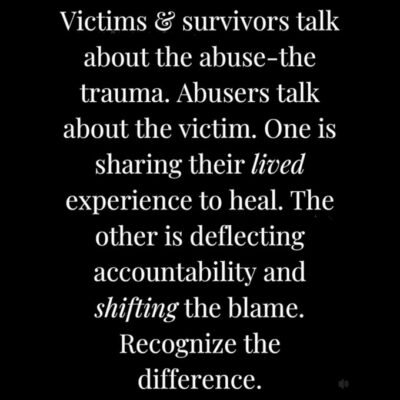
When Survivors speak, they talk about what was done to them—the pain, the trauma, the abuse. They are naming the wound so it can finally begin to heal. But abusers? They talk about the Survivor. They twist the story, shift the blame, and try to make the harm seem justified.
They say things like, “She brought it on herself,” “He made me do it,” or “If they hadn’t said that…”
That’s not remorse. That’s manipulation dressed as explanation.
Abusers talk about the victim because they cannot bear to talk about what they did. They rewrite the story to make cruelty look like reaction, and control look like love.
Meanwhile, Survivors speak truth to reclaim their voices, their peace, and their dignity.
One voice seeks healing. The other hides from accountability.
At We Survive Abuse, we remind our community to recognize the difference. Real healing conversations name the harm, not the human who survived it. Accountability begins when the focus stays where it belongs—on the choices that caused the pain, not the person who endured it.
Because no one deserves to be harmed. Ever.
🌿 Affirmations: Recognizing the Difference
I no longer explain what I lived through to people who defend the harm.
My healing is sacred. I speak to be free, not to be believed.
Their lies do not cancel my truth. My story stands.
I release the weight of their blame—it was never mine to carry.
I no longer try to convince those who are committed to misunderstanding me.
I see the difference between truth-telling and manipulation.
I am not responsible for their refusal to face what they did.
My voice is not an accusation—it is restoration.
I deserve safety, respect, and justice, whether or not anyone grants it.
I honor my courage to speak when silence once protected me.
Their deflection will never erase my clarity.