Last names are deeply personal women who live through violence, abuse, or attack. It should remain that way. Personal. Even when she chooses to reveal
Last names are deeply personal women who live through violence, abuse, or attack. It should remain that way. Personal. Even when she chooses to reveal some of her reasoning for choosing this last name or that last name for herself or her children; we might want to treat last names like a boundary. Her choice to make for herself.
This is a perspective that often gets lost in the louder, more academic debates about marriage and naming traditions. While the public conversation usually focuses on “tradition vs. independence,” for many women, the decision to change a last name is deeply personal, often rooted in the need for a clean break and a fresh identity.
For a survivor of emotional abuse, coercive control, an attack, or a volatile family history, a birth name can feel less like a heritage and more like a haunting. It’s the name that was shouted in anger; the name that appeared on legal documents during the hardest years of survival; the name that connects her to a lineage, campus, or community of people who didn’t keep her safe.
She changed. If ever she gets the chance, she might take it. And she will definitely think carefully about the name she wants her children to wear. When you’re dealing with heavy emotional burdens—you’re constantly reminded of a weight you no longer wish to bear.
Here is a down-to-earth look at why choosing a new name can be an act of profound self-reclamation.
The Weight of a “Label”
For many, a maiden name represents family. But for a survivor of a controlled or abusive upbringing, that name can be a constant linguistic trigger.
* The Echo of the Past: Hearing that name at the doctor’s office, seeing it on a driver’s license, or signing it on a check can spark a “flicker” of the old survival mode.
The Burden of Representation: There is an unspoken pressure to “carry on” a family name that may represent people who did not protect or cherish you.
Changing the Name as a “Boundary”
Sometimes, taking a spouse’s name isn’t about “submitting” to a new patriarch; it’s about setting a firm boundary against the old one. It is a way of saying, “That chapter is closed. That person no longer exists in the way you knew her.”
A Symbolic Shield: A new name provides a layer of anonymity and distance from those who might still try to exert control or find a way back into her life.
The Power of Choice: For the first time, the woman is choosing her identity. Whether she takes her partner’s name, blends names, or creates a new one entirely, the agency lies with her-where it should. Her choice.
Examining the “Feminist” Perspective
There is often a critique that changing one’s name is “anti-feminist.” Shouldn’t empowerment be centered on her autonomy?
For a woman who has escaped a life of control, the most womanly thing she can do is whatever makes her feel safe, whole, and at peace.
If keeping a birth name feels like keeping an anchor to a captor, then shedding that name is an act of liberation.
It’s not about “belonging” to a husband, father, or past life; it’s about no longer belonging to the trauma.
To Freedom
We can choose to stop asking women why they are “giving up” their names and start acknowledging that for some, they aren’t giving anything up at all—they are making a choice that has nothing to do with the rest of us.
When a woman chooses a new name after escaping a controlled past, she isn’t losing her identity; she is finally giving herself the space to find it. If the old name is tied to a version of you that was small, silenced, or afraid, the new name may be a vessel for the version of you that is loud, safe, and free.
A Note on Perspective
In many cultures, especially within the African diaspora and other communities where family naming has historically been complex or even stripped away, choosing a name is a profound act of agency. It’s about building a “new house” where the foundation is love and respect, rather than the control of the past. In the context of the Black liberation movement and the African diaspora, changing a name is often much more than a social transition—it is a revolutionary act of reclaiming one’s soul.
(See: Malcolm X, Afeni Shakur, Tupac Shakur, Muhammad Ali, Laila Ali, Sojourner Truth, Kwame Ture, Queen Latifah –different reasons for her but you get it. )
But speaking of rappers and entertainers, Ice T’s wife, or some other rapper’s wife will give birth to a baby and no one will question if the baby carries their last name. Not even if they name the girl or boy child “junior”. But Rihanna giving her children ASAP Rocky’s last name is a point of discussion. (That she likely cares nothing about by the way)
Did you have this “discussion” about male entertainer’s children and how they arrived at their choices or…..?
Sometimes we forget that we are unlearning fighting one another and how we women survive in those systems. We forget that we are supposed to be fighting against patriarchal systems. In our learning, we give other women a hard way to go.
And PS. my Mama and my Aunt changed their entire names a few times for various decorative, seasonal, and “new chapter” reasons. Mainly because they felt like it.
Come to think about it, I have done this myself. And no (committee, ideology, or individual) one was invited when I made the choice. Thinking back, the woman at the bank looked at me like I was the strange one when she told me that I couldn’t use the name that I chose. I went home looked it up and legally, of course I could.
So when I see people tripping, especially other women, about women’s choices around her name….. I can’t relate.
We women are taught to keep patriarchy securely in place. We are taught to be the glue. That is the unlearning that we must all do too.
Affirmations for Reclaiming Your Identity
These affirmations are designed for the moments when the “old” name feels heavy, or when the world questions your choice to change it or keep it. It is often the first major decision a woman makes where no one else’s opinion matters. It is the ultimate exercise of agency.
My new last name is a boundary, not a burden.
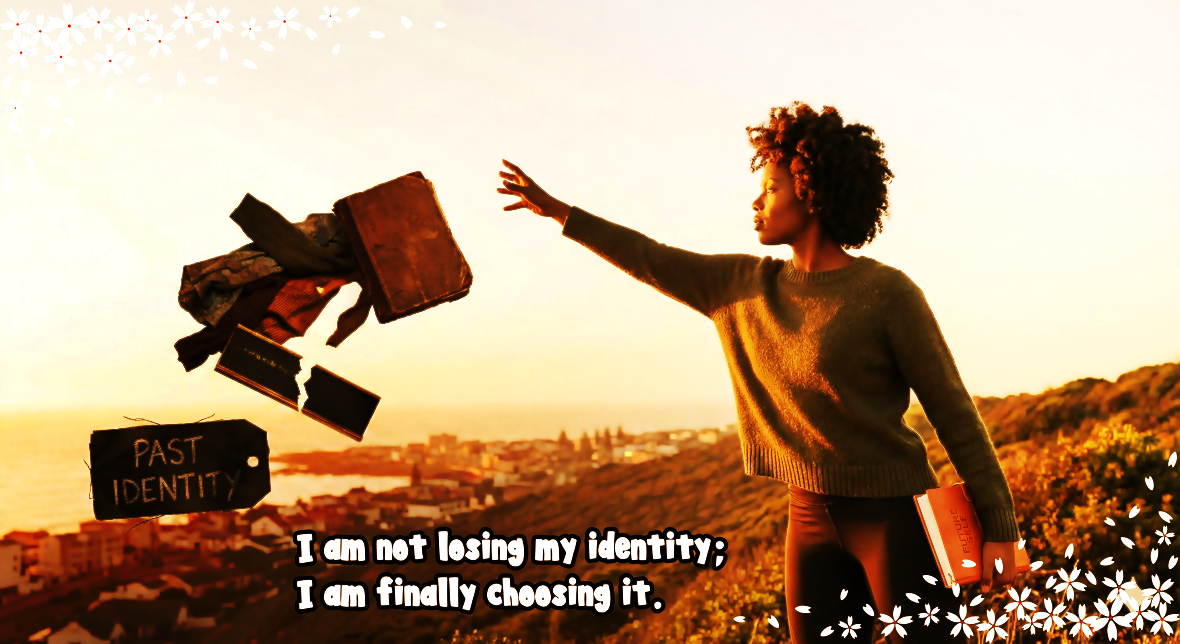
I am not losing my identity; I am finally choosing it.
I honor the woman I was by giving the woman I am a fresh start.
My worth is not tied to a lineage, group, or community that did not cherish me.
I have the right to be known by a last name that feels like safety.
Changing my last name is a sacred act of self-protection and peace.
The past no longer has a hold on the way I introduce myself to the world.