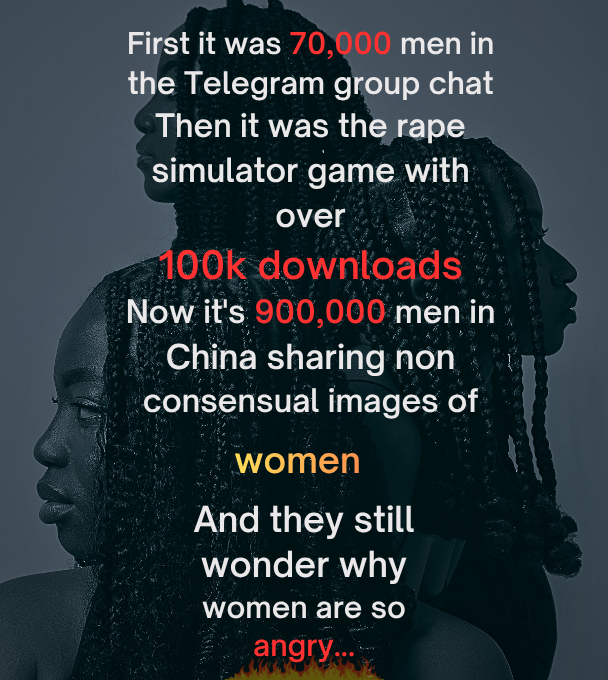
We are nowhere close to being able to collapsing women's issues into total invisibility......Maybe in thousands of years or something, but not now. So
We are nowhere close to being able to collapsing women’s issues into total invisibility……Maybe in thousands of years or something, but not now. Sometime AFTER people learn to listen to women and girls.
Two recent stories in the United States differ in their facts, their cities, and the ways they are devastating.
But together, they raise a question much larger than either case:
What happens when a woman reaches an institution associated with protection, but the people inside that institution do not fully recognize her as someone who needs protecting?
In San Antonio, Texas, a woman who called police during a domestic-violence incident reported hearing a responding officer make the remark, “Women are the downfall of men.” The San Antonio Police Department described the comment as inappropriate and said the matter was under review.
Consider the setting. A woman was seeking help during an alleged domestic-violence situation.
And within that response came language blaming women for what happens to men.
That is not simply an unfortunate choice of words.
It exposes a belief that survivors across the world have encountered in many different forms: that when a man harms a woman, someone will eventually begin searching for what the woman did to provoke him, embarrass him, anger him, disrespect him, disappoint him or ruin his life.
The conversation quietly shifts.
His behavior becomes a reaction.
Her behavior becomes the explanation.
And accountability begins to disappear.
Then there is Asia Bennett.
Asia Bennett was 22 years old when she was fatally shot by police in Jacksonville, Florida.
According to reporting about the case, Bennett’s mother has said that her daughter had been experiencing domestic violence before the fatal encounter and has questioned why her daughter was not recognized as someone who needed help.
There are still facts surrounding the shooting that belong to investigation and scrutiny. A Survivor-centered analysis does not require pretending to know facts that have not been established.
But her mother’s question deserves to remain in the center:
Why wasn’t my daughter seen as someone who needed help?
For Black women especially, that question carries history.
Black women can be perceived as aggressive where others might be recognized as frightened.
Defiant where others might be recognized as distressed.
Threatening where others might be recognized as traumatized.
Strong when they desperately need care.
That does not mean every encounter involving a Black woman can be reduced to race, or that every institution or professional responds identically.
It means race, gender, stereotypes, trauma and institutional power cannot simply be removed from the questions surrounding how Black women in crisis are perceived.
These are American stories. The underlying problem is not solely American.
It would be easy to discuss San Antonio and Jacksonville as evidence of a uniquely American failure.
Violence against women tells us otherwise.
The World Health Organization’s latest global estimates put the scale in unmistakable terms: nearly one in three women worldwide have experienced physical and/or sexual intimate-partner violence or non-partner sexual violence during their lifetime. WHO identifies gender discrimination in public and private institutions—including police, justice, health and education systems—among the conditions associated with violence against women.
Across borders, languages, religions, and political systems, women encounter variations of the same disbelief:
What did she do?
Why didn’t she leave?
Why did she go back?
Why was she angry?
Why didn’t she cooperate?
Why didn’t she report sooner?
Why was she with him?
These questions can sound like requests for information.
Too often, they function as a search for a reason to reduce the responsibility of the person causing harm.
What They’re Not Saying About These Stories
The failure of protection does not always begin when someone refuses to answer a call.
Sometimes the call is answered.
The police arrive.
The hospital doors open.
The report gets taken.
The court date is scheduled.
The child enters the school office.
The woman reaches the shelter, social-service agency, religious institution or community organization.
And she is still not safe.
Because access to an institution is not the same thing as being believed by it.
Being heard is not the same thing as being understood.
And receiving a response is not the same thing as receiving protection.
That distinction matters far beyond policing.
A woman can tell the truth and still encounter a system that has already decided what a “real victim” looks like.
She can be too angry. Too calm. Too poor. Too educated. Too sexual. Too quiet. Too loud. Too Black. Too complicated.Too imperfect.
Too traumatized to explain herself neatly.
The imagined perfect victim is often passive, visibly frightened, endlessly cooperative, and unquestionably sympathetic.
Real Survivors are human beings. Trauma does not organize itself for institutional convenience.
The danger of believing women are responsible for men’s behavior
“Women are the downfall of men” carries an old idea in a short sentence.
The idea appears in different cultures with different vocabulary: women tempt men, provoke men, destroy families, embarrass husbands, ruin promising men, make false accusations, cause men to lose control, or bring consequences upon men by speaking publicly about what happened.
The wording changes.
The underlying transfer of responsibility does not.
Said plainly: A man’s violence is not evidence of a woman’s failure to manage him.
Women are not responsible for keeping men emotionally regulated enough not to hurt them.
Girls are not responsible for preventing boys from crossing their boundaries.
Wives are not responsible for absorbing violence to preserve families.
Former partners are not responsible for remaining accessible so that men will not become angry.
Survivors are not responsible for protecting the reputations of people who harmed them.
And for Black women, protection cannot depend on appearing powerless.
Asia Bennett’s story raises an especially painful question about Black womanhood and crisis.
What happens when society has spent generations describing Black women as unusually strong—and then encounters a Black woman who desperately needs someone to recognize her vulnerability?
Strength can become another way suffering disappears.
A Black woman does not have to become small enough, quiet enough, frightened enough or agreeable enough before her humanity becomes visible.
A woman can be distressed and still deserve protection.
She can be angry and still deserve protection.
She can be confused and still deserve protection.
She can make imperfect decisions and still deserve protection.
She can have a complicated history and still deserve protection.
Protection that exists only for the perfectly behaved victim is not meaningful protection.
This is a global women’s issue.
WHO describes violence against women as both a human-rights violation and a global public-health problem rooted in gender inequality. Its current data also acknowledge that reported prevalence likely understates the true scale because violence remains heavily stigmatized and underreported.
That changes how these two American stories sit within the larger picture.
San Antonio matters.
Jacksonville matters.
Asia Bennett matters.
But the underlying question travels.
It travels anywhere women hesitate before reporting violence because they do not know whether the person receiving their disclosure will see a victim, a problem, a liar, an inconvenience, a stereotype—or a human being in danger.
It travels wherever institutions have procedures for responding to violence but still carry cultural beliefs that excuse it.
And it travels wherever women’s credibility remains conditional.
At its core, the issue is this:
A protection system cannot protect women from violence while carrying beliefs that make women responsible for the violence committed against them.And an institution cannot call itself survivor-centered merely because its doors are open.
The deeper measure is what happens after a woman walks through them.
When she says she is in danger, who does the system see?
That question belongs in San Antonio.
It belongs in Jacksonville.
It belongs wherever Asia Bennett’s name is spoken.
And it belongs far beyond the borders of the United States.
Because women around the world are still asking institutions to recognize something that should never have required persuasion:
Her life is worth protecting before she becomes another story about why protection came too late.
Sources
Reporting on the San Antonio incident and the Jacksonville shooting provides the immediate factual basis for these cases. The broader global context is supported by the World Health Organization’s 2026 violence-against-women data and global overview, which estimate that nearly one in three women have experienced physical and/or sexual intimate-partner violence or non-partner sexual violence in their lifetime.