There are men who prey on men. Go ahead and get the gasp out of the way. Because this seems to be a truth everybody sees but is afraid to say out lou
There are men who prey on men. Go ahead and get the gasp out of the way.
Because this seems to be a truth everybody sees but is afraid to say out loud unless we get to laugh.
When a man targets, grooms, pursues, coerces, or violates another man, it is not a betrayal of masculinity to wonder who he is attracted to. It is not bigotry, it is not hate speech, it is not a social faux pas. It is a reasonable question born from observable behavior.
If a man spends his time seeking out boys, flirting with young men, pursuing male bodies, violating male boundaries — why are we forbidden from asking whether he is heterosexual?
Why is that question treated like a grenade,
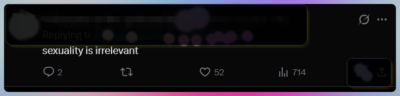
a x.com conversation turned defensive of HIS, Sean Combs’ “sexuality”.
instead of a normal step toward understanding motive, pattern, and risk?
We question the sexuality, choices, clothing, and motives of female victims
every. single. day.
We demand they explain themselves, their bodies, their
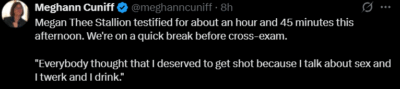
movements, their relationships, their silence.
But the moment a man harms another man sexually?
Suddenly the world turns into a monastery of humility, whispering:
“We don’t really know what he wanted.”
“Let’s not speculate.”
Spare me.
When men violate female bodies, we have zero hesitation saying they are heterosexual. Nobody writes think pieces about how naming that “might harm straight men everywhere.”
Manhood is clearly sturdy enough to survive accountability — until that accountability starts pointing inward.
Let’s say the quiet part plainly:
If a man’s predatory behavior consistently involves males, it is natural — and necessary — to question whether he is heterosexual.
Maybe he isn’t.
Maybe his public identity never matched his private actions.
Either way, the world will keep on spinning.
The sun will rise.
Civilization will not crumble.
Manhood is not that damn fragile.
If your identity as a man can’t withstand a question — a question — then the problem isn’t the question.
The problem is the insecurity behind it.
Victims should not have to perform emotional CPR on someone else’s sense of masculinity. They should not have to protect the public image of a man who did not protect them. They should not have to censor plain truth so another man’s feelings remain pristine.
When a man harms another man sexually, the question of orientation is not gossip — it is context.
And context matters because:
It shapes who he targets
It shapes who is at risk
It shapes where prevention should happen
It shapes how survivors understand their trauma
There is nothing dangerous about naming accurate patterns.
There is something dangerous about forbidding people to see them.
Let’s stop babying an identity that has survived wars, revolutions, empires, and recessions. It can survive honesty.
If manhood collapses because someone asked a question, then manhood wasn’t a fortress — it was a cardboard box.
Victims deserve truth, not reputation management.
And any masculinity that requires silence to stay intact?
Isn’t masculinity at all.
Let’s clear the way for male victims of male violence to tell their stories.