Black women are often assumed not to know: Our own history Political theory Feminist scholarship Legal realities
Black women are often assumed not to know:
Our own history
Political theory
Feminist scholarship
Legal realities
Medical facts
Global context
This assumption shows up quietly, but constantly.
It appears in the way our statements are questioned before they are heard.
In the way our observations are treated as opinion rather than insight.
In the way we are asked to “learn more” about realities we live inside of every day.
At the same time, Black women are expected to:
Cite sources instantly
Speak perfectly
Carry emotional labor
Stay calm while being doubted
This contradiction is not accidental.
The Double Bind
Black women are positioned in a double bind:
We are treated as unknowing, yet required to be instructional.
Treated as uninformed, yet asked to explain complex systems.
Treated as biased, yet expected to offer neutral clarity.
If we speak plainly, we are told we lack rigor.
If we speak precisely, we are told we sound rehearsed.
If we speak emotionally, we are dismissed.
If we speak calmly, we are ignored.
There is no “right” tone that resolves this—because tone is not the issue.
What’s Really Being Questioned
The assumption is not about intelligence.
It is about trust.
Whose knowledge is assumed to be objective?
Whose experience is treated as evidence?
Whose voice is allowed to stand on its own?
Black women’s knowledge is often treated as suspect because it comes from proximity. We speak from inside the experience, not from a safe distance. That closeness is misread as bias rather than recognized as expertise.
But closeness does not disqualify understanding.
It deepens it.
The Myth of Neutral Knowledge
Many systems treat knowledge as credible only when it is: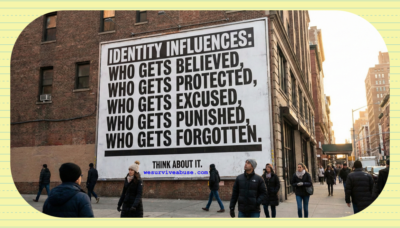
Detached
Sanitized
Abstracted
Delivered in dominant language
Black women’s knowing is often embodied, relational, and contextual. It carries memory, pattern recognition, and consequence. It is shaped by paying attention because survival requires it.
That kind of knowledge is powerful.
And power that doesn’t look familiar is often resisted.
The Emotional Cost
Being assumed not to know what you clearly know takes a toll.
It leads to:
Over-explaining
Over-preparing
Self-doubt
Fatigue
Silence
It teaches Black women to question our instincts instead of trusting them. It trains us to carry the burden of proof for realities that should not require defense.
And over time, it narrows who feels safe speaking at all.
Reframing the Truth
Black women are not under-informed.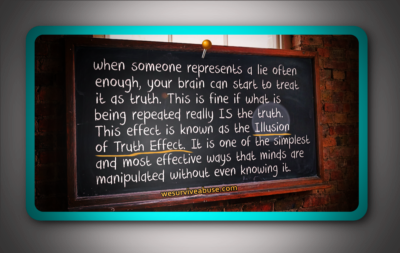
We are under-trusted.
Our knowledge is often dismissed not because it is shallow—but because it challenges comfort, hierarchy, and long-held assumptions about who is allowed to be an authority.
This is why representation alone is not enough.
What matters is:
Whose knowledge is taken seriously
Who is believed the first time
Who is allowed to speak without translating themselves
Closing Reflection
Black women do not need to prove our understanding.
We need environments willing to recognize it.
When our knowledge is trusted, conversations deepen.
When our insight is honored, harm is prevented.
When our voices are believed, outcomes change.
The question is not whether Black women know enough.
The question is whether the world is ready to listen—without demanding proof for what we already live.