The Lie We Tell to Stay Comfortable People say: “Rape is rape, it doesn’t matter who did it.” But that has never been true in practice.
The Lie We Tell to Stay Comfortable
People say:
“Rape is rape, it doesn’t matter who did it.”
But that has never been true in practice.
A wealthy man is treated differently than a poor man
A white man differently than a Black man
A heterosexual man differently than a gay man
A beloved community figure differently than a stranger
Identity shapes how the crime is processed, not just how it is committed.
If the world believes the perpetrator is incapable of harm, the Survivor must climb a mountain just to be heard.
Perpetrators do not arrive in front of victims as blank slates.
They arrive carrying:
cultural permissions
labels that grant credibility or innocence
identities that shape how the world interprets their behavior
From a victim-centered lens, identity always matters because identity shapes response — not just the act.
AND how people believe victims “ought” to act in response to harm and violence. Ain’t that something?
Why Identity Matters in Violence
If a man rapes a woman, the world sees:
If a respected minister harms someone, the world sees:
an authority figure
a spiritual covering
a role that carries built-in credibility
If a gay man harms someone, the world may see:
a symbol of a marginalized group
someone presumed more vulnerable than dangerous
a person culturally protected from accusation
Identity isn’t decoration.
It is context — and context determines whether a Survivor is believed, dismissed, or destroyed.
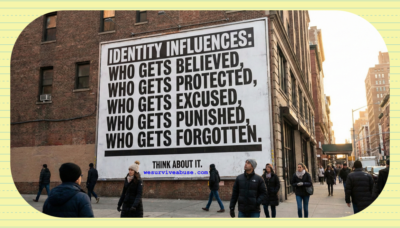
Identity Is Not the Cause — But It Shapes the Consequence
who gets believed
who gets protected
who gets excused
who gets punished
who gets forgotten
A man with power will be shielded by it.
A woman without power will be punished by his power.
A gay man may be shielded from scrutiny because calling him a rapist feels politically dangerous.
A minister may be shielded because his title creates a halo.
A beloved uncle may be shielded because “he’s family.”
(While we are here, “white” is an identity too, whether you choose to say it or not.)
In every case:
The victim pays the price for the perpetrator’s perceived identity.
A Victim-Centered Lens Refuses Fantasy
A victim-centered approach looks at the world as it is, not as we wish it were.
It says:
People are treated differently based on who they are
Systems respond differently based on who harmed whom
Some perpetrators walk into rooms wrapped in social insulation
It refuses to pretend that identity doesn’t alter justice.
The Real Danger
When identity is ignored, two silent messages emerge:
This type of person wouldn’t do that
— which protects perpetratorsThis type of victim must have misunderstood
— which punishes Survivors
And that is how culture becomes an accomplice.
Fully Honored
To be victim-centered is to understand:
Who someone is in society shapes how their violence is perceived, processed, and punished.
Identity does not excuse harm — but identity absolutely influences whether harm is acknowledged.
The crime does not occur in isolation.