Printable PDF Women and girls are frequently sent the message that demanding accommodations for our health and safety are "selfish." And, DEI is a si
Printable PDF
Women and girls are frequently sent the message that demanding accommodations for our health and safety are “selfish.” And, DEI is a sin, you know.
Meanwhile, there are many everyday products, designs, and “safety” standards built around the “default male body” that put women at increased risk for harm, injury or even death. 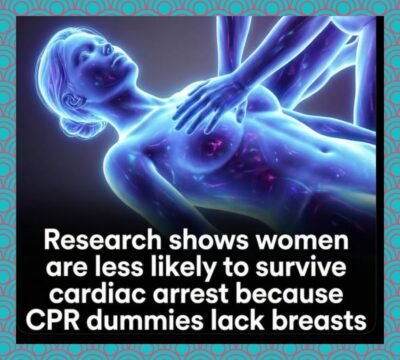
Below are 25 examples — or categories — of such products / systems, with links to reporting or research showing how neglecting female anatomy or needs creates danger.
⚠️ Important: this isn’t about “women are weaker.”
It’s about design bias — a world created with a narrow body and life-experience in mind.
When you don’t fit that design, you pay with your body and maybe your life.
🚨 25 Items & Systems That Risk Women’s Lives Because They Don’t Accommodate Women
| # | Product/System | Why It’s Risky / What’s Wrong | Example / Source |
|---|---|---|---|
| 1 | Standard car seatbelts & crash-test dummies | Crash-test dummies and belt routing have historically been made for a “standard male body.” Women are likelier to be injured even when belted. Consumer Reports+2Policy Perspectives+2 | “Dummies Used In Motor Vehicle Crash Tests Favor Men And Put Women At Risk” Forbes+2Searcy Law+2 |
| 2 | CPR / first-aid mannequins | Most training dummies lack female anatomy (like breasts), which affects how people learn to give CPR — leading to lower likelihood of women receiving help in emergencies. The Guardian+1 | “Learning CPR on manikins without breasts puts women’s lives at risk” study referenced by The Guardian. The Guardian |
| 3 | Vehicle seat & headrest design (for whiplash protection) | Modern car seats and headrests are often too firm and designed for heavier male musculature; women’s lighter bodies and necks make them more vulnerable to whiplash. The Guardian+1 | “The deadly truth about a world built for men — from stab…” article describing how seat design increases women’s risk. The Guardian |
| 4 | Standard “female” crash-test dummies that are just scaled-down males | Even “female” dummies are often just smaller versions of male forms, ignoring real anatomical differences — leading to misleading safety data. Humanetics+1 | “What do crash test dummies have to do with gender bias?” perspective piece. Humanetics |
| 5 | Pregnancy / maternity car safety setups | Seatbelts and car safety systems rarely accommodate pregnant bodies properly — increasing risk of injury to both mother and fetus in crashes. Gendered Innovations+1 | Analysis of crash risk for pregnant women and inadequacy of standard seatbelt design. Gendered Innovations |
| 6 | Medical equipment & hospital beds designed around “average male” proportions | Standard hospital tools (beds, stretchers, protective gear) may not fit or protect women properly, especially under stress or emergency situations. (While this is a broad issue, CPR / medical mannequins are a concrete example — see #2.) | See reporting on first-aid mannequin bias. The Guardian+1 |
| 7 | Seat harnesses / restraints for children or adults that don’t adjust for female body shapes | Restraints that don’t account for female pelvic/hip/torso shape can apply excessive or misdirected pressure during crashes, causing internal injuries. arXiv+1 | Recent research into risk of pelvic fractures under standard lap-belt loading in females. arXiv |
| 8 | Public safety gear (vests, body armor, life vests, seat belts for public transport) based on male bodies | When protective gear is sized for “average men,” women often get loose fit — reducing protection, increasing chance of injury or escape during accidents or emergencies. (General issue — closely linked to known bias in “standard sizing.”) | See broader documentation on data bias and design gaps for women. Monash University+1 |
| 9 | Furniture and seating (office chairs, public benches, seats on buses/trains) with narrow seat width or improper ergonomics | Women with different hip/torso shapes (or carrying children) may be at ergonomic disadvantage — leading to chronic pain or violence of physical discomfort. (Less-studied, but common in UIW design critique.) | The principle is discussed in design-bias literature such as “Invisible Women.” Monash University |
| 10 | Workplace safety equipment (helmets, harnesses, gloves, protective wear) built to “average male size.” | Ill-fitting safety gear reduces protection, especially in workplaces where women are minority but still present — increasing risk of injury or death. (Generalized from known bias in safety equipment.) | Design bias described broadly in product-design analyses. Harvard ALI Social Impact Review+1 |
| 11 | Emergency response training & educational materials written for male anatomy / averages | When training (first aid, rescue, medical) uses male norms, women’s physiological realities get ignored — meaning assistance may fail when applied to women. CPR mannequins are a concrete example from this. The Guardian+1 | Reporting on global CPR manikins lacking female anatomy. The Guardian |
| 12 | Vehicle impact safety standards & legislation based on male-centric crash testing | Because safety regulation uses outdated male body standards, many cars remain unsafe for women even if they “pass” crash tests — leading to disproportionate injury rates among women. The Washington Post+2Policy Perspectives+2 | Opinion piece from Washington Post on female crash test dummy inadequacy. The Washington Post |
| 13 | Design of public spaces (bathrooms, changing rooms, seating, public transport) ignoring women’s needs (privacy, safety, ergonomics)** | This can expose women to harassment, injury, discomfort, or denial of safety — because spaces treat “default user” as male. (A general structural issue — linked to systemic design bias.) | Broader analysis of “world built for men” in design-bias literature. The Guardian+1 |
| 14 | Safety standards in sports equipment (helmets, pads, harnesses) often sized for male anatomy | Women athletes may be under-protected because gear doesn’t fit properly — risking injuries, especially in high-impact sports. (While specific research varies, the problem mirrors the same design bias.) | Theoretical extension of known design bias in safety gear; see general critique of product-design bias for women. Harvard ALI Social Impact Review+1 |
| 15 | Transportation design (car interiors, public transport seats, ride-hailing safety measures) that don’t account for gendered safety / risk | Women riding alone — especially at night — face higher risks when vehicles, ride-hail apps, or transit systems aren’t designed with their safety and comfort in mind. (Related to women’s ride-hailing research.) arXiv | Recent study showing nighttime ride-hailing safety concerns for women due to design/infrastructure gaps. arXiv |

