There is a quiet cruelty that rarely gets named plainly. It lives in the space where Blackness and disability intersect. It shows up not only in drama
There is a quiet cruelty that rarely gets named plainly. It lives in the space where Blackness and disability intersect. It shows up not only in dramatic moments of harm, but in everyday interactions, policies, classrooms, clinics, workplaces, and streets. It is the steady erosion of patience, empathy, and humanity. It is the withholding of grace.
Grace is a simple thing. It is the pause before judgment. The willingness to ask what might be happening instead of assuming what must be wrong. The recognition that struggle is not failure and difference is not defiance.
Yet Black people with disabilities are routinely denied this basic human offering.
Disability, especially when invisible, already carries misunderstanding. Add race, and perception hardens. Behaviors linked to anxiety, sensory overload, cognitive processing differences, psychiatric distress, chronic pain, or neurological conditions are too often interpreted through a distorted lens:
Not overwhelmed — but “aggressive.”
Not confused — but “noncompliant.”
Not struggling — but “difficult.”
Not in need — but “threatening.”
(I still have Survivors check in with me on these things from time to time. Maybe they are unwilling to share every detail about assault because they are still processing it themselves. Yes, it has been years but they are still climbing past the lies and persuasions to just smile and be silent. They then have to come to terms with being viewed as the “problem” within their problem.)
What should trigger care instead triggers control.
What should invite curiosity invites punishment.
This is not imagination. It is pattern.
A Black child with learning differences may be disciplined instead of supported. A Black adult in mental distress may be met with force instead of de-escalation. A Black patient describing pain may be doubted instead of treated. A Black disabled employee requesting accommodation may be labeled problematic instead of respected.
The same disability, carried in a different body, often receives a different response.
Because dehumanization rarely announces itself loudly. It hides behind words like “policy,” “procedure,” “professional judgment,” and “standard practice.” It disguises bias as objectivity. It frames exclusion as neutrality.
And beneath it all is a dangerous idea: that some people must constantly prove their innocence, competence, worthiness, and vulnerability in order to receive compassion.
Grace should not require performance.
But Black disabled people are frequently expected to be:
Extra calm
Extra polite
Extra composed
Extra accommodating
Extra grateful
Simply to receive what others are given automatically.
This exhaustion is its own form of harm.
To live at this intersection is to navigate a world that often misunderstands disability and misreads Blackness, while rarely acknowledging how those forces compound one another. It is to carry the weight of stereotypes that say you are exaggerating, imagining, unstable, lazy, intimidating, or undeserving.
It is to feel the constant pressure to shrink, mask, soften, explain, reassure.
And still be misinterpreted.
Yet there is another truth that deserves equal light.
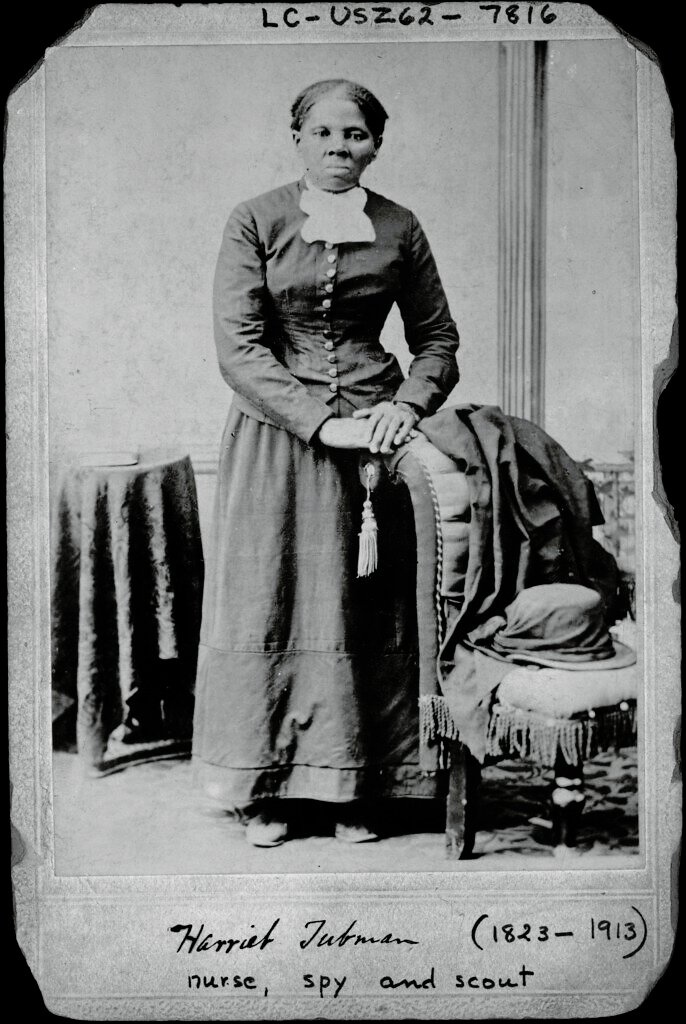
Historian Deidre Cooper Owens notes that Harriet Tubman spoke freely about her pain and her need for care. It’s a powerful reminder that “strength” doesn’t mean being invulnerable; she was a disabled Black woman leading a revolution. Late in her life, she underwent brain surgery at Massachusetts General Hospital—famously refusing anesthesia, instead biting on a bullet like the soldiers she had served with. She spent her final years establishing the Harriet Tubman Home for the Aged and Indigent, ensuring that other elderly and disabled Black Americans would have the care she often struggled to find.
Black disabled lives are not defined by deprivation. They are marked by creativity, adaptation, humor, resilience, brilliance, and depth. Communities have always built language, culture, art, care networks, and survival strategies in the face of layered barriers.
The problem is not the existence of disability.
The problem is the absence of grace.
Grace changes outcomes.
Grace asks, “What support might help here?”
Grace wonders, “What am I not seeing?”
Grace allows space for humanity instead of demanding perfection.
Grace recognizes that dignity does not depend on ease, productivity, or conformity.
When society withholds grace from Black people with disabilities, it sends a corrosive message: that empathy is conditional, patience is selective, and humanity is negotiable.
But humanity is not negotiable.
Every person deserves to move through the world without being automatically suspected, dismissed, feared, or hardened against. Every person deserves the breathing room to be imperfect, to struggle, to need help, to communicate differently, to exist without being treated as a problem to manage.
Grace is not softness.
Grace is justice in its most human form.
And expanding it is not charity.
It is a correction long overdue.
I include this list because there are too many people pretending that Black people do not live with disabilities. Even more, that Black families aren’t intimately familiar with disabilities and ableism. (That’s a tell by the way. When people don’t see Black people as human beings who may also be disabled and care for disabled friends and kin.)
Here’s a brief list of Black people with disabilities who were killed by police, harmed in violent encounters with law enforcement, or whose deaths highlight how institutional racism and ableism intersect. Among Black American households, many of these names are commonly known and there are circles and groups who continue to advocate for change on their behalf.
Each name carries history, pain, and a reminder that justice systems often fail the most vulnerable:
🔹 Black Disabled People
Marcus-David Peters – Shot by police while in a mental health crisis in Virginia.
Tanisha Anderson – Died after being restrained face-down by Cleveland police during a mental health episode.
Eric Garner – Asthma and other health conditions worsened by a chokehold during a police arrest in NYC, leading to his death.
Freddie Gray – Died in Baltimore police custody after injury; had a developmental disability.
Laquan McDonald – Young Black man experiencing crisis shot by Chicago police; mental health factors part of his situation.
Deborah Danner – Black woman with schizophrenia shot by police in her home in New York.
Michelle Cussaux – Experienced mental health issues and was fatally shot by Phoenix police.
Andre Gladen – Black man with blindness and mental illness killed by police in Portland, Oregon.
Keith Lamont Scott – Had a traumatic brain injury; shot by police in Charlotte.
Ezell Ford – Man with bipolar disorder, depression, and schizophrenia shot by LAPD.
Alfred Olango – Mentally disabled man shot after his sister called police for help.
Daniel Prude – Died from asphyxiation after police held him down during a mental health crisis.
Ryan Gainer – Black autistic teenager shot and killed by sheriff’s deputies at his home.
Jeremy McDole – Black paraplegic man in a wheelchair shot and killed by police in Wilmington, Delaware.
Eleanor Bumpurs – Elderly Black woman with mental health struggles, shot and killed by NYPD during eviction.
🔹 Other Cases Showing Institutional Harm Toward Black Disabled People
Tyron McAlpin – Deaf Black man with cerebral palsy violently arrested; advocates called out discrimination and lack of disability-aware training.
Reginald Latson – Black autistic and intellectually disabled man repeatedly caught in punitive criminal justice responses leading to solitary confinement.
Jameek Lowery – Suffered fatal injury after police restraint and rough handling during a crisis; his family disputes the official account.
Matthew Zadok Williams – Killed by a Georgia officer during a mental health crisis; his family’s lawsuit cites disability discrimination.
🔹 Historic or Institutional Failures
Sandra Bland – Black woman with epilepsy and depression died in police custody after a traffic stop (disability conditions relevant in her treatment and care).
Bijan Ebrahimi – Though not killed by U.S. police, this disabled Black refugee in the UK was murdered after police and institutions repeatedly failed him; investigations called out institutional racism.
Freddie Gray
Freddie Gray had documented lead exposure in childhood, something his family’s attorneys and multiple reports connected to cognitive and behavioral impacts. Court records and media investigations described him as having:
- Learning difficulties
- Reduced literacy
- Developmental challenges associated with lead poisoning
Lead exposure is not just an environmental issue. It is medically recognized as capable of causing long-term neurological and developmental impairment, especially when exposure occurs early in life.
Why many people missed this:
• Media coverage focused on the arrest and protests in Baltimore and around the country
• His disability was treated as background detail
• Society tends to recognize only visible disabilities
• Environmental harm is rarely framed as a disability issue
Many Black people with:
Cognitive disabilities
Psychiatric disabilities
Neurological impairments
Brain injuries
Trauma-related conditions
are not recognized publicly as disabled, even when those conditions shape how they move through schools, courts, healthcare, and police encounters.
Disability doesn’t always announce itself.
Sometimes it’s carried quietly in:
Reading struggles
Processing differences
Communication challenges
Executive functioning difficulties
And those differences can drastically change how authority figures interpret behavior.
Gray’s case sits at the intersection of:
Environmental racism (lead exposure disproportionately affecting Black communities)
Disability
Policing
Custodial violence
His death was not only about a “rough ride.” It raised urgent questions about how institutions treat Black men whose disabilities are invisible, misunderstood, or ignored.
And there is a hard truth inside this:
👉 A person can be vulnerable
👉 That vulnerability can be shaped by structural harm
👉 Systems can then punish the very conditions they helped create
Freddie Gray was not just a man who died in police custody.
He was a young Black man whose life carried the imprint of environmental toxicity, developmental struggle, and systemic neglect long before the fatal encounter.
Sonya Massey
Sonya Massey was a Black woman killed by a sheriff’s deputy in Illinois in 2024 after calling for help. Reporting around her death indicated she was experiencing a mental health crisis at the time of the encounter.
Her case sits within a devastating and familiar pattern:
A person seeks assistance
A crisis is misread as threat
The response escalates instead of stabilizes
A life is lost
When mental health disability is present, outcomes often hinge on whether responders are trained for care, de-escalation, and regulation rather than command-and-control tactics.
Sonya Massey‘s name belongs in this discussion because psychiatric disabilities are disabilities, even when:
• They are stigmatized
• They are episodic
• They are framed as “behavior” instead of health
Trigger Warning….Elijah McClain
Elijah McClain was the young Black man in Aurora, Colorado, known by friends and family as gentle, sensitive, and deeply kind. He played the violin, sometimes for shelter animals. In 2019, he was stopped by police while walking home, placed in a chokehold, and later injected with ketamine by paramedics. He went into cardiac arrest and died days later.
His case became one of the most haunting examples of how:
Blackness
Perceived “suspicion”
Disability / neurological difference (reports indicated he was unusual in affect and behavior, though formal diagnoses are discussed carefully)
Police force
Medical intervention
collided with fatal consequences.
Elijah McClain’s last recorded words come from police body-camera footage during the 2019 encounter in Aurora, Colorado.
He can be heard saying:
“I can’t breathe. Please stop.”
“I have no gun.”
“I don’t do that stuff.”
“I’m just different.”
One of the lines that stayed with many people was:
“I’m an introvert. Please respect the boundaries that I am speaking.”
And repeatedly:
“Please. Please.”
These were not formal “final words” in the traditional sense, but they are the last statements captured on video before he lost consciousness after police restraint and the subsequent ketamine injection.
Elijah McClain’s voice in that footage is often described as:
Apologetic
Frightened
Trying to explain
Trying to survive
His words reflected confusion and distress rather than aggression — a reality that deeply shaped how the public later understood the tragedy of Elijah McClain.
There are absolutely Black disabled people.
And no, they are not viewed — or treated — the same.
That distinction is not rhetorical. It is documented across systems.
Disability is often imagined through a white-centered lens. The “default picture” many people carry — consciously or not — looks like:
• white
• physically visible condition
• evokes sympathy
• framed as vulnerable
Blackness disrupts that stereotype.
So when disability and Blackness coexist, perception frequently shifts in harmful ways:
Not vulnerable — but suspicious
Not distressed — but dangerous
Not needing support — but needing control
The same behaviors that trigger concern in one body can trigger fear or punishment in another.
A Black autistic person may be read as “noncompliant.”
A Black person in mental crisis may be seen as a threat.
A Black disabled child may be disciplined instead of accommodated.
This is the fracture point.
Because disability does not erase racial bias.
And racial bias reshapes how disability is interpreted.
Research, reporting, and advocacy have repeatedly shown:
Black disabled students face higher discipline rates
Black patients’ pain is undertreated
Black people with psychiatric disabilities face more coercive responses
Black disabled individuals are disproportionately harmed in police encounters
Not because disability differs — but because perception does.
And perception drives outcomes.
Who gets patience
Who gets escalation
Who gets believed
Who gets doubted
Who gets medicalized
Who gets criminalized
This is why many Black disabled people speak about having to prove their fragility in ways others are never asked to do.
To be calm enough.
Soft enough.
Nonthreatening enough.
Articulate enough.
To receive basic human grace.
Yet here is the deeper truth that deserves full voice:
Black disabled people have always existed.
Always adapted.
Always created beauty, culture, language, survival strategies.
What has been inconsistent is not their presence.
It is society’s willingness to see them fully.
Not as contradictions.
Not as exceptions.
But as human beings whose disability is real, whose vulnerability is real, whose dignity is non-negotiable.
Because when Black disabled people say
“We are not treated the same,”
they are not describing feelings.
They are describing patterns.
And naming that clearly is not divisive.