There’s a phrase people love to say when conversations get uncomfortable: “I don’t see gender, race, sexuality, or identity. I treat everyone the sam
There’s a phrase people love to say when conversations get uncomfortable: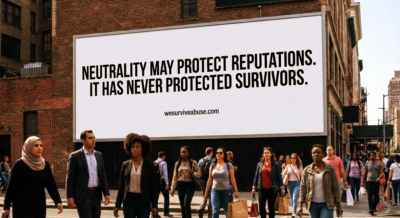
“I don’t see gender, race, sexuality, or identity. I treat everyone the same.”
It sounds enlightened. It sounds fair. It sounds like progress.
But for Survivors of violence, that kind of neutrality doesn’t feel like safety.
It feels like erasure.
It feels like someone saying,
“Your story is too complicated. Your truth requires too much courage. I’d rather not deal with it.”
Neutrality Sounds Compassionate — But Often Isn’t
Neutrality has a soft voice. It presents itself as kind and moral.
It promises that if we refuse to look at identity, no one will be stereotyped or harmed.
But here’s the hidden truth:
Neutrality is not equality. Neutrality is anesthesia — it numbs the pain instead of treating the wound.
When someone claims they “don’t see identity,” what they are really saying is:
“I don’t want to know who holds power.”
“I don’t want to understand why some victims are not believed.”
“I don’t want to face how systems respond differently depending on who gets harmed and who does the harming.”
Neutrality lets people step away from the discomfort of reality.
It allows them to skip the hard truths and walk around the tough conversations.
That might feel peaceful, but it leaves Survivors standing alone in the fire.
**In Theory, Neutrality Protects Fairness.
In Practice, It Protects Power.**
When identity isn’t named, power decides the story.
Think about it:
A powerful man is “misunderstood.”
A respected leader is “going through something.”
A beloved family member “would never do that.”
A victim is “dramatic,” “confused,” or “making it up.”
- Another man faces difficult circumstances from society.
Without identity, we pretend the world treats everyone the same.
But we all know better.
A Survivor’s voice is not weighed equally against someone who is admired, wealthy, male, popular, charming, or protected by a title.
Neutrality ignores the fact that identity changes the room before a single word is spoken.
Neutrality Avoids Accountability
When someone refuses to acknowledge identity, they are not avoiding bias —
they are avoiding responsibility.
Because once we name identity, we have to confront:
Who we trust automatically
Who we doubt instinctively
Who society calls credible
Who is forced to prove their own humanity
Neutrality lets people say, “That’s not my problem,”
when it always has been.
Survivors Don’t Heal in Neutral Space
Survivors need clarity:
They need words that match what happened
They need space to name who harmed them
They need the world to acknowledge the full truth — not the edited version
When we refuse to talk about identity, we are not being fair.
We are asking the wounded to whisper,
so the comfortable don’t have to hear.
A person’s identity shapes how they are viewed, believed, and protected.
Ignoring that fact doesn’t make systems less biased — it makes bias impossible to challenge.
The Real Cost of Identity Blindness
Every time we choose neutrality, we choose:
silence over truth
comfort over justice
protection for perpetrators over healing for Survivors
Neutrality does not heal wounds.
Neutrality hides them.
And while those wounds are hidden, they keep bleeding.
A Better Way Forward
Seeing identity isn’t prejudice.
Seeing identity is awareness.
It’s understanding that:
some people walk into some rooms with instant credibility
others walk in carrying the burden of disbelief
justice is not distributed evenly
Survivors need language that honors what actually happened
When we refuse to name identity, we refuse to name power.
And where power goes unnamed, harm grows unchecked.
The Call
If we want a world where Survivors are heard and believed, we cannot pretend identity doesn’t matter.
We must be willing to say:
“I see who you are. I see how the world treats you. And I see what happened to you — fully and without apology.”
Neutrality may protect reputations.
It has never protected Survivors.