There was a time when America believed a slogan could solve a crisis. The Just Say No campaign told people: Just say no to drugs. Simple. Clear. Re
There was a time when America believed a slogan could solve a crisis.
The Just Say No campaign told people: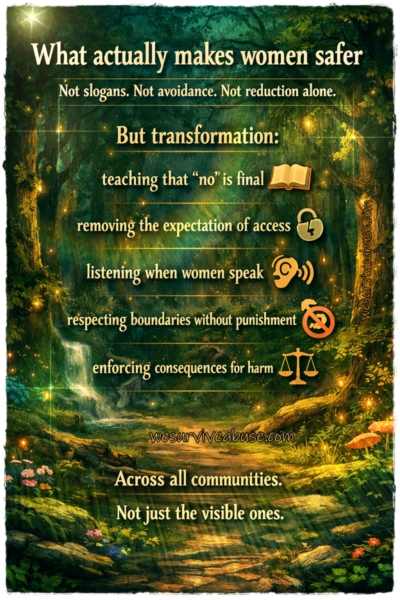
Just say no to drugs.
Simple. Clear. Repeatable.
And it failed, failed, failed. Then wakes up in the morning and fails again.
People were substances to the point of self harm and wearing t-shirts that said “Just Say No” on the front.
Because the problem was never that simple
People were not using drugs because no one told them not to.
They were navigating:
pain
poverty
pressure
trauma
environment
lack of access to opportunities (intentionally placed obstacles)
A slogan could not touch any of that.
Because the campaign didn’t address:
why people turn to substances
how environment shapes behavior
what support systems are missing
how trauma and instability play a role
It did not ASK the people, their families, the communities, or healing and treatment providers on the frontlines …..enough questions.
And we are at risk of repeating that same mistake
Today, the conversation sounds different, but the pattern feels familiar:
“If we remove porn, women will be safer.”
It sounds decisive.
It feels like action.
But it is still a surface-level solution to a layered problem.
We Do Not Defend Porn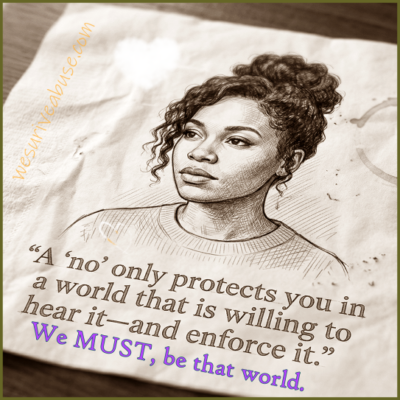
Let that be said clearly.
We see harm.
We see exploitation.
We see distortion.
But we are not going to pretend that removing content removes the mindset behind it. We have been here before.
If porn disappeared tomorrow,
women would not suddenly be safe and out of range of destruction.
Because the danger was never just the content.
The danger is the mindset carried into the world.
Because we have already seen this play out
“Just Say No” focused on desired outcomes.
while ignoring the conditions that produced it.
And when the conditions remained,
the behavior adapted.
The same risk exists here
If porn disappeared tomorrow, but nothing else changed—
lack of consequences for harm (especially if the judge believes he/she is looking at a “bright future”. As if the victim was not.)
—women would not suddenly become safe.
This is because the belief system would still be intact.
This is the part we cannot afford to skip
Safety is not created by removing one outlet.
It is created by confronting:
power
permission
accountability
Across homes.
Across institutions.
Across cultures.
Especially for the women most often overlooked
Because surface solutions rarely reach:
women who are poor or come from a background where poverty was reality
elderly women and young women too
- women whose cultures taught them to carry pain quietly
- women whose “strength” has been used as an excuse to deny them care
- girls sent from one home to be a “wife” to a far too old man in another.
- girls held down and mutilated without anesthesia for the benefit of some man in the future.
- girls sent to period huts because they are menstruating.
If safety only improves for some,
then it has not been built. Constructed. With a framework and everything.
What actually makes women safer
Not slogans.
Not avoidance.
Not reduction alone.
But transformation:
teaching that “no” is final
removing the expectation of access (for each and every male)
listening when women speak
respecting boundaries without punishment
enforcing consequences for harm
Across all communities.
Not just the visible ones.
The truth we already learned once
We’ve already tried solving deep problems with simple slogans.
It didn’t work then.
It will not work now.
The real issue is what some men (and women) believe they are entitled to
Access to women’s bodies
Control over women’s choices
Authority over women’s lives
The right to ignore “no”
The expectation that women should absorb harm and violence quietly
Porn can reflect these beliefs.
It can amplify them.
But it did not invent them.
“You don’t solve harm with a slogan.
You solve it by changing the conditions that allow it.
**Content warning (some descriptions of abuse that may be upsetting)