When people express pain, shock, and grief; your confusion is not an emergency. And it is not more urgent than a woman’s grief. What we

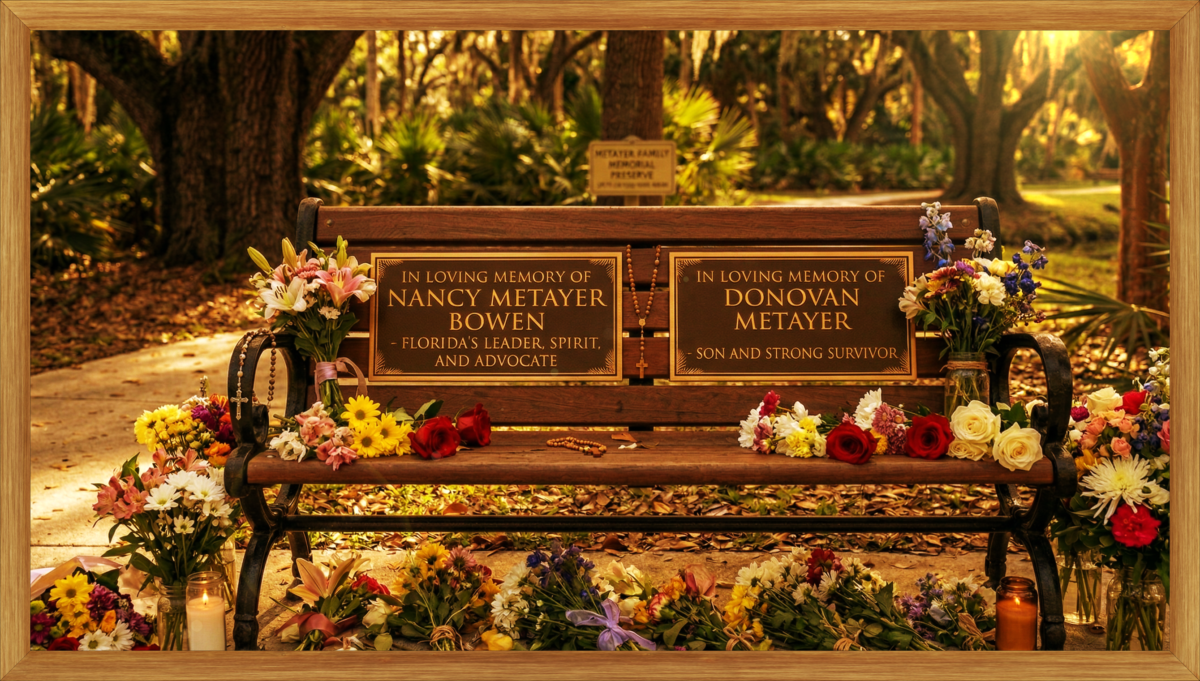
Rest in power Nancy Metayer Bowen and Donovan Metayer.
When people express pain, shock, and grief; your confusion is not an emergency.
And it is not more urgent than a woman’s grief.
What we are witnessing, again, is how quickly pain gets rerouted when it does not arrive in a form people can immediately understand. A woman speaks from the middle of shock—before the facts are neatly arranged, before the sentences are polished—and instead of stillness, she is met with demands.
“Explain it better.”
“Say it clearly.”
“Make it make sense—for us.”
That is not curiosity.
That is control.
History has long trained people to expect women to translate their pain into something digestible. To soften it. To organize it. To make sure it does not unsettle anyone who is listening. And when she does not—when she speaks from the wound instead of the script—there is a rush to correct her.
But grief is not a performance.
It does not owe coherence on demand.
When a family is carrying the weight of burying a child—let alone more than one—there is no version of that reality that comes out clean. There is no timeline where emotion waits its turn so the audience can stay comfortable.
So when people choose to center their own confusion over someone else’s pain, what they are really revealing is this:
They have been taught that understanding should come before compassion.
And that is a lesson we must refuse.
Women are not here to manage the emotional ease of the world. They are not responsible for making tragedy easier to process. And they do not need to earn care by first being clear.
There is nothing wrong with speaking while the grief is still forming.
There is nothing wrong with words that arrive incomplete.
There is nothing wrong with feeling out loud.
What is wrong is the instinct to discipline that humanity.
On days when the noise is loud and the responses are sharp, let this be steady:
You are allowed to recognize manipulation, even when it is dressed up as a request for clarity.
You are allowed to step away from demands that ignore your humanity.
You are allowed to protect your voice, your boundaries, and your right to feel without performance.
Clarity will come when it comes.
But compassion should never be delayed until it does.
Women do not need permission to see what is happening, to draw the line, or to protect life in all its forms—and doing so does not harm the world.
It is how the world is held together.
Rest in power Nancy Metayer Bowen and Donovan Metayer.