updated from March 28, 2025 This is so cruel. There’s a new talking point going around:That not allowing boys to compete against girls in sp
updated from March 28, 2025
This is so cruel.
There’s a new talking point going around:
That not allowing boys to compete against girls in sports is somehow the same as Jim Crow segregation.
Let’s be absolutely clear:
👉🏾 Jim Crow was not about fairness. It was about domination.
👉🏾 It wasn’t about inclusion. It was about exclusion, violence, and dehumanization.
👉🏾 And comparing it to sex-based protections in sports is not only misleading—it is an insult to our ancestors.
At WeSurviveAbuse, when we say “we survive abuse,” we mean all of it:
Personal abuse
Institutional abuse
Intergenerational abuse
And yes—the historical trauma of racism
Jim Crow is still memory for many of us. Even the documented cases are only a part of the Jim Crow terror that made it into the record. So when people compare every modern feeling of exclusion to Jim Crow, they are not just simplifying history. They are speaking over the unnamed, the uncounted, and the families who still carry what the official record refused to hold.
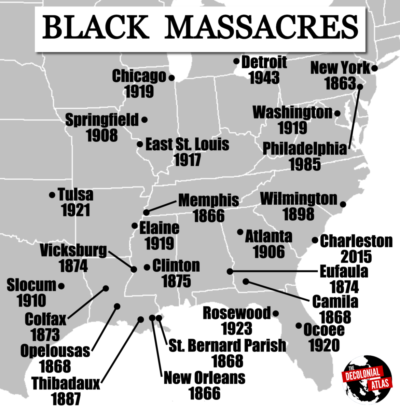
To honor the truth, here are 12 real acts of violence from the Jim Crow era—and how each one was designed to enforce segregation, crush resistance, and keep Black people, especially girls and women, in danger and silence.
1. Lynchings Across the South (1877–1950)
Thousands of Black people were lynched in the U.S., often after accusations of “stepping out of place.”
🟥 This was racial terrorism meant to keep Black communities submissive, segregated, and silent.
Source: Equal Justice Initiative
2. The Atlanta Race Massacre (1906)
Dozens of Black people were murdered by white mobs after newspapers printed false allegations about Black men.
🟥 The violence was used to reinforce white supremacist rule and segregate the city.
Source: New Georgia Encyclopedia
3. The Perry Massacre (1922)
Four Black men were lynched and Black homes and businesses were destroyed in retaliation for a white woman’s murder.
🟥 It was a violent warning to Black residents to “stay in their place.”
Source: Wikipedia – Perry Massacre
4. The Tulsa Race Massacre (1921)
The thriving Black community of Greenwood—“Black Wall Street”—was destroyed. Hundreds were killed, and 35 city blocks were burned.
🟥 The goal was to destroy Black success that defied racial segregation.
Source: Tulsa Historical Society
5. The Rosewood Massacre (1923)
An entire Black town was wiped off the map after a white woman falsely accused a Black man of assault.
🟥 Rosewood’s destruction was about reinforcing racial terror and segregation.
Source: PBS
6. The Ocoee Massacre (1920)
On Election Day, a white mob murdered dozens of Black residents who attempted to vote.
🟥 This was targeted violence to enforce Jim Crow voter suppression.
Source: Orlando Sentinel
7. The Colfax Massacre (1873)
Over 100 Black men were killed by white militias for defending their right to vote during Reconstruction.
🟥 This was organized violence to destroy Black political power and install Jim Crow law.
Source: Smithsonian Magazine
8. The Elaine Massacre (1919)
Black sharecroppers organizing for fair wages were slaughtered by mobs and military forces.
🟥 The massacre for white economic dominance and segregation in labor.
Source: Equal Justice Initiative
9. The Wilmington Coup and Massacre (1898)
White supremacists overthrew a multiracial local government, killed Black citizens, and ran others out of town.
🟥 It was the only successful coup in U.S. history—and it restored Jim Crow control.
Source: Zinn Education Project
10. The East St. Louis Massacre (1917)
White mobs murdered Black workers and families during labor tensions. Homes and businesses were burned.
🟥 The attack reinforced labor segregation and housing inequality.
Source: History.com
11. The Springfield Race Riot (1908)
White mobs lynched Black residents and destroyed neighborhoods in the hometown of Abraham Lincoln.
🟥 The violence pushed segregation further and led to the founding of the NAACP.
Source: Illinois Times
12. The Detroit Race Riot (1943)
White resistance to Black families integrating housing projects led to widespread killings and police violence.
🟥 The goal: maintain segregation in housing, schools, and labor.
Source: Detroit Historical Society
You cannot use Jim Crow as your moral example while erasing the Black girls who survived Jim Crow. If your comparison protects males from discomfort but ignores Black girls’ safety, privacy, and dignity, then it is not liberation logic. It is selective empathy. Why is she still being coerced to surrender more?
MYTH: Any exclusion is Jim Crow.
This is borrowed-oppression logic.
Taking the moral weight of one group’s historical suffering, then using it to silence another vulnerable group’s present safety concerns. In this case, someone invokes Jim Crow, which was a system built to terrorize, exclude, humiliate, and control Black people, including Black girls and Black women. Then they try to apply that history to males seeking access to girls’ private spaces.
Where are Black girls in that comparison?
Because Black girls were harmed under Jim Crow.
They were not just background figures in racial history. They were children navigating segregated schools, racial terror, sexual exploitation, economic deprivation, public humiliation, medical neglect, and the constant threat of adult systems that did not protect them.
So when someone says, “This is like Jim Crow,” but ignores Black girls’ privacy, dignity, fear, boundaries, and sex-based vulnerability, they are not honoring history.
They are using history as a shield.
The logic has several problems:
1. It treats Black history like a costume.
Jim Crow becomes a rhetorical outfit people put on when they want moral authority, instead of a real system that brutalized real Black people, including girls.
2. It erases Black girls from the very history being invoked.
Black girls did not live Jim Crow as abstract “people.” They lived it as Black children and as female human beings. That matters because race and sex shaped their vulnerability.
3. It confuses exclusion from public life with boundaries in intimate spaces.
Jim Crow barred Black people from schools, voting booths, jobs, neighborhoods, restaurants, buses, hospitals, libraries, and public dignity.
Girls’ spaces such as bathrooms, locker rooms, shelters, camps, sports, and changing areas are not the same kind of thing. Those spaces involve bodily privacy, development, vulnerability, and protection.
4. It demands compassion in only one direction.
The male person’s feelings are treated as urgent.
The girls’ discomfort is treated as bigotry.
That is not justice. That is a hierarchy wearing justice’s coat.
5. It repeats an old pattern: Black girls are asked to move over, be quiet, and absorb the cost.
History already did that to them. Families did it. Schools did it. Courts did it. Movements did it. Churches did it. Communities did it.
So when modern arguments use Jim Crow while ignoring Black girls, they are not breaking with history. They are repeating one of its ugliest habits.
✊🏾 We Survive Abuse—including Generational, Racial Trauma
When we say We Survive Abuse, we mean:
The abuse that happened in homes
The abuse that happened in silence
And the abuse that was written into the law, burned into our neighborhoods, and beaten into our bloodlines
To compare sex-based fairness in girls’ sports—which exists to protect and include girls—to the brutality of Jim Crow segregation is an erasure of our suffering and a distortion of history.
Jim Crow harmed Black girls too. So do not borrow Black suffering to tell girls they have no right to boundaries
Girls’ sports are not Jim Crow.
Boundaries are not violence.
And protecting girls is not hate.
What is harmful?
Using the memory of lynchings, massacres, and racial terror to silence girls, erase women, and manipulate a conversation that should be rooted in care, truth, and fairness.
The documented cases are not the total. They are the surviving evidence.
We remember. We survive. We protect.
https://www.britannica.com/event/American-civil-rights-movement
ADDITIONAL READING
Jim Crow Had Graves Attached to It – WESurviveAbuse
Jim Crow Was About Stripping Boundaries-Not Setting Them – WESurviveAbuse
Jim Crow and the Erasure of Black Womanhood – WESurviveAbuse
Let’s Make It Plain: Jim Crow and Sex-Based Boundaries Are Not the Same Thing – WESurviveAbuse
Sex-Based Boundaries Are NOT Jim Crow – WESurviveAbuse
The Old Lies That Still Harms Black Women – WESurviveAbuse
You Cannot Punish Women for Protecting Themselves from Male Violence Against Women – WESurviveAbuse
Access + Entitlement = Danger: What’s Really Putting Black Women and Girls at Risk – WESurviveAbuse
Black Women Do Not Ever Have to Sacrifice Safety to Prove Solidarity – WESurviveAbuse
📢 Hidden Herstory: The Leesburg Stockade Girls – WESurviveAbuse
You See Our Blackness, But Not Our Bruises – WESurviveAbuse
Respect Without Surrender: When Rights Don’t Mean Access – WESurviveAbuse
Grooming by Environment: When the System Softens the Ground for Abuse – WESurviveAbuse
Safety Requires Strategy — Not Just “Being Nice”! – WESurviveAbuse
🧩 Oppressive Systems Are Built to Erase Specificity – WESurviveAbuse
Her Name Is Mary Turner. Her Story Still Speaks. – WESurviveAbuse
Maleness Is Portable Power: 20 Reasons Women Are Still Asked to Move Over – WESurviveAbuse
🛑 Start Noticing: Saying No Is Not Hate – WESurviveAbuse
There Are No Magic Words That Grant Access to Our Boundaries – WESurviveAbuse
Calling Women “Hateful” for Wanting Safety Is Abuse Dressed in Decorum – WESurviveAbuse