When I was in college earning my degree in Organizational Management and Development, we were asked to give a presentation about early milestones in o
When I was in college earning my degree in Organizational Management and Development, we were asked to give a presentation about early milestones in our lives that helped shape how we got there.
I shared something I hadn’t thought about in a long time.
I am the oldest of three siblings.
Yes… the oldest girl.
We played imaginary games constantly.
Dance competitions where fake money was the grand prize.
Playing along with game shows on TV as if we were really winning too.
Pretending our dolls were real and that we were their “parents.”
It was pure joy. I loved growing up with them by my side.
One time, we invented a game where we lived in an imaginary town. Naturally, I made myself the mayor.
And I was bossy. Extremely bossy.
I told my class that my two younger siblings eventually banded together and fired me. ME!?
They got tired of taking orders.
They told me the game wasn’t real.
That they weren’t doing what I said anymore.
I was stunned.
I truly did not know they had it in them.
To their point, as the eldest girl, if I’m the boss every other time, why would they welcome me as boss during play time too?
So during preparation for that assignment years later I realized something.
That moment was part of why I was in that classroom.
I was there to learn what businesses and organizations may not even realize is their greatest asset: human beings.
Because people, even children, will play along for a while.
But if you get too bossy, forget that human beings have their own thoughts, ideas, and priorities…
Some people will revolt.
Most people do not resent what others believe.
They do not wake up angry that someone prays differently.
Loves differently.
Heals differently.
Imagines differently.
Names their pain differently.
Human beings have always carried private worlds.
Some call them faith.
Some call them culture.
Some call them conscience.
Some call them imagination.
Even children do this.
A child creates an imaginary friend, and most of the time, no one is harmed by it.
It is tender.
It is creative.
It is a way of learning how to be alive.
The problem does not begin with the imaginary friend.
The problem begins when the imaginary friend is brought into everyone else’s game and used to control the rules.
Suddenly:
“You have to play this way.”
“My friend says you’re wrong.”
“We can’t do that because my friend forbids it.”
At that point, the issue is no longer imagination.
It is coercion. (Some male and female Survivors have been and are being abused in exactly this manner-both adults and children.)
The boundary many Survivors recognize
Survivors understand this difference in their bones.
We are rarely disturbed by the private inner worlds of others.
What unsettles us is when someone:
uses their beliefs to override our consent
uses their pain to command our silence
uses their identity to demand our obedience
uses their healing to control our boundaries
uses their story to erase ours
That is no longer self-expression.
That is dominance dressed in meaning.
Healthy difference vs. unhealthy control
There is a quiet line that healthy people learn to respect:
“You may carry your inner world.
You may not rule mine.”
Healthy belief says:
“This is what I choose.”
Unhealthy belief says:
“This is what you must accept.”
Healthy imagination says:
“This helps me feel safe.”
Unhealthy imagination says:
“This decides what you are allowed to do.”
Healthy faith says:
“This guides me.”
Unhealthy faith says:
“This governs you.”
Survivors have lived on the wrong side of that line.
In families.
In relationships.
In institutions.
In movements.
In communities that preached love but practiced control.
Why this matters for healing spaces
We create safe spaces through agreement.
By the shared agreement that:
no one gets to annex another person’s body, mind, labor, or voice
no one’s belief outranks another person’s safety
no one’s story cancels another person’s truth
We can honor imagination without surrendering autonomy.
We can respect belief without surrendering consent.
We can witness one another without being ruled by one another.
A closing truth Survivors deserve to hear
You are not cruel for resisting control.
You are not closed-minded for protecting your boundaries.
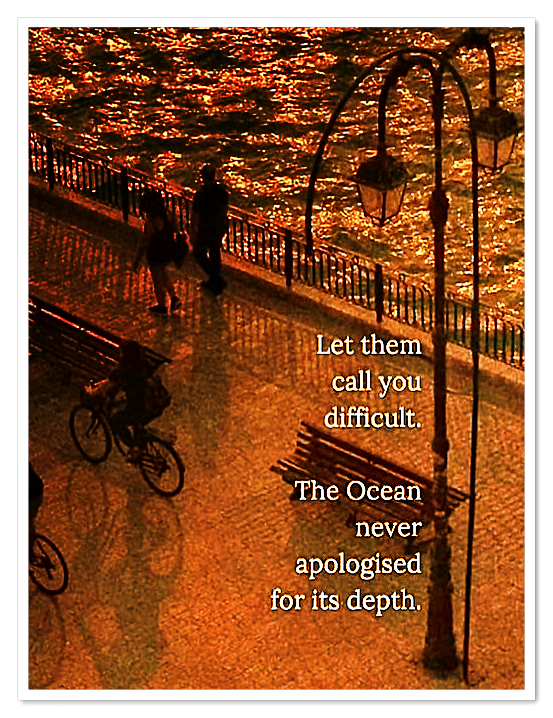
You are not “difficult” for refusing to live inside someone else’s inner world.
You are practicing something sacred:
self-sovereignty.
And that is not a threat to healthy people.
It is only a threat to those who confuse belief with entitlement.