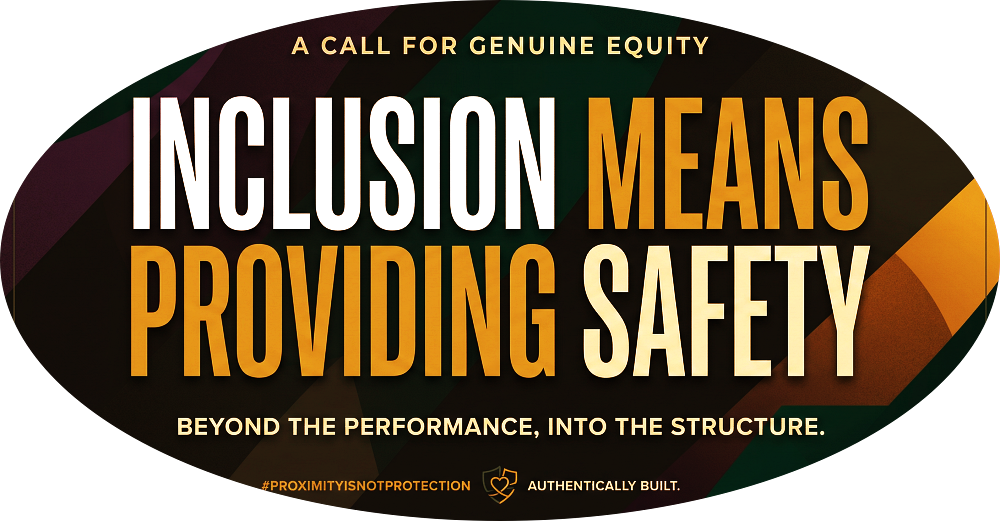
"Institutionally, we still don't understand what inclusion means. Just because you invite someone into a space, but you don't provide the necessary re
“Institutionally, we still don’t understand what inclusion means. Just because you invite someone into a space, but you don’t provide the necessary resources to keep them and everyone else in that room safe… that’s not inclusivity. That’s exploitation.”
At the 2026 NAACP Image Awards, Jayme Lawson (star of Sinners) provided a powerful, viral critique of how major institutions often confuse “proximity” with “inclusion.” Her comments were centered on the mishandling of a racial slur incident at the BAFTAs a week prior, where a man with Tourette’s Syndrome shouted the N-word while her castmates, Michael B. Jordan and Delroy Lindo, were on stage.
What resonated so deeply with audiences was her distinction between performative presence and institutional protection.
Her Flawless Assertion
Lawson argued that true inclusion is not just about inviting Black people into a space—it’s about the responsibility to protect them once they are there.
Her most impactful points included: Lawson emphasized that the incident was a failure on two fronts: it failed to protect the Black actors on stage and it exploited the disability of the man with Tourette’s by placing him near a microphone and then broadcasting his tics for “division.”
Lawson’s speech was seen as a masterclass in holding powerful institutions accountable. She shifted the conversation from the individual’s “outburst” to the systemic choices made by producers and networks. By doing so, she highlighted that safety—both emotional and professional—is a non-negotiable component of any genuine diversity and inclusion effort.’
“You want to celebrate our art, but you won’t protect it.” — Jayme Lawson
When institutions stop at the “Black square” (a reference to the 2020 social media trend), they are essentially practicing Aesthetic Inclusion. They want the visual benefit of diversity without the structural “cost” of equity or safety.
The Anatomy of Institutional Failure
To move from a “Black square” to actual safety, an institution has to shift its priority from optics to operations. Minds and hearts must change. Here is how that failure usually manifests:
Safety First: If a woman, person with a disability, minority, young person, etc… cannot report an incident without fearing for their career or physical safety, the “Black square” is a lie.
Authentic Voice: Genuine inclusion means the institution is willing to be uncomfortable. If an organization only listens to marginalized voices when they are saying “thank you,” it isn’t listening.
The “Safety for All” Standard: This requires recognizing that different groups carry different risks. An institution that is “safe” for a white male executive is not inherently safe for a Black woman assistant unless specific protections are built into the foundation. Just because a woman is “kind” does not make her more safe. In fact, placing that burden on her is likely to put her at a higher risk of harm, as we have already seen with women and girls in schools, prisons, and other spaces where the only safety plan was ….”be kind.” “Don’t look.”
The “Betrayal Gap”
The “wonderful” (and devastating) thing about Lawson’s speech was that she exposed the Betrayal Gap: the space between what an institution says it is and how it behaves when a crisis occurs. When the BBC chose not to cut a slur, failed to prepare for the likelihood of the slur, failed to support all people with disabilities in a meaningful way AND failed to address the harm carried by the slurs YET chose to cut a political plea for peace (self-protection), they showed exactly where their values live.
Authenticity isn’t found in a marketing budget; it’s found in the Policy of Safety and Protection. If you invite me to your home or event, it is reasonable for me to expect that you will also be concerned about my safety. At the very least you will not shrug it off. And me being me, I would feel offended if you allowed this to happen to any guest in attendance.
Companies and organizations are going to have to learn how to treat their guests better. ALL of their guests.
| The Performative Action (The “Black Square”) | The Genuine Requirement (The “Real”) |
| Diversity Hire: Bringing in a person of color or a woman for a high-profile role. | Cultural Safety: Ensuring that person has the authority and protection to change the environment that previously excluded them. |
| Statement of Solidarity: Posting a quote or a hashtag during a crisis. | Resource Allocation: Investing actual capital into harm reduction, equitable pay, and independent reporting systems. |
| “Safe Space” Branding: Using inclusive language in brochures or websites. | Enforced Accountability: Removing high-performing “toxic” leaders who perpetrate harm, regardless of their status. |
This is not new assertion around safety and respect for us. This is the foundation of safety. Awhile ago we made this short….
Inclusion MUST include boundaries and be safe for all by Tonya GJ Prince