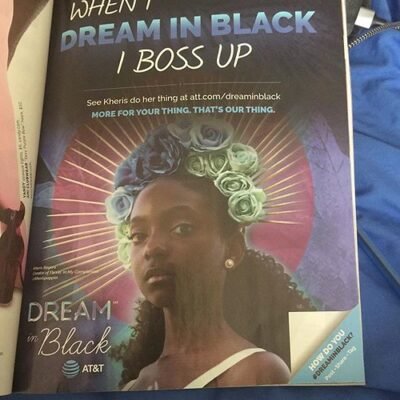
Wonderful to see @kherispoppin in this ATT ad in @essence magazine. #melaninpoppin
For Black American women, the natural hair journey is deeply personal. It’s not a trend. It’s not a rebellion. It’s a reclamation. A quiet, daily act of truth-telling.
We walk into workplaces where our tightly coiled crowns are seen as threats. Where jokes—masked as compliments—cut like blades:
“Uh oh, you’ve got your Angela Davis hair today,”
said with a mock-fearful pose, as if our curls were weapons.
A young Black man shared just yesterday:
He wore his adored, curly hair to work.
Someone said he looked like he came from the circus.
This is what it means to show up as yourself while carrying generations of insult, ridicule, and erasure on your scalp. To wear your hair as it grows from your head—only to be met with fear, disgust, or unsolicited advice.
If you live in a place—geographically or emotionally—where you’ve never had to hold your poise through a barrage of unprovoked comments about your hair, your skin tone, or your culture…
Then you don’t get to speak on our hair journey.
Just like you don’t get to tell Survivors when it’s time to forgive.
Both are journeys of the spirit.
Both are laced with pain, healing, resistance, and sacred timing.
And both belong to the one living them.
So no—you don’t get to decide what’s professional, acceptable, or beautiful on our bodies.
We do.
And we’ve been doing it—gracefully and powerfully—for a long time.