“Being asked to ignore degradation is not an invitation to be strong. It is an invitation to disappear. And you were never meant to disappear.” For S
“Being asked to ignore degradation is not an invitation to be strong. It is an invitation to disappear. And you were never meant to disappear.”
For Survivors, language is never “just language.”
It lands in the body.
It touches memory.
It echoes history.
So when Black people are asked to accept being called the n-word — even framed as “a mistake,” even attributed to disability, even offered without apology — something profoundly important is being “misunderstood”.
BUT sometimes intentionally because people understand all of what you are about to read when they are advocating for other issues: sexism, ableism, religion, faith, culture, region, special interest, gaming community, ….you name it. The same issues where they
told you that “the Black stuff was complicating things”.
Or called you a “victim” for pointing out facts and patterns of harm against you.
Anyway…….
What “Just Ignore It” Really Asks
On the surface, it can sound like a plea for patience.
But beneath that surface lives another message:
👉 Swallow the sting.
👉 Carry the discomfort….. quietly though so as to honor the “Do Not Disturb” sign of others.
👉 Protect the feelings of the speaker while ignoring your own
It shifts the emotional labor onto the person who was harmed.
And Survivors know this pattern intimately. Just like the family, the school, the institutions, the employers, the faith community who just want it all to go away without putting in the real work.
It is the same logic that says:
Minimization rarely feels neutral.
And yet, there someone will be to tell you that you are “over-reacting”.
But they aren’t “over-reacting” when it is an issue that they view as important?
Why the Word Can Never Be Small
Despite what people who are oddly numb to Black feelings may say, the n-word is not an ordinary insult. I’ve said before that everyone understands that “the body remembers” until it comes to Black people. Then it is time for forceful amnesia. No one understands why you might have any of the health conditions that you have. A mystery. And yet inside your body that carries brilliance there is so much more.
Centuries (-to present day) of:
Enslavement
Terror
- Torture
Mockery
Exclusion
- Scapegoating
Violence
- Erasure
Even when spoken casually, its roots remain intact.
For many Black Survivors, hearing it can trigger:
A stress response
A flash of anger or fear
A familiar, exhausting ache
Not because they are fragile.
But because the body remembers what society sometimes tries to forget. And demands that you selectively forget too.
Intent vs. Impact
Disability is real. (I’ve shared that I know this personally)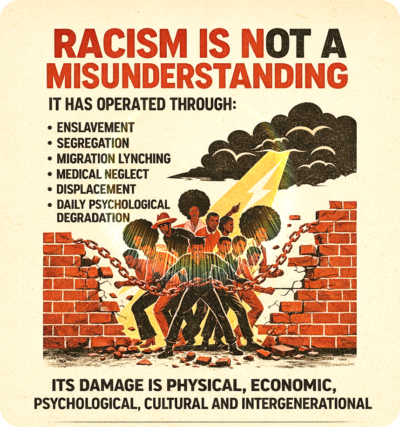
Mistakes are real. (This I know personally too.)
And compassion absolutely belongs in any humane society.
But compassion cannot mean:
👉 The harmed person must pretend harm did not occur.
Impact still exists, even when intent is absent.
A Survivor’s nervous system does not pause to evaluate context.
It reacts to the sound, the history, the meaning carried in the word.
Acknowledging that reality is not cruelty.
It is honesty. Truth. Courage.
The Silence Around Apology
The absence of apology deepens the wound.
Because apology says:
👉 “I see you.”
👉 “I recognize the harm.”
👉 “Your dignity matters.”
Without it, the message can feel like:
👉 “Your pain is negotiable.”
👉 “Your humanity is secondary.”
For Survivors — especially those whose boundaries were ignored in the past — this can reopen something tender.
Not just anger.
Grief.
What Resilience Actually Looks Like
True resilience is not built by enduring disrespect.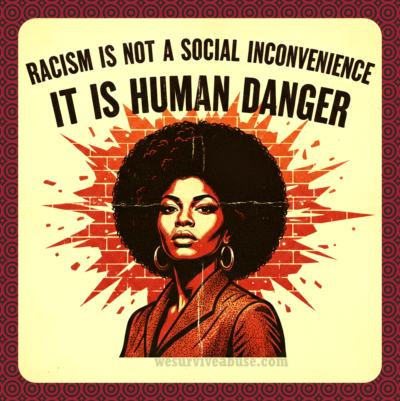
It is built by:
Seeing boundaries respected
Knowing dignity will be protected
Strength does not grow from being told to shrink your reaction.
Strength grows from being met with care.
Real Progress Sounds Different
Real progress does not ask the targeted to harden themselves against degradation.
Real progress says:
👉 “We do not speak to people in ways that deny their humanity.”
It holds space for:
Accountability
Repair
Apology
Learning
It recognizes that dignity is not a personality trait.
It is a human requirement.
A Gentle, Unshakable Truth
Survivors have spent enough of their lives adapting to what hurt.
They deserve a world that adapts to what heals.
NOTE: This conversation — and the repeated dismissal of what Black people feel and live — is one of the reasons healing circles for Black women and Black girls continue to matter.
Everyone deserves a space where their experiences are received with care, not questioned into silence.
A place where harm is not minimized.
Where pain is not explained away.
Where truth does not have to fight to be believed.
Healing asks something courageous of us.
It asks us to face what hurt.
To speak what was swallowed.
To honor what the body and spirit remember.
Because growth does not come from pretending wounds are imaginary.
Strength is built when feelings are acknowledged.
When dignity is protected.
When people are heard without being corrected for having been hurt.
And sometimes healing begins with something beautifully simple:
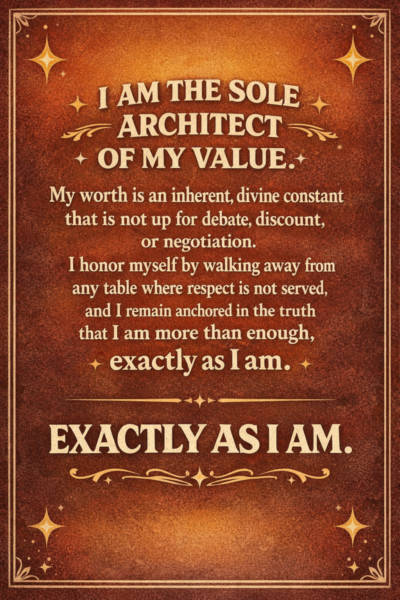
👉 Being allowed to tell the truth in a room that does not argue and debate it into being a lie. Again.
AFFIRMATIONS
My experiences are real, even when others try to minimize them.
I do not need permission to recognize disrespect.
What hurts me is worthy of care.
My dignity is not fragile. It is foundational.
I honor my feelings without apology.
Calling harm “small” does not make it small.
I trust my inner sense of what is wrong.
I am not “too sensitive.” I am aware.
Respect is not an unreasonable request.
My peace is protected by truth, not denial.
Sensitivity is not weakness. It is perception.
I refuse to shrink to fit someone else’s comfort.
My emotional responses carry wisdom.
I am allowed to name what hurts.
My boundaries are healthy and necessary.
Silence is not the same as resilience.
I am allowed to respond to disrespect.
Peace built on denial is not peace.
I deserve environments that honor my humanity.
My voice is part of my healing.