Table of Contents
Introduction
The issue is not that mothers will stop being mothers in real life.
Women will still carry babies through morning sickness, back pain, swelling, fear, hope, and those strange midnight cravings that make absolutely no sense until you are the one standing in the kitchen at 2:17 a.m. eating crackers like they came down from heaven. Women will still labor. Women will still bleed. Women will still nurse, rock, sing, soothe, protect, and stretch themselves across the needs of a child like a bridge over dangerous water.
The concern is different.
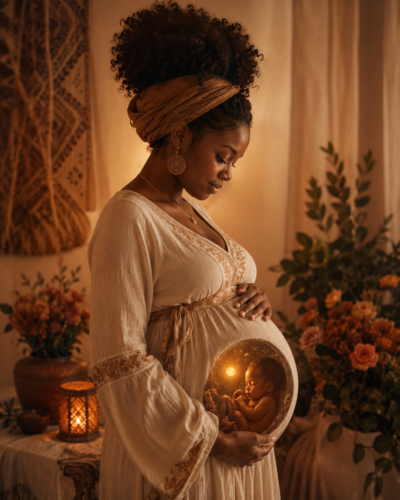 The concern is that the state is changing its official language. And once courts, hospitals, schools, agencies, forms, databases, and automated systems change the words, ordinary women may have to fight harder to have their motherhood named plainly.
That is where many women are pausing.
Not because every family looks the same. They do not. Not because same-sex parents, adoptive parents, surrogates, or transgender parents do not need accurate legal protections. They do. A humane society should be wise enough to protect different family structures without making women feel like the price of inclusion is silence about our own bodies.
Inclusive language should widen the table. It should not ask women to leave their own names at the door.
What Is Actually Changing?
This conversation is not imaginary. In New York, Senate Bill S9316 says directly that it would replace terms such as “father,” “mother,” and “filiation” with gender-neutral language in certain parts of state law. The bill language uses terms such as “gestating parent,” “non-gestating parent,” and “parentage.” You can read the bill directly through the New York State Senate bill page.
Maryland shows the shift in a different way. The Maryland Department of Health describes an Affidavit of Parentage as a document that allows “a parent who gave birth” to add the “other parent” to a child’s birth certificate. The actual Maryland Affidavit of Parentage form also uses “parent who did not give birth.”
California is another model. It often expands the boxes rather than replacing all the words. Some California birth certificate materials include options such as Mother, Father, Parent, and Not Specified. That is different from saying mother and father are forbidden. But it still shows how state systems are moving toward broader parentage categories. A California birth certificate worksheet explains this kind of form language in plain terms through California vital records materials.
Here is the plain comparison:
The Difference Between Adding Words and Replacing Women
There is a difference between adding language and replacing language.
Adding language says, “We recognize more than one kind of family.”
Replacing language says, “The old words are too narrow, so we are moving them out of the center.”
For women, especially mothers, that distinction is not small. “Mother” is not just a sentimental word. It is a social word, a legal word, a medical word, a kinship word, a safety word, and for many women, a sacred word.
When a hospital says “birth parent,” a woman may understand the administrative purpose. But when she is lying in a bed after labor, body sore, cut, emotions high, baby crying, paperwork being passed across a clipboard, she may not feel like a “birth parent.” She may feel like a mother. And let’s tell the truth, hospitals and everyone around expect her to act like one.
And there is nothing backward about saying so.
Why This Matters for Safety
This conversation cannot stop at language. It must include safety.
Women are already being harmed while pregnant. The CDC has reported that intimate partner violence during pregnancy is linked to serious maternal injury, delayed prenatal care, depression, post-traumatic stress, substance use, and poor birth outcomes. The CDC also notes that about 40 percent of homicides among people known to be pregnant or within a year of pregnancy are related to intimate partner violence. That should make every lawmaker sit up straight. You can read the CDC’s discussion of intimate partner violence and pregnancy.
Harvard public health researchers have also discussed homicide as a leading cause of death for pregnant women in the United States. That is not a small footnote. That is a flashing red light on the dashboard. See Harvard’s coverage on homicide and pregnant women.
So when the state rewrites family law language, it must be careful not to accidentally flatten the real risks mothers face.
A woman in a toxic or abusive relationship may already be pressured to sign documents, share parental authority, keep peace with a dangerous partner, or let an unsafe person stay connected “for the child.” If official language becomes too smooth, too neutral, too detached from sex, pregnancy, and violence, it can hide what needs to be seen.
Sometimes neutrality is not neutral.
Sometimes neutral language walks into a dangerous room and acts like everyone in the room has equal power.
But women know better.
A pregnant woman dealing with coercive control is not simply “one parent” negotiating with “another parent.” She may be a woman trying to survive a man who monitors her phone, controls transportation, threatens custody, sabotages medical care, or becomes more dangerous during pregnancy.
That has to be named.
Where Language Can Affect Women
An Example: When “Equal Parent” Language Can Hide Unequal Power
Imagine a woman named Keisha.
Keisha is pregnant. She is not married. The baby’s father has been charming in public and frightening in private. He has never left a bruise where people could easily see it, but he has punched walls, threatened to take the baby, called her unstable, and shown up at her appointments uninvited.
At the hospital, someone hands them parentage paperwork.
The form says “parent who gave birth” and “other parent.” It sounds clean. It sounds modern. It sounds fair.
But Keisha knows the room is not fair.
She knows that signing paperwork may give him more legal standing. She knows he has already used the baby as leverage. She knows that once his name is on every document, getting distance may become harder.
This is where language, law, and safety meet.
The answer is not to deny every unmarried father legal recognition. The answer is to make sure women are not rushed, pressured, shamed, or misled into legal decisions while they are recovering from birth, facing fear, or navigating abuse.
Hospitals and agencies need trauma-informed explanations. Women need private time away from partners to ask questions. Staff should be trained to recognize coercion. Forms should include safety warnings in plain language. And mothers should not have to surrender the word mother in order for other families to be protected.
Inclusion Should Not Require Female Disappearance
There is a better way.
We can acknowledge that some families need broader language. We can recognize intended parents in surrogacy. We can protect adoptive parents. We can make sure same-sex parents are not legally erased. We can ensure that transgender parents are treated with dignity in specific legal situations.
And we can still say mother.
That is the part that should not be hard.
The public conversation gets foolish when people act like women are being hateful for noticing that our names are being changed. Women are not wrong to ask, “Where am I in this new language?” Mothers are not wrong to ask, “Why does my body become a process while everyone else gets identity?”
When the phrase “gestating parent” replaces mother, in law, many women hear something cold. They hear the state describing them by function. Gestating. Producing. Carrying. Delivering. It sounds like a job description written by a committee that has never sat beside a woman in labor.
Motherhood is not only biology, but biology is not nothing.
The body is not nothing.
Pregnancy is not nothing.
Birth is not nothing.
Women’s risk is not nothing.
What Better Policy Could Look Like
A better policy would protect all families without stripping women of plain recognition.
Here is what that could look like:
The Question Women Are Really Asking
Women are not only asking, “Can I still call myself a mother?”
Women are asking, “Will the state still call me one?”
That question carries weight.
Because institutions have a long history of asking women to be quiet for someone else’s comfort. Smile. Adjust. Make room. Be nice. Don’t make trouble. Don’t use the words that make people uncomfortable. Don’t mention sex. Don’t mention male violence. Don’t mention pregnancy risk. Don’t mention that mothers are often the ones left holding the child, the bill, the fear, the court date, and the night watch.
We have been here before.
A policy can be inclusive and still carry blind spots. A law can mean well and still miss women standing right in front of it. A form can look modern and still make a mother feel like the room got colder.
The goal should not be to drag the country backward. The goal should be to move forward with everybody visible.
That includes women.
That includes mothers.
That includes pregnant women in danger.
That includes mothers trying to leave unsafe men.
That includes women who know that language is not just decoration. Language is how systems decide what they can see.
Conclusion
The state can modernize forms without making motherhood sound like a technical event. It can protect diverse families without dissolving the words mother and father into a fog of administrative labels. It can honor inclusion without asking women to become less visible.
The issue is not whether mothers will still exist. Of course we will.
The issue is whether institutions will still name us plainly.
And when women are already facing pregnancy-related violence, custody threats, coercive control, medical dismissal, and legal confusion, plain language is not petty. It is protective.
A society that truly believes in inclusion should be brave enough to include women without sanding us down.
Say “parent” when “parent” is the right word.
Say legal parent” when “legal parent” is the right word.
Say “intended parent” when surrogacy requires it.
And say “mother” when the woman is a mother.
That is not exclusion.
That is accuracy with a human heartbeat. 💛
New York bill would replace “mother” and “father” with “gestating parent” in court docs
New York bishops say gender-neutral language law ‘mocks the foundation of the family’
Bill would replace ‘mother’, ‘father’ with gender-neutral terms