"Equality and kindness" do not require or justify the abolition of women as a sex class or the abrogation/appropriation of women's rights to pri
“Equality and kindness” do not require or justify
the abolition of women as a sex class
or the abrogation/appropriation of women’s rights
to private spaces, sports teams, etc.
On the contrary. We must speak out against
the attempts to turn misogyny into a moral virtue.
Professor Gary Francione
I can disappoint others and still be acting in integrity with myself.
American culture has wrestled with this before — loudly, controversially, imperfectly.
What we’re seeing now is not new friction.
It is an old argument wearing modern clothes.
🎬 Misogyny isn’t a good thing.
American culture dealt with that in The Color Purple (1985)
When the film arrived, something revealing happened. Women of all backgrounds went in groups. Men didn’t. They saw the film of course, but typically with a woman.
Even still, public conversation did not center:
• The lives of Black women
• The violence they endured
• The psychological realism
• The historical truth of gendered suffering
Instead, much of the backlash focused on:
“How does this make Black men look?”
That reaction told its own story.
Why this mattered:
Women’s lived realities were displaced by anxiety about male image.
Acknowledging harm inside a marginalized community was framed by some as “betrayal” rather than truth-telling.
The Color Purple forced audiences to confront layered truths:
• Racism
• Sexism
• Intracommunity violence
• Survival strategies of women
Decades later, people still debate whether the portrayal was “fair,” even while the conditions depicted remain historically documented and socially relevant.
And a harder question still echoes, ‘why is women’s suffering so often negotiable when male reputation feels at stake?’ That’s a pretty universal question.
🎵 Misogyny isn’t a good thing.
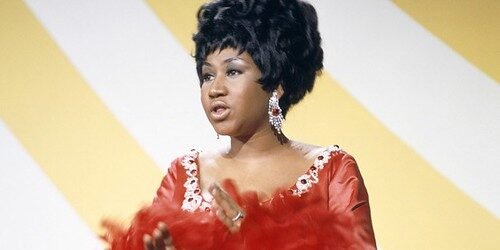
American culture dealt with that when Aretha Franklin sang the heck out of the evergreen classic hit, “Respect”.
“R-E-S-P-E-C-T
Find out what it means to me”
That lyric is often sung.
Less often examined.
Because embedded in it is a powerful declaration of authority:
Not what respect means socially
Not what respect means traditionally
Not what respect means to others
But: “What it means to me.”
A woman defining the terms of dignity for herself is radical on any day.
It implies:
• Bodily autonomy
• Emotional consideration
• Economic fairness
• Sexual agency
• Freedom from humiliation
• Freedom from control
Women have long expected to adjust, accommodate, endure — but not define. Never that.
We’re living in an era where women are reasserting:
• Boundaries
• Language
• Consent
• Standards
• Interpretations of safety
Aretha wasn’t asking for manners.
She was asserting ‘interpretive sovereignty.’
📺 Misogyny isn’t a good thing.
American culture dealt with that in A Different World (1987–1993)
This was not just a college sitcom and audiences loved each and every layer. It became a site of cultural negotiation.
Confronting what some colleges would rather hide:
• Date rape
• Consent
• Marriage expectations
• Career ambition
• Colorism
• Cultural identity
• Gender roles
This time Black women’s interior lives were centered, not treated as side stories.
It challenged the assumed myths:
• That danger only came from strangers
• That “good men” were incapable of harm
• That women’s hesitation was confusion rather than instinct
• That marriage was the automatic goal
Instead, women were choosing for themselves:
• Education
• Self-definition
• Partners intentionally
• Independence without apology
📺 Misogyny isn’t a good thing.
American culture dealt with that in Mary Tyler Moore / Rhoda / Alice / Wilona/Florence/Mrs. Garrett
Today, a single woman living alone barely registers as revolutionary.
But there was a time when:
• Women struggled to rent apartments without a husband
• Credit access was restricted
• Independence triggered suspicion
• Single women were framed as incomplete or unstable
These characters disrupted that reality.
Mary Richards
Rhoda Morgenstern
Alice Hyatt
Wilona Woods
Women defining their lives independent of male approval or direction.
They normalized:
• Female autonomy
• Economic survival
• Personal ambition
• Life beyond marriage
These shows and characters bravely pushed against the line using talent, great writing, and comedy even though independence in women was more stubbornly interpreted by many as:
• Rejection
• Threat
• Deviance
• A dreaded and miserable temporary phase between lonely seasons
🔎 The Familiar Pattern Across All of Them
Stereotypes were not ignored.
They were:
• Joked about
• Challenged
• Satirized
• Confronted
• Rewritten
Yet — and this is critical —none of those stereotypes defined these women.
Not Florida Evans.
Not Wilona.
Not Mary.
Not Whitley.
Not Florence.
Not Aretha.
Progress is not just changing laws. It means women changing our own mindsets.
It is refusing to let old limitations reclaim moral authority.
“When stereotypes regain the language of virtue, equality is at risk.”
Affirmations Inspired by Women Who Refused to Shrink
1.I honor the women who stood their ground, spoke their truth, and lived fully — and I carry that inheritance forward.
2.
My boundaries are not cruelty.
They are clarity.
They are self-respect in visible form.
3.
I do not measure my worth by how comfortable others feel with my strength.
4.
Like the women before me, I define my life from the inside out — not from expectation, pressure, or stereotype.
5.
I release the burden of being “pleasant” at the cost of being safe, honest, or whole.
6.
My independence is not rebellion.
It is a natural expression of my humanity.
My responsibility is honesty and respect — not endless availability.
Each boundary I honor strengthens my self-trust, my peace, and my emotional clarity.
I can be warm, compassionate, and kind without surrendering my voice, instincts, or authority over my own life.
I embrace humor, intelligence, softness, and power — knowing no single role contains me.
I refuse narratives that reduce women to stereotypes, punchlines, or supporting characters in their own stories and opportunities.
I am allowed to take up space without softening my truth to make others comfortable.
I honor the wisdom of my instincts; they exist to protect me, not to be negotiated away.
My boundaries are a reflection of my self-respect, not a rejection of others.
I am allowed to maintain boundaries even with people I love, people I’ve known forever, and people who expect unlimited access.
I release the belief that keeping the peace requires me to betray myself.
Healthy relationships are not built on my self-erasure, but on mutual respect for limits, needs, and dignity.