When a man kills three women over his lifetime, the system did not just fail once. It failed over and over. It was designed this way. Not all
When a man kills three women over his lifetime, the system did not just fail once. It failed over and over. It was designed this way. Not all men will be properly held accountable. It was designed this way.
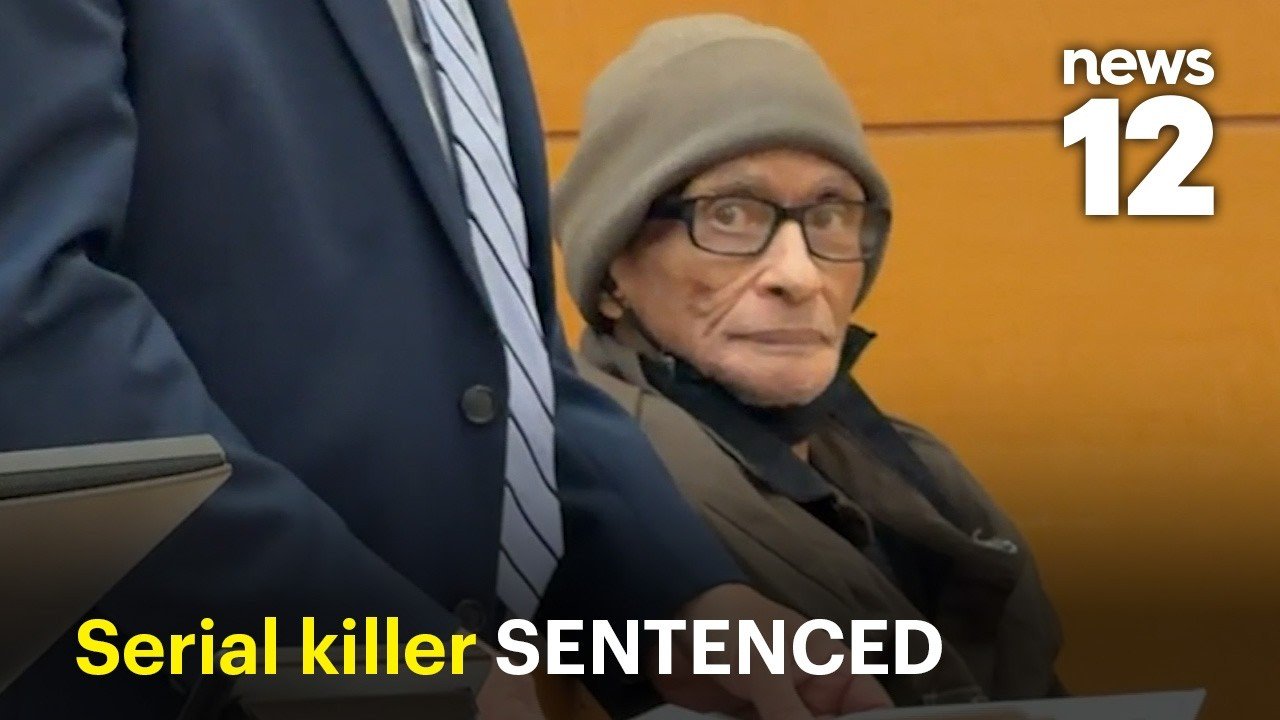
Recently, an 88-year-old man named Harvey Marcelin (sometimes Marceline Harvey) was sentenced to life in prison without parole in New York. This is his third time going to prison for killing a woman.
We cannot fight femicide—the killing of women because they are women—if the system keeps letting killers go free. We need to look closely at the patterns.
Here are 10 things that should make us deeply angry about this case.
1. Three Women Are Gone Forever
We must start with the lives stolen. Harvey shot Jacqueline Bonds to death in 1963. He stabbed another woman to death in 1985. He murdered Susan Leyden, and her body was treated with pure cruelty in 2022. Three names. Three humans. They are gone.
2. Forced to Live Alongside Danger
When the system released him, they placed him in public housing and shelters. Harvey was allowed to live right among women who were just trying to survive. These women put their trust in the system to give them safety. They believed the building structure and the rules would protect them. And honestly, what other choice did they have? The system forced them into the same spaces as a monster.
3. He is Not “Smart” or “Prolific”
Someday, true-crime shows might call him a “prolific” killer. People might give him credit and say he was “smart.” Do not believe them. He was not a criminal mastermind. He simply used a broken system that did not care enough about the women he harmed.
4. The Irony of the System
The sad irony is that they will never grasp how they were outsmarted. They looked at paperwork, external appearance, and whether or not he fit into other categories that they believed to be dangerous, while he looked at a green light to do it again. The system is still built and operating on the biases that include “all Black people are violent,” “women are hysterical and exaggerating danger,” and “children are not telling the truth.”
5. Our System is Too Soft on Crime Against Women
Is a killer really smart, or is our system just incredibly soft when it comes to violence against women and children? The answer is clear. When women are the victims, the system treats their lives like minor details rather than emergencies.
6. The “Checklist” Bias
Our justice system is quick to lock away certain people for minor crimes if they fit a specific checklist based on race or background. In this case, Harvey is Black. He also learned how to perform so he could be released and get more opportunities to get closer to more victims. A twice-convicted killer was allowed to walk freely into community spaces and target vulnerable women because he did not trigger the system’s biased alarms. We’ve seen this pattern before where violent and predatory criminals connect with a church that allows them to have access to women and children who aren’t aware of their history or believe the person has changed. Maybe they have. I believe in people’s ability to change. That’s what healing is about.
But, maybe they haven’t.
7. The Danger of “Lifetime Parole”
In 1963, he was given a life sentence. But because laws changed, he became eligible for parole and walked out in 1984. A life sentence should mean life, especially when a life was taken.
8. Pleading Down the Second Murder
After he was let out the first time, he killed a second woman just one year later. Instead of being locked away forever, he was allowed to plead down to a lesser charge of manslaughter. The system bargained away a woman’s worth.
9. Women Who Noticed Danger Were Silenced
A caseworker inside the NYC shelter system did exactly what she was trained to do: she observed behavior. She looked at Harvey Marcelin—who was using the name Marceline Harvey—and recognized a deep, violent threat to the women around him. She did not look at a superficial checklist. She looked at the danger and reported it. This, even as Marcelin was threatening her life and the caseworker believed that he had access to a weapon.
10. We Have a Right to Safety
We do not have to accept this. The criminal justice system cannot keep allowing this to happen to us. We deserve to walk down the street, live in our homes, and exist in the world without fearing that a known killer was handed a key to our neighborhoods.
The Bottom Line: We must stop looking at these cases as random accidents. They are part of a clear pattern. When the system ignores the safety of women and children, it allows evil to thrive. We demand better, because our lives depend on it.
To hear more about the court details and the impact on the community, you can watch this report on The Sentencing of Harvey Marcelin. This video shows the final court outcome where the judge officially stated there was no hope for rehabilitation.
Note: This isn’t about an entire demographic of people being depicted as harmful. This man had killed before. TWICE. There ought to have been extreme caution and safeguards when he was around other trans-identifying persons (especially young people), people with disabilities, people with addictions, women, and children. You know. People who might be harmed by a person who sees no issue with murdering people who don’t do what he wants them to do.
It isn’t about who people are; it is about the people in decision-making positions deciding that once THEY learn who someone is, they forget everything that they have ever been taught or learned about safety.
Enablers of harm can be just as dangerous as the people who physically commit the crime.
The policy lesson is simple: women’s spaces need individualized risk assessment. Prior history and patterns of violence against women, sexual violence, coercive control, stalking, threats, and predatory behavior should matter in placement decisions. Otherwise, the institution is asking women to absorb danger in the name of administrative convenience.
Good safety policy asks: Who is most vulnerable here? Who has a known pattern of harm? What could happen if we get this wrong? That is not cruelty. That is prevention.
A placement decision that ignores a documented pattern of violence against women undermines the whole purpose of that design. How in the hell are you pretending to build a safety structure for women when YOU brought the danger in and placed it to live among them?
After all this time, women are still demanding to be recognized and seen for who WE are. AND, what that continues to mean in the world that we live in.
(Having worked in a shelter as a counselor/case manager: prior history mattered when it was a female with a past criminal history.)
Harvey Marcelin was caught in a system that relied on parole board discretion, coupled with a severe crunch in how much time boards actually spend reviewing individual cases.
His repeated releases sparked intense scrutiny over how someone with his history could walk free. The breakdown of why he was let out both times highlights the vulnerabilities within the system:
1. The 1984 Release (The First Murder)
In 1963, Marcelin shot and killed his girlfriend and was given a “20 years to life” sentence.
The Mechanism: Under New York law at the time, “life” did not automatically mean natural life behind bars unless specified as “life without parole.” Once he hit his 20-year minimum mark, he legally became eligible to see the parole board.
The Result: The board granted him lifetime parole in 1984.
2. The 2019 Release (The Second Murder)
Just one year after his first release, in 1985, he stabbed another girlfriend to death. This time, he pled down to manslaughter, which carried a lesser maximum penalty than first-degree murder.
The “Good Behavior” and Time Served Factor: He was sentenced to 6 to 12 years, but because of his prior murder conviction, he was ultimately kept behind bars for over 30 years.
The Aging Inmate Factor: By the time he was released in 2019, Marcelin was 81 years old. Parole boards frequently weigh an inmate’s age heavily, operating under the statistical assumption that elderly inmates are much less likely to pose a physical threat or commit violent crimes.
Systemic Issues: 5 to 15 Minutes Per Case
When legal analysts and journalists looked into how Marcelin kept slipping through, they highlighted a staggering administrative burden on the New York State Parole Board.
According to criminal justice experts interviewed about his case, parole board members are often forced to review massive backlogs, sometimes getting as little as 5 to 15 minutes to consider an inmate’s entire history before making a decision. While they weigh disciplinary records, psychological evaluations, and public safety risks, the sheer volume of cases means high-risk nuances can be overlooked.
Because of his age and decades of compliance inside the prison walls, the board ultimately deemed him safe to release in 2019—a tragic miscalculation that ended in the 2022 murder of Susan Leyden. The public record suggests Susan Leyden may have been in Marcelin’s circle, but reporting does not clearly prove she was a romantic partner. Some outlets call her a friend or “pal.” Prosecutors said she was last seen entering Marcelin’s apartment, and People reported investigators found they had both lived in the same Bronx shelter in 2019, but “the nature of their relationship remains unclear.”
A THIRD WOMAN.
Harvey Marceline (sometimes going by Marceline Harvey) was a master at exploiting access, trust, vulnerability, and proximity and had a long pattern of lethal violence against women.
But we will all have to hear them pretend that he was “smart,” “charming,” or “clever.” That’s what you say when you are not yet ready to admit that YOU failed to think smart. To notice patterns. To ask yourself, “Where did I go wrong, and how can I be better?”
Even still, I don’t see how a man murdering his partner allows release when he was supposed to get life. He shot her! We all know that women who kill in self-defense don’t get this kind of leeway. AND after he murdered two women, the system intentionally looked the other way when it allowed him to be housed among vulnerable women. Missing from these stories are the voices of the women around him.
Social worker claims she was fired for her warnings about trans serial killer | Social Work News
The Silenced Voices of Women around Harvey Marcelin
The voices of the women who had to live around Harvey Marcelin were silenced by a system that treated their survival as an afterthought. When we look at what happened in those shared spaces, the patterns of fear, vulnerability, and systemic neglect become painfully clear.
The reality of what the women around him experienced tells a damning story:
Because the system used a superficial checklist, he was allowed to walk freely into the Bronx shelter system and public housing networks under this new identity.
The system completely ignored his 60-year history of extreme violence against women. They placed an unmonitored predator right into the living spaces of vulnerable, dependent women. He kept showing them that he had a tendency to cross boundaries and “punish” women with violence. What more did they need? Harvey was able to exploit a systemic blind spot to target and murder Susan Leyden.
1. The Trap of Forced Living Spaces
Susan Leyden, the third woman Harvey Marcelin targeted, was down on her luck and staying in a Bronx shelter when she met him in 2019. For women in the shelter system, poverty and housing insecurity strip away choices. They are forced to occupy the same halls, lounges, and neighborhoods as the people the state assigns there. The structure did not give them a way to vet who was sleeping in the next room. They had to assume the system had checked his background—but the system failed them.
2. A Pattern of Manipulation
The system allowed Marcelin to blend into these vulnerable communities. Because he was an elderly person in a wheelchair, he did not trigger the typical “visual checklist” of a violent predator. He used that false sense of safety to get close to women who were just trying to survive. Reports from his recent trial showed that he became obsessed with women he met in the shelter system, using his apartment as a space to lure them in under the guise of offering help or companionship.
3. Exploiting the Most Vulnerable
Another woman, Lisa Lindahl, was inside Marcelin’s apartment during the time of the final violence. She was homeless, struggling with severe addiction, and completely dependent on finding a safe place to rest her head. Marcelin’s defense lawyers tried to blame her for the crime—a classic pattern of trying to pin the blame on an unhoused, vulnerable woman who had no power to fight back against the system’s narrative. Bad actors look for women who the world already ignores, knowing that if something happens, society will be slow to listen to them.
4. Neighbors Knew Something Was Wrong
When reporters spoke to people living in his building after his arrest, neighbors described him as “strange” and unsettling. One neighbor noted that he felt an immediate chill just looking at him in the hallway. But in public housing complexes and shelter networks, residents are often conditioned to keep their heads down. When the state tells you a person is cleared to live next door, you are forced to swallow your fear because there is nowhere else to go.
The fear was absolutely there, but it was buried under the daily weight of survival. The system ignored the warning signs, left vulnerable women unshielded, and forced them to navigate a predator entirely on their own.
To hear more about the direct impact this case had on the community and the testimonies from the trial, you can watch 87-year-old serial killer found guilty in Brooklyn dismemberment case. This video includes local reactions from neighbors who lived doors away from the apartment and sheds light on the tragic circumstances surrounding the victims.
If this isn’t a pity and shame.
The entire system needs an audit and a do-over. Unplug it and reset it.
Further Reading on Cases of Repeat Offenders Who Went on to Kill Again is in the Widget Below