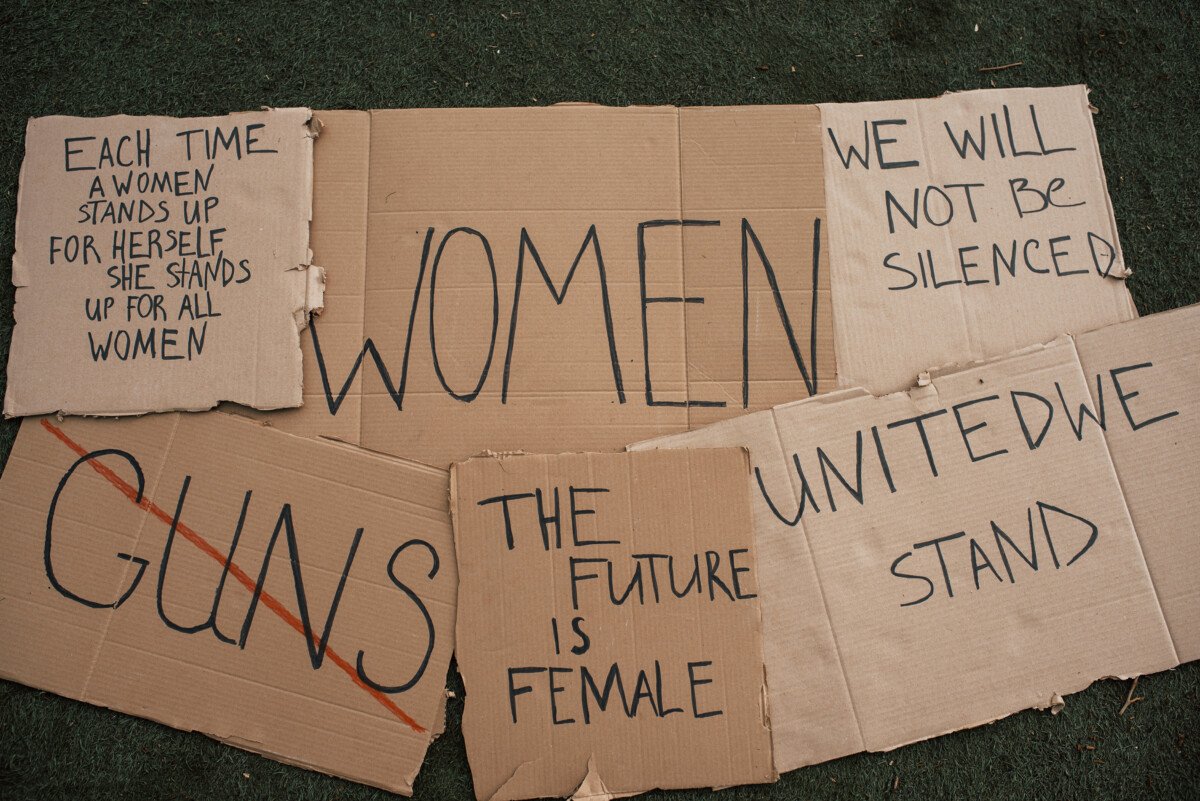
There is a question people ask often.“Can we?” Can we do this.Can we allow that.Can we push this boundary further. It sounds reasonable.It sound
There is a question people ask often.
“Can we?”
Can we do this.
Can we allow that.
Can we push this boundary further.
It sounds reasonable.
It sounds neutral.
But it isn’t.
Because “can we” is about permission.
It’s about what is technically allowed.
And too often, it skips over something far more important.
The Question We Keep Avoiding
Not can we.
Should we.
Should we move forward with something
that increases risk for women and girls?
Should we normalize ideas
that make it harder for women to name harm clearly?
Should we keep expanding boundaries
without stopping to ask who absorbs the impact?
Because Someone Always Pays
Decisions are not abstract.
They land somewhere.
And more often than not,
they land on the bodies, safety, and lives of women and girls.
The girl who is told to ignore what feels wrong
The woman who is expected to “be understanding”
The one who is asked to carry discomfort quietly
so others don’t have to feel challenged
This is not new.
What’s new is how often it’s dressed up
as progress.
Ability Is Not Responsibility
Just because something can be done
does not mean it should be done.
Just because something is possible
does not mean it is safe.
And just because a line can be crossed
does not mean women and girls should be the ones
expected to live with what happens next.
A Grounded Standard
Before any change moves forward,
there is a question that deserves to be asked—clearly, without rushing past it:
Who benefits?
Who is placed at risk?
Who is expected to adjust, endure, or stay quiet?
If the answer continues to be women and girls,
then the conversation is not complete.
A Survivor-Centered Truth
Women and girls are not the testing ground
for ideas that have not been fully considered.
We are not the margin of error.
We are not the silent cost.
Affirmations
I am allowed to question what is being asked of me.
I do not accept harm simply because it has been normalized.
My safety is not negotiable.
I am not here to absorb the consequences of decisions I did not make.
The question was never just “can we.”
The question is—and has always been—
“who pays for it if we do?”
— WeSurviveAbuse.com | Survivor Affirmations | Tonya GJ Prince
Retired police chief says Layton officer was ‘over invasive’