Table of Contents
People who shut their eyes to reality simply invite their own destruction,
and anyone who insists on remaining in a state of
innocence long after that innocence is dead turns himself into a monster.”
-James Baldwin
“Not this person” protects reputations, comfort, and social order.
It does not protect women’s bodies, safety, futures, or lives.
Across decades of domestic violence advocacy—courtrooms, faith spaces, workplaces, families—the pattern has been consistent and devastatingly clear.
1. It Slows or Stops Accountability
When people rush to say “not this person,” investigations stall.
Questions are softened.
Urgency disappears.
Delay is not neutral. Delay is dangerous.
2. It Trains People to Doubt Women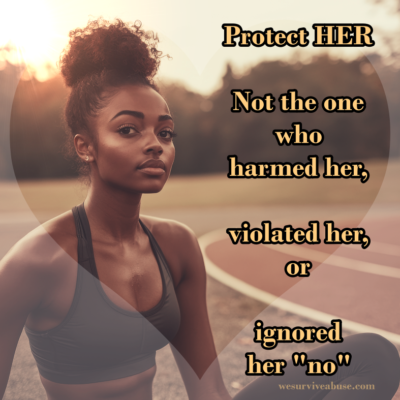
“He doesn’t seem like that” is not evidence.
It is disbelief wrapped in politeness.
Women learn quickly that how a man is perceived matters more than what they experienced.
3. It Transfers the Cost of Harm Onto Women
When people say, “This would ruin his life,” the unspoken expectation is clear:
She should carry the damage instead.
Women are pressured to stay quiet, forgive, endure, or disappear.
4. It Keeps Women in Danger Longer
That reflex often means:
-
staying longer in unsafe situations
-
being urged to “work it out”
-
being told to wait, pray, try harder
-
losing critical time to escape
Time matters. And “not this person” steals it.
5. It Erodes Credibility
Once doubt enters the room, women are forced into proving instead of being heard.
Their tone is judged.
Their memory is questioned.
Their motives are examined.
Harm becomes secondary to reputation management.
6. It Protects Familiarity, Not Safety
Women are most often harmed by people they know.
People others call “good.”
People with titles, roles, and community standing.
Familiarity has never been a safety plan.
7. It Turns Patterns Into “Isolated Incidents”
“Not this person” breaks continuity.
It prevents people from seeing repetition.
Patterns protect women.
Personality defenses hide harm.
8. It Rewards Silence
Women watch what happens to the first woman who speaks.
When she is doubted or dismissed, others learn the lesson quickly:
Say nothing. It’s safer.
That silence costs lives.
9. It Confuses Mercy With Minimization
“Not this person” can sound compassionate.
But mercy that ignores harm is not mercy to women.
It is mercy to systems that do not want disruption.
10. It Replaces Safety With Social Comfort
That reflex calms bystanders.
It stabilizes groups.
It avoids conflict.
What Actually Protects Women
Women are safer when cultures choose:
-
believing patterns over personas
-
taking disclosures seriously the first time
-
removing access when harm is possible
-
prioritizing safety over image
-
allowing truth to surface without punishment
Protection grows from examination, not exemption.
What Safety Sounds Like
Women are safer in cultures that say:
We will look.
We will listen.
We will not decide who is incapable of harm.
That is not suspicion.
That is wisdom learned the hard way.
And women have paid dearly for every culture that refused to learn it.