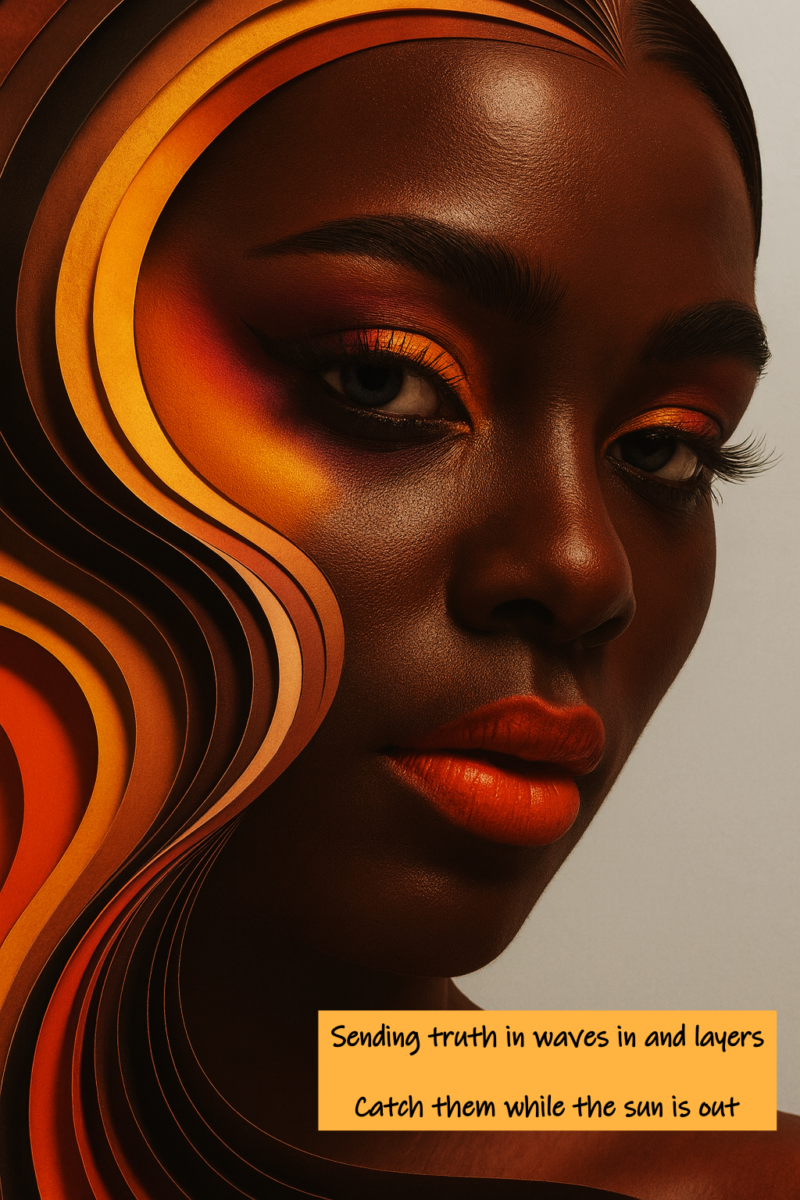
"I've never seen or heard of anything like this!" Black people have been telling the truth about violence for a long time.N
“I’ve never seen or heard of anything like this!”
Black people have been telling the truth about violence for a long time.
Not for attention.
Not for spectacle.
Not to be labeled.
But so that more people could live peaceful, joyful, violence-free lives.
That was the intention.
And still is.
The Record Was Never Hidden
Long before hashtags.
Long before public debates.
Long before people argued over what words to use—
the stories were already here.
Incidents in the Life of a Slave Girl — a young girl naming sexual coercion by a man in power.
Roots — families torn apart, women exploited, power operating in the open.
Cane River — generations shaped by unequal power, quietly documented and traced through bloodlines.
The Color Purple — abuse inside the home, normalized and endured.
The Bluest Eye — a harmed child, and a community that could not protect her.
Corregidora — memory preserved when systems erased evidence.
The Dorothy Dandridge Story
For Colored Girls — layered violence that many recognized immediately.
I May Destroy You — modern language for harm that has always existed.
Surviving R. Kelly — Survivors speaking for years before power was challenged.
Central Park Five
Selma
Sinners
Get Out
Do the Right Thing
The Jeffersons, Sanford and Son, Good Times..….
Foundational Black Feminist Works on Violence & Power
Ain’t I a Woman? Black Women and Feminism
Connects slavery-era sexual exploitation to modern systems of harm against Black women.Sisters in the Wilderness
Uses the story of Hagar to explore sexual exploitation, survival, and spiritual meaning.
Violence Against Black Women (Direct Focus)
Arrested Justice: Black Women, Violence, and America’s Prison Nation
Shows how systems criminalize Black women while failing to protect them from violence.Compelled to Crime
Examines how abuse and coercion push women into criminalized situations.Invisible No More: Police Violence Against Black Women and Women of Color
Documents state violence and lack of accountability.At the Dark End of the Street
Shows how sexual violence against Black women shaped the Civil Rights Movement.
Structural & Systemic Analysis
Killing the Black Body
Examines control over Black women’s reproduction and bodily autonomy.Medical Apartheid
Documents medical exploitation and experimentation on Black bodies.Fearing the Black Body
Traces how anti-Blackness shapes standards, control, and harm.
How many songs and lyrics…….
Across all of these works, you see a consistent throughline:
Violence is not random
Systems often fail—or punish—the harmed
Black women document anyway
And Then Came the Pushback
Not just new either.
When the truth is told, the response often sounds like this:
“They’re doing too much.”
“This is trauma porn.”
“They’re playing the race card.”
“That’s victim mentality.”
“This is just woke.”
Different words.
Same function.
To make the truth easier to ignore.
This Pattern Is Not Unique
This is where the understanding deepens.
Because this doesn’t just happen to Black storytellers.
This happens to victims of violence—everywhere.
They are questioned.
Their tone is policed.
Their experiences are minimized.
Their credibility is challenged.
Before protection ever arrives.
And Still—The Stories Were Told
Black people did not wait for approval.
They wrote it.
They filmed it.
They spoke it.
They passed it down.
So that someone, somewhere, could recognize:
This is not normal.
This is not acceptable.
This has a pattern.
The goal was to make violence visible—so it could be stopped.
And because those records exist,
we are not starting from zero.
We are starting from truth that was already given.
People talk about this daily online. Are you listening? Are you avoiding the issues? Are you avoiding the truth?
The question now is simple:
Will we all listen—
or will we keep renaming the truth until it feels easier to dismiss?
“I’ve never seen or heard of anything like this!” Haven’t you? Are you ready to listen now?