Before history knew her as a symbol, Mary Lumpkin was a woman. She was a mother. A Survivor. A person whose life carried both unimaginab
Before history knew her as a symbol, Mary Lumpkin was a woman.
She was a mother. A Survivor. A person whose life carried both unimaginable hardship and extraordinary strength.
Mary Lumpkin was enslaved in Richmond, Virginia, by Robert Lumpkin, who operated a notorious slave jail known as Lumpkin’s Jail, sometimes called the “Devil’s Half Acre.” The site represented one of the cruelest realities of slavery: human beings were bought, sold, confined, and treated as property.
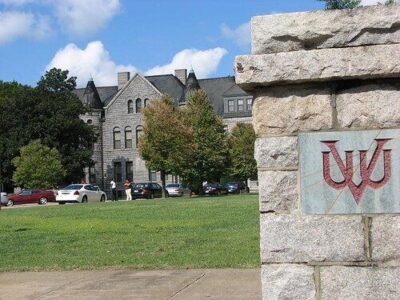
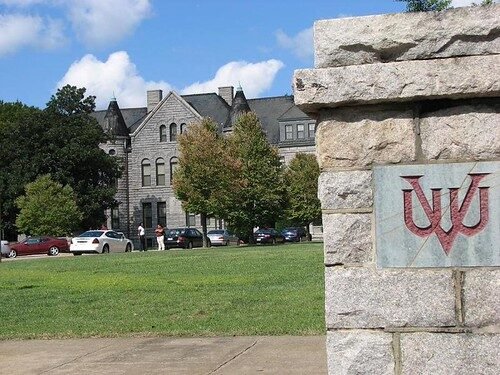
Campus of Virginia Union University
Mary’s early life was shaped by a system designed to take away her freedom and control her choices. She was forced into a coerced relationship with Robert Lumpkin and gave birth to several of his children while enslaved. After the Civil War, she became a free woman and played an important role in transforming the former jail site into a place of education that later became associated with Virginia Union University, a historically Black university. Slavery did not have the final word in her story.
After emancipation, Mary Lumpkin became a free woman who helped transform a place associated with suffering into a place connected to education and possibility. The former site of Lumpkin’s Jail later became part of the foundation that helped create Virginia Union University, one of the nation’s historically Black universities.
Think about that.
A place built around the buying and selling of Black lives became connected to the education and liberation of Black minds.
That transformation carries a lesson.
Mary Lumpkin’s story reminds us that oppression does not get the final word. The people who were once denied education helped build institutions of learning. The people who were denied ownership of their own lives helped create communities, families, churches, schools, and movements that shaped America.
Her story is not only about what was done to her.
It is about what she did after surviving.
Mary Lumpkin was enslaved by Robert Lumpkin, the white Richmond slave trader who operated Lumpkin’s Jail. During slavery, he held legal ownership over her and their children. Their relationship existed within the context of slavery, where enslaved women did not have the legal freedom to consent or negotiate power equally.
When Robert Lumpkin died in 1866, after emancipation had begun, his will provided for Mary and their children. Mary received property, including the former Lumpkin’s Jail site and other assets. Some accounts describe her as inheriting a significant portion of his estate.
The remarkable part of Mary Lumpkin’s story is what she did with that inheritance.
Rather than allowing the property to remain only a reminder of the place where enslaved people had been imprisoned and sold, she became involved in transforming the site. She leased the property to Nathaniel Colver, who established a school there for newly freed Black people. That school later became connected to the development of Virginia Union University.
Her story holds a complicated but powerful historical lesson:
Mary did not simply “inherit a fortune.” She inherited property from a man who had benefited from a system that had denied her freedom and humanity. Yet she used that property in a way that contributed to Black education and advancement.
Mary Lumpkin was a woman born into slavery who survived a system designed to control her body and her future. After emancipation, she gained control over property connected to her former enslaver and helped transform a place associated with human bondage into a place associated with learning and liberation.
So this is about the power of a woman who lived through a system that tried to make her invisible and still left a mark that generations would remember.
Her life spanned one of the most dramatic transformations in American history:
1830s–1860s: Mary lived under slavery in Virginia. She was enslaved by Robert Lumpkin, a Richmond slave trader and owner of Lumpkin’s Jail.
1865: The Civil War ended and slavery was abolished with the ratification of the 13th Amendment.
1866: Robert Lumpkin died. Mary, who had been enslaved by him, became connected to property from his estate.
Late 1860s–1870s: She helped transform the former Lumpkin’s Jail site into a place connected with education for newly freed Black people.
1905: Mary Lumpkin died in Richmond, Virginia.
Mary Lumpkin’s life reminds us that history is not only made by presidents, generals, and famous leaders. Sometimes it is shaped by people who survived systems designed to erase them and then used whatever power they gained to build something different.
Affirmation:
I honor the women whose names history almost forgot. Their lives were never defined only by what they endured. They carried wisdom, courage, creativity, and the power to transform what was meant to break them.
Reflection:
What places, stories, or experiences have been marked by pain but later transformed into sources of healing and hope?
Mary Lumpkin’s legacy offers a powerful truth:
A person can be born into a chapter they did not choose, and still help write a different ending.
Interesting fact:
L. Douglas Wilder graduated from Virginia Union University (VUU).
He earned a Bachelor of Science degree in Chemistry from Virginia Union University in 1951. He later earned his law degree from Howard University School of Law in 1959.
L. Douglas Wilder was:
the first African American elected governor of any U.S. state, serving as governor of Virginia from 1990 to 1994.
He was also the first African American elected to the Virginia Senate after Reconstruction.
- Mayor of Richmond from 2005 to 2009.
The Enslaved Woman Who Liberated a Slave Jail and Transformed It Into an HBCU