Because access is not respect. And entitlement is not love.
Even when men have the access they want, saying no can still be dangerous.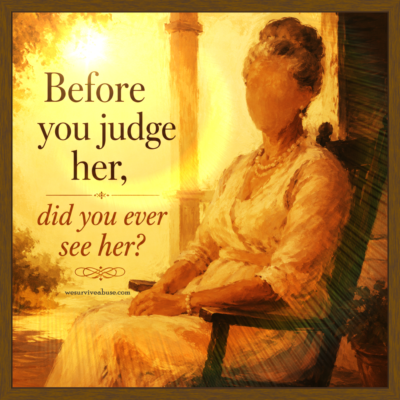
History has shown us a painful pattern: when a woman says “no,” some people do not hear a boundary—they hear a challenge to their sense of entitlement, and they respond by trying to punish her for belonging to herself.
In 1990, Nellie Jackson, known as the “Mississippi Madam,” was killed in a fire at her Natchez, Mississippi establishment. She was 87 years old. A man who had been refused service returned, and an act of rejection became an act of violence.
Before we rush past her story because of the work she did, we need to ask a deeper question:
Who was Nellie Jackson before the world decided what to call her?
Who were the women who worked in places like hers?
What brought them there?
Because women do not wake up one day and simply choose hardship, judgment, danger, and vulnerability because it is easy. Many women throughout history have entered survival economies because of poverty, limited opportunities, abuse, abandonment, discrimination, or a world that offered them far fewer choices than it offered others.
They were daughters.
They were mothers.
They were sisters.
They were women trying to survive.
They laughed. They struggled. They cared for families. They carried burdens. They had dreams. They were human beings.
And whatever complicated realities surrounded their lives, one truth remains:
Serving someone does not make a woman less deserving of respect.
A woman’s labor, her circumstances, or her past do not erase her humanity.
There is a dangerous lie that has harmed women for generations:
That if a woman says yes enough times, she will finally be honored.
That if she is available enough, agreeable enough, giving enough, beautiful enough, patient enough, she will receive the respect that should have been hers from the beginning.
But history keeps showing us something different.
A woman can say yes and still not be valued.
A woman can give access and still not be protected.
A woman can offer kindness and still be harmed.
A woman can make herself smaller and still be treated as disposable.
Because the problem was never that women failed to give enough.
The problem is a culture that too often teaches some people to see women’s access as something they are entitled to—and a woman’s boundary as a personal offense.
“No” is not cruelty.
“No” is not disrespect.
“No” is not an invitation for punishment.
A woman’s body is not a public resource.
A woman’s labor is not a debt she owes.
A woman’s presence is not a guarantee of access.
The measure of a society is not how it treats women when they are pleasing, useful, young, beautiful, or agreeable.
The measure is how it treats women when they say:
Enough.
Stop.
You cannot come further.
You do not have permission.
Nellie Jackson’s story forces us to confront an uncomfortable truth: some people do not struggle with women’s suffering as much as they struggle with women’s autonomy.
Women and girls deserve more than rights written on paper. They deserve a world where their boundaries are honored before tragedy forces us to remember their humanity.
Because the painful truth is this: some people confuse availability with consent, service with surrender, and kindness with obligation.
A woman can spend years caring, giving, working, serving, loving, accommodating—and there will still be people who believe one boundary means she has become the enemy.
The core wound underneath Nellie Jackson’s story: the idea that many women are allowed to say “yes” repeatedly, but the moment they exercise the power of saying “no,” some people reveal that they never respected the woman’s humanity—they respected her access.
We do not honor women only when we agree with their choices.
We honor women because they are human.
And What Happened to the Man Who Harmed Nellie??
The man who killed Nellie Jackson was Daniel Eric Breazeale, a 20-year-old college student who was in Natchez during the summer of 1990. According to reports, he had been drinking, came to Nellie’s establishment, and was refused entry. He left, returned with gasoline in an ice chest, and set the fire that killed both Nellie Jackson and himself.
There is something deeply unsettling about that ending: he was not killed by the system afterward. He was killed by his own act of violence. He carried the gasoline back. He made the choice to return. He escalated a boundary into a deadly attack, and he died in the same fire.
Why was her “no” so powerful that he felt entitled to destroy her?
Because this is where we have to look honestly at a pattern that affects women across all walks of life.
Some people are comfortable with a woman’s “yes” because they interpret it as access, service, availability, or approval. But the true test of whether someone respects a woman is not how they respond when she gives.
It is how they respond when she refuses.
Nellie Jackson had spent decades in a world where men came to her door. She created rules. She decided who entered. She exercised authority in a place where she held power. And when one man encountered a boundary he did not like, he did not see an elderly woman with a lifetime of experiences behind her.
He saw a person who had denied him what he wanted.
That is the danger.
A woman can say yes a thousand times and some people will still believe they are owed one more yes.
A woman can provide kindness, care, labor, affection, or service and some people will still not recognize her humanity.
Because respect that disappears the moment a woman says “no” was never respect. It was entitlement wearing a polite mask.
Nellie Jackson: A Story of Unlikely Power in the Jim Crow South | RealClearHistory
Natchez, Mississippi: Nellie Jackson ran a brothel until 1990
Male Access Supremacy: When Entitlement Disguises Itself as Equality – WE Survive Abuse
Access to Women Is Not a Male Human Right – WE Survive Abuse
There Are No Magic Words That Grant Access to Our Boundaries – WE Survive Abuse
Women in prostitution won’t be protected by Amnesty’s plan | Julie Bindel | The Guardian