
A woman does not become hateful because she refuses to believe what someone else believes. Her mind is not public property, and her agreement is not a
A woman does not become hateful because 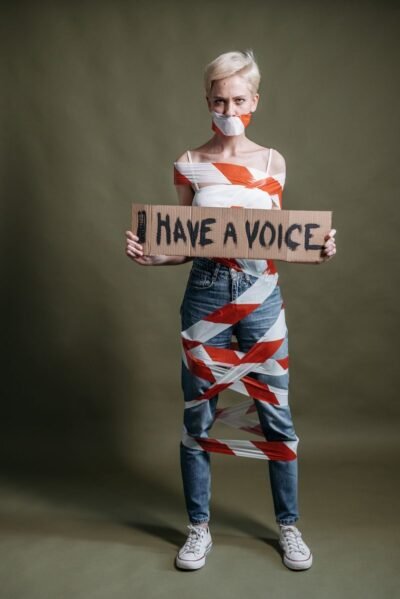 she refuses to believe what someone else believes. Her mind is not public property, and her agreement is not a debt she owes.
What happens when women challenge gender-identity policies and find themselves answering criminal complaints? In France, two feminist activists have become part of a larger debate about women’s freedom of speech, sex-based rights, and the pressure to affirm beliefs they do not share.
Women are frequently asked how gender-identity policies affect them. Sometimes the question is sincere. Other times, it is delivered as though women must prove they have been harmed before their concerns deserve consideration.
The experiences of French feminists Marguerite Stern and Dora Moutot offer one answer.
Their advocacy has resulted in criminal complaints from LGBT organizations, including organizations reported to receive public funding. Their experience raises questions about what happens when women challenge institutional policies, reject claims they cannot independently verify, and insist on the right to describe their own sex-based experiences.
This is not simply a disagreement about language. It concerns the freedom women have to think, speak, organize, and advocate without being compelled to adopt someone else’s beliefs.
1. ⚖️ Two French feminists challenged gender-identity policies
Marguerite Stern and Dora Moutot are French feminist activists and authors who have publicly challenged the replacement of biological sex with gender identity in laws, language, and public institutions.
Stern became known for her involvement in campaigns against femicide. Moutot built an audience through conversations about women’s sexuality and experiences.
Together, they began examining how gender-identity policies affect women’s rights, particularly in prisons, sports, changing rooms, and services intended for women who have experienced violence.
In 2024, they published Transmania, a controversial book criticizing aspects of gender-identity activism.
Their positions attracted public criticism, protests, and legal complaints.
You cannot call a woman free while demanding that she surrender her judgment to keep the peace.
Peace that requires her silence is not the same as liberty
2. 📢 LGBT organizations filed criminal complaints over feminist speech
In March 2023, four LGBT organizations announced a criminal complaint against Stern and Moutot over their Manifeste Femelliste.
The organizations included STOP Homophobie, Mousse, Inter-LGBT, and Famille LGBT+.
They alleged public insults and incitement to hatred or violence based on gender identity.
Stern and Moutot maintained that they were expressing feminist positions about biological sex and women’s rights.
The organizations argued that some of their statements stigmatized transgender people.
These are competing legal claims. Filing a criminal complaint does not establish that a crime occurred.
Yet the use of criminal proceedings against feminist political expression raises a question that reaches beyond these two women.
How much freedom do women have to challenge policies that directly affect their bodies, privacy, safety, and legal protections?
I can respect your right to believe something without surrendering my right to question it.
Respect is not a contract requiring two people to reach the same conclusion
3. 🚨 One of the women was convicted over a statement about safety
In May 2026, a Paris court convicted Dora Moutot of public insult based on gender identity over comments made during a 2022 television debate.
Her statement, translated into English, was:
“As women, we have to be wary of people with penises.”
Moutot said she was discussing women’s safety and concerns about male violence.
The court determined that her statement unlawfully generalized suspicion toward transgender women.
The conviction concerned that specific statement and its context. It was not a ruling that every discussion of biological sex or women’s safety is illegal.
Still, consider the conflict. Women are routinely encouraged to recognize danger, establish boundaries, and take precautions. Women who have experienced sexual violence are often asked whether they recognized warning signs or took steps to protect themselves.
Yet here, a woman discussing sex-based caution was convicted of a speech offense.
A legal system must distinguish between unlawful personal attacks and women’s ability to speak about safety. Women should not have to abandon discussions of sex-based risks simply because those discussions are politically uncomfortable.
4. 🏛️ Public funding raises another question
Some organizations involved in the disputes have been reported to receive public funding.
That does not, by itself, establish that government money financed these particular complaints or that government officials directed the organizations to act. Those details require examination of grant records and legal filings. But public funding creates legitimate questions about transparency and accountability.
If an organization receives public money while pursuing criminal complaints against women over political speech, the public has reason to ask how that funding is allocated, what safeguards exist, and whether the government protects room for lawful disagreement.
Publicly supported advocacy should be open to public scrutiny, especially when its activities intersect with criminal law and political expression.
5. 🗣️ One way gender-identity policies affect women is through pressure on their speech
Women are repeatedly asked how the inclusion of trans-identifying males in female spaces affects them.
The conversation often stops at toilets, changing rooms, prisons, and sports.
But there is another issue.
What happens to a woman’s freedom to speak when she is expected to affirm a claim about sex that she does not believe?
Women may face pressure to change their vocabulary, avoid certain biological descriptions, or accept institutional definitions of womanhood that conflict with their understanding of sex.
The consequences vary. Some involve criticism or professional disagreement. Others may involve employment disputes, disciplinary proceedings, or legal complaints.
These are not all equivalent to censorship, and each case requires its own evidence.
But they raise a common concern: whether women can continue to express sex-based political positions without facing disproportionate consequences for lawful disagreement.
Freedom of expression includes the freedom to disagree with claims about identity. It does not require women to surrender their own understanding of reality.
A woman’s boundary does not become an act of aggression because someone dislikes where she has drawn it. Her right to establish that boundary deserves consideration before anyone demands that she move it.
6. 🔎 Respecting a person’s beliefs is not the same as being required to believe them
People have personal convictions about religion, identity, spirituality, politics, and the meaning of human experience.
They are entitled to hold those convictions. Other people are entitled to disagree.
A person can sincerely describe an internal experience. That sincerity does not make every claim about the experience independently verifiable, nor does it automatically establish how institutions must classify everyone else.
Gender identity concerns a person’s internal sense of self. Biological sex concerns physical characteristics associated with reproductive organization.
The two concepts are not interchangeable.
A woman can acknowledge that someone has a particular understanding of themselves without accepting that understanding as her own belief.
She can offer ordinary courtesy without agreeing that sex is irrelevant to women’s rights.
Respect for a person and agreement with a proposition are two different things.
7. ⛪ We criticize religious demands for submission. Why should women accept comparable demands elsewhere?
For generations, women have challenged religious institutions that expected them to accept male authority, defer to male interpretations, and silence their own objections.
Religious teachings have sometimes been used to tell women that obedience is virtuous, disagreement is rebellion, and questioning authority is a moral failure.
Many feminists rejected those demands.
They argued that women are thinking human beings who have the right to examine claims, question authority, and decide what they believe.
That principle should not disappear when the belief being presented is secular rather than religious.
A man’s sincere conviction about himself does not automatically create an obligation for a woman to share that conviction.
Nor should a woman have to demonstrate kindness by surrendering her ability to describe herself, recognize sex-based distinctions, or challenge institutional policies.
There are differences between religious doctrine and gender-identity law. They are not identical systems.
But the comparison exposes a recurring question about authority.
Why should a woman’s independent judgment become a problem whenever it conflicts with what someone expects her to believe?
Women fought for the freedom to question religious authority. That same intellectual freedom belongs to them in every other setting.
If a woman can discuss her safety only after everyone else approves her vocabulary, she has not been given freedom of speech.
She has been given permission to repeat approved opinions.
8. 🛑 Disagreement is not automatically hatred
There are meaningful distinctions between criticizing an idea, challenging a policy, insulting an individual, threatening someone, and inciting violence.
Those distinctions are essential to freedom of expression.
A woman who argues that female prisons should be organized by biological sex is making a policy argument.
A woman who questions whether gender identity should replace sex in official records is raising a question about classification.
A woman who refuses to describe herself using language she rejects is exercising personal judgment.
None of those positions, standing alone, establishes hatred.
Equally, presenting a statement as feminist does not automatically exempt it from laws addressing threats, harassment, or unlawful discriminatory insults.
The content and context must be examined.
The danger comes when political disagreement itself is treated as sufficient evidence of wrongdoing.
I am allowed to examine what I am told and arrive at my own conclusions.
I can be thoughtful, fair, and respectful without pretending to believe something I do not.
9. 👩🏾 Women’s rights cannot depend on women’s willingness to agree
Women have fought against systems that restricted their education, economic independence, political participation, and authority over their own lives.
The freedom to think independently is part of that history.
Women should be able to question policies affecting female prisoners, girls in sports, women seeking refuge from violence, and the privacy of intimate facilities.
They should also be able to ask whether a policy has been evaluated for its consequences, whether women were consulted, and whether safeguards are effective.
Those questions do not require permission from the people who disagree with them.
Women’s participation in public life cannot be conditional on their willingness to affirm every belief promoted by an institution or advocacy organization.
10. 📚 The French cases deserve continued public examination
The legal disputes involving Stern and Moutot are not all one proceeding.
The March 2023 complaint concerned their feminist manifesto. Moutot’s May 2026 conviction arose from a separate television statement. Additional complaints concerning their advocacy have also been reported.
The outcomes, allegations, legal standards, and available appeals must be tracked separately.
These distinctions protect accuracy.
They also help answer the larger questions: Which statements resulted in legal action? Which organizations initiated the complaints? What laws were invoked? What did the courts actually decide?
Without those details, the public cannot properly evaluate whether criminal law is being applied consistently or whether lawful feminist advocacy is being chilled.
11. 🌿 Women do not owe anyone intellectual submission
There is a difference between living peacefully alongside someone and being required to participate in their understanding of reality.
A woman may respect another person’s freedom to believe something while declining to affirm it herself.
She may reject cruelty without surrendering her judgment.
She may support another person’s civil liberties while defending sex-based protections for women.
And she may refuse to participate in a belief system without wishing harm on those who hold it.
The right to think independently cannot belong only to people whose conclusions are institutionally approved.
My safety is always worthy of consideration.
I do not have to wait until something terrible happens before discussing prevention.
My experiences, observations, and concerns deserve to be heard and examined seriously.
A concluding truth
Women are often asked to explain how gender-identity policies affect them.
The cases involving Marguerite Stern and Dora Moutot show one area that deserves examination: the legal and social consequences women can face when they challenge those policies.
The answer is not to presume that every complaint is malicious or every disputed statement is lawful. It is to insist on careful legal scrutiny and meaningful protection for political expression.
Women must remain free to describe their experiences, question unverifiable claims, and advocate for their own sex-based rights.
A woman’s dignity does not depend on her agreement. Her freedom of conscience does not belong to someone else. And her right to speak does not disappear because her conclusions are unwelcome.
Research note: This article discusses separate French legal proceedings and publicly reported allegations through October 2026. Claims about government funding and the status of pending complaints should be verified against grant disclosures and court records before publication.