So we have reached the place where the n-word is actually Black American people's fault. And that is part of the cycle of harm. Evading accountability
 So we have reached the place where the n-word is actually Black American people’s fault. And that is part of the cycle of harm. Evading accountability.
The concept of “the devil made me do it” isn’t new—it’s an ancient redirect. But when you look at how it traveled from European folklore into the Black American South, and eventually into the language of modern abuse, you see a masterclass in evading accountability.
Here is a look at that timeline and how we still use redirection to hide from the truth.
The Timeline of the Great Redirect
The Medieval “Trickster” (Pre-1600s): The devil was a main character in “Morality Plays.” If a person stole or lied, the devil was portrayed as a literal imp sitting on their shoulder. It wasn’t “I am a thief”; it was “I was tempted by a spirit.” It began the process of separating the action from the actor.
The Faustian Bargain (1700s–1800s): Society started using the devil to explain away genius or power they couldn’t control. If a Black person or a “low-status” person showed immense talent (like Paganini on the violin), the world claimed it was “sorcery.” It was a way to dehumanize excellence—stripping the person of their hard work and crediting a dark force.
The Blues & The “Hellhound” (1920s–1930s): This is where it gets deep. For folks like Robert Johnson, “the devil” was a metaphor for the unbearable pressure of being Black in the Jim Crow South. When the world is trying to kill you every day, you feel haunted. But the music also adopted the “spirit of the blues” as a scapegoat for personal failings—drinking, wandering, and mistreatment of others.
In this time of lynching entire families, church bombings, arson, …..it was not safe to name systemic racism. (Which is why it is disrespectful to say: “We are not our ancestors”) Traveling blues singers and other creatives would speak of whatever troubled them as “the devil” with a wink and a nod to audiences.
The “Demon” of Domestic Violence (Modern Era): We see this today in the language of abusers. How many times have we heard, “That wasn’t me, I just snapped,” or “I have demons I’m fighting”? By personifying the abuse as a “demon” or an external “monster,” the abuser creates a third party to blame. It is her clothes. It is her bad housekeeping. It is her failure to understand him. It is her
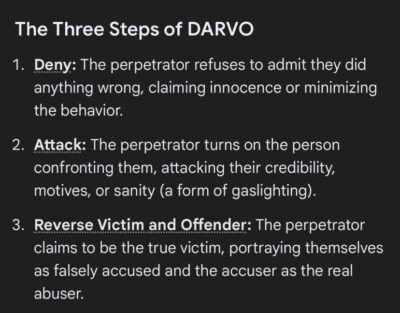 weight.
The devil made and all of her “failings” made him do it. All of the blame allows them to keep their “good guy” image
while the “monster” takes the fall.
Racism & The “Evil” Outlier: We do this with systemic racism, too. White people point to “evil” individuals (the devilish outliers) so we don’t have to look at the system we all live in.
It is not the mass incarceration, the intentional poverty, the diversity, equity, and inclusion that never actually fully trickled down to Black people anyway, or the lack of financial reparations that have been paid to other groups.
It is the “music.” It is the clothes. It is the culture. It is the voice.
It is the insistence on existence.
If we blame “evil,” we don’t have to talk about responsibility.
| The Label | The Scapegoat | The Real Truth |
| The Blues | “The music got a hold of me.” | I am using art to process my trauma and my choices. |
| Domestic Abuse | “My temper is a monster.” | I am choosing to use power and control to harm you. |
| Systemic Racism | “That’s just a few ‘bad seeds’.” | The structure is designed to benefit some at the expense of others. |
Whether it’s a blues song about a crossroads or a partner apologizing for “losing their mind,” the mechanic is the same: If I can blame a spirit, I don’t have to change my soul. Accountability is the only thing the “devil” is actually afraid of.
Because once you own the choice, the “demon” loses its power to hide you.
You’re not being “the bigger person” when you allow disrespect to slide.
There is a difference.
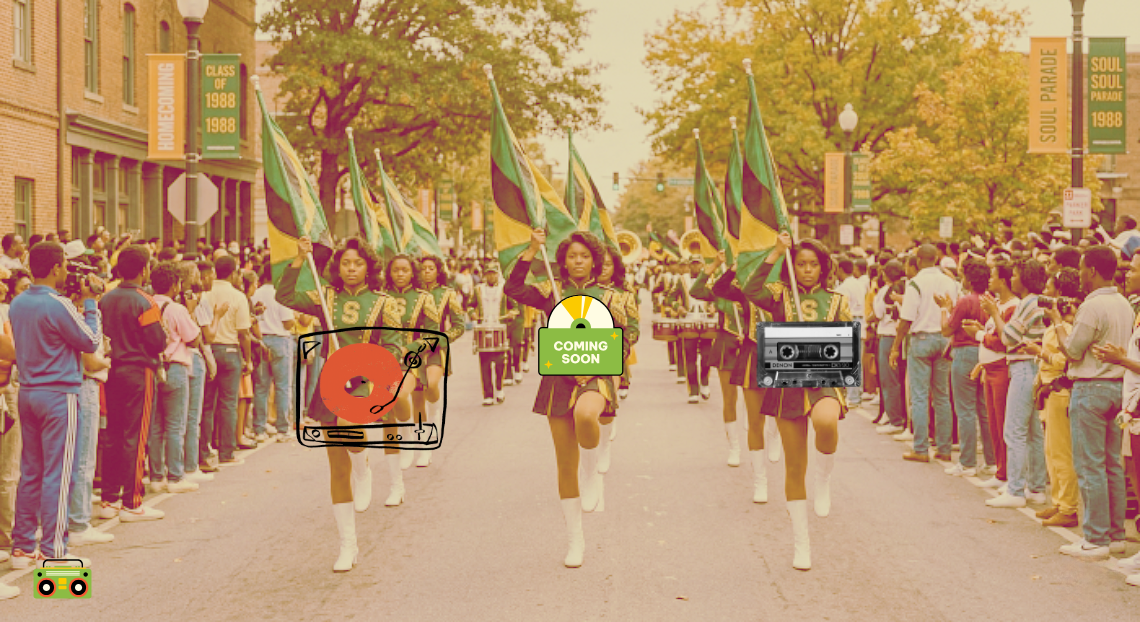
Our most recent podcast episode….. Black Marching Band History: The Rhythm of Resistance
Category: History / Society & Culture / Personal Memoir
Episode Summary
What happens when you take the rifle out of a soldier’s hand and replace it with an instrument? You don’t get silence—you get a revolution.
In this episode, Tonya GJ Prince deconstructs the hidden, radical history of the Black American marching band. We go back to a time where Black men were “relegated” to the band as a form of military restriction. We explore how those ancestors refused to be dull, transforming heavy conduit poles and brass instruments into a display of style, poise, and undeniable dignity that the world had never seen.
But the music didn’t just survive on the field; it survived because of the community that surrounded it. Tonya shares a deeply personal look into her own journey, honoring the specific Black women—the matriarchs and protectors—who stood as a human shield around the band members in her life.