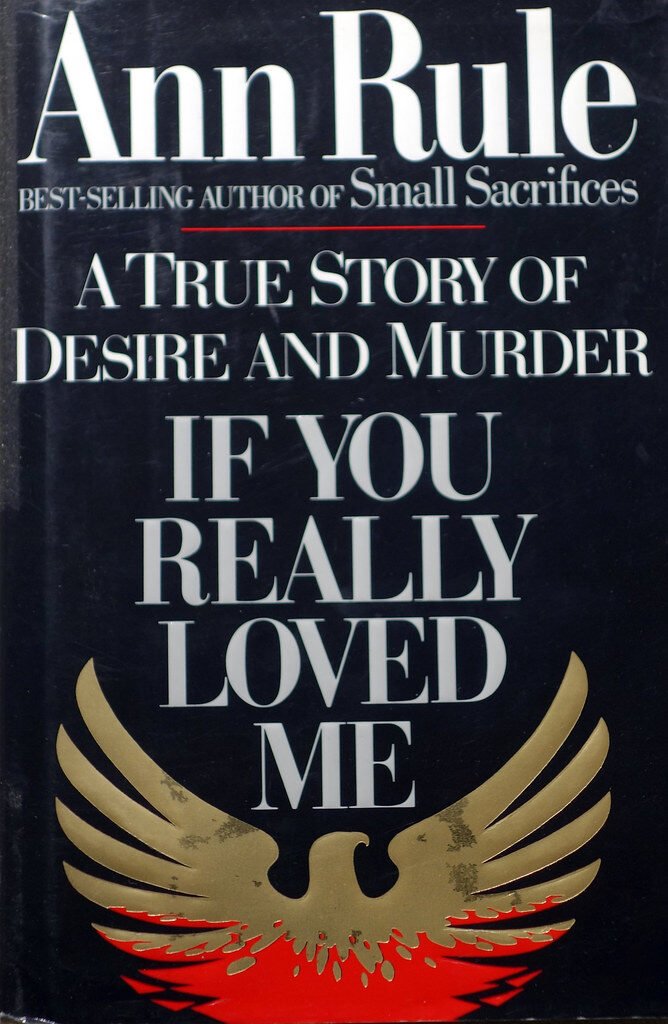
Ann Rule is one of my faves. I liked her long before I started hearing about her connection to Ted Bundy. Her insight into the tragic stories she told
 Ann Rule is one of my faves. I liked her long before I started hearing about her connection to Ted Bundy. Her insight into the tragic stories she told was just on another level. It was as if she were a member of her subject’s close circle. So many years later, and her stories still gut-punch me. She helped change the way many people understood victims, offenders, and the complicated spaces where violence happens.
Ann Rule had a rare ability to hold two truths at the same time:
Ted Bundy could have been someone she knew and cared about, and he could have been capable of horrific violence.
Her background also mattered. Before becoming a bestselling author, she worked with people in crisis. She understood fear, trauma, desperation, and the ways people reveal pieces of their lives when they are looking for help. That gave her writing a different depth than someone who was simply fascinated by violence.
There is also something deeply human about her story: she had to face the humiliation and grief of realizing that someone she trusted had deceived her. Many people might have retreated from that experience. Instead, she used it to educate others.
One of the enduring lessons from Ann Rule’s work is:
A person’s public goodness is not the same as private integrity. Character is revealed through patterns, accountability, and how someone treats people when there is nothing to gain.
The Stranger Beside Her: What Ann Rule’s Experience With Ted Bundy Revealed About Trust, Manipulation, and Hidden Danger
When Ann Rule first met Ted Bundy, she did not meet a monster.
She met a young man volunteering beside her at a crisis hotline.
He was intelligent.
He was polite.
He was calm under pressure.
He helped people who were suffering.
To Rule, he appeared to be the kind of person society teaches us to trust: someone offering comfort during another person’s darkest moments.
Years later, she would learn that the same man she had worked beside was responsible for the murders of numerous young women.
Her book The Stranger Beside Me became one of the most haunting accounts in true-crime history because it was not written from the outside looking in.
It was written by someone who knew him.
Someone who laughed with him.
Someone who trusted him.
Someone who had to reconcile the person she knew with the crimes he committed.
Here are 12 of the most disturbing insights from Ann Rule’s writings about Ted Bundy.
1. The Most Dangerous People May Not Look Dangerous
One of Rule’s biggest revelations was that Bundy did not fit the image people often imagine when they think of a violent offender.
He was educated.
He was articulate.
He was socially skilled.
He appeared ambitious and caring.
Rule’s experience challenged the idea that evil always announces itself.
Sometimes the person who causes harm is not the stranger lurking in the shadows.
Sometimes it is the person who has learned how to appear safe.
2. Helping Others Does Not Automatically Reveal Someone’s Character
Bundy’s volunteer work at the Seattle Crisis Clinic deeply disturbed Rule in hindsight.
He was involved in helping people during moments of emotional crisis.
That contradiction became one of the most chilling parts of his story.
Rule showed how important it is to separate:
“What role does someone perform?”
from:
“How does someone actually behave when no one is watching?”
A helping profession can reveal compassion.
But a title, position, or reputation cannot guarantee it.
3. Charm Can Become a Tool of Access
Rule described Bundy as charismatic and socially comfortable.
That charm was not just a personality trait. In hindsight, it became part of the way he moved through the world.
He knew how to appear approachable.
He knew how to gain trust.
He understood how people responded to someone who seemed intelligent and vulnerable.
The lesson is uncomfortable:
Charm is not the same thing as goodness.
4. Intelligence Does Not Protect Someone From Becoming Violent
Bundy was often described as intelligent and capable.
But Rule’s writing demonstrates something important:
A person can be intelligent and still be cruel.
Education does not erase entitlement.
Professional success does not erase dangerous behavior.
Social skills do not equal empathy.
A person’s ability to impress others is not proof of their ability to love others.
5. People Often Explain Away Warning Signs
One of the painful themes in Rule’s writing was how difficult it was to accept that someone familiar could be capable of horrific acts.
Humans naturally try to preserve their understanding of people they know.
We think:
“He would never do that.”
“He does not seem like that kind of person.”
“He helped people.”
But harmful people often survive because others struggle to connect the public image with the private reality.
6. Victims Are Often Targeted Through Trust
Bundy’s crimes forced many people to confront a difficult reality:
Predators do not always gain access through force.
Sometimes they gain access through appearing harmless.
They use familiarity.
They use sympathy.
They use social expectations that encourage people to help.
This is why safety education often emphasizes boundaries, intuition, and not feeling obligated to assist someone simply because they appear vulnerable.
7. A Person’s Reputation Can Become a Shield
Bundy benefited from the fact that people saw him as a “good person.”
He was someone’s friend.
Someone’s classmate.
Someone’s coworker.
Rule’s account shows how community perception can sometimes protect the wrong person.
A positive reputation should be examined alongside behavior, not used as a replacement for examining behavior.
8. Rule Experienced the Pain of Betrayal by Familiarity
One of the most human parts of Rule’s story was her struggle with betrayal.
She was not simply researching a criminal.
She was processing the fact that someone she personally knew had deceived her.
That experience shaped much of her later writing about crime and human behavior.
The frightening truth:
Sometimes the hardest person to see clearly is the person standing close by.
9. Manipulation Often Happens Before the Crime
Rule’s writings contributed to a larger understanding of how offenders can create a public identity that separates them from their actions.
Before someone harms others physically, they may spend years learning how to:
gain trust,
manage impressions,
avoid suspicion,
create excuses.
The public mask often comes first.
10. Communities Must Look Beyond “He Seems Nice”
One of the strongest lessons from Bundy’s case is that safety cannot be built on personality assessments alone.
People who protect children, vulnerable adults, or victims need systems:
accountability,
transparency,
reporting procedures,
boundaries,
independent oversight.
Good intentions are not enough.
11. Rule Showed That Evil Can Exist Beside Ordinary Life
Perhaps the most haunting revelation was how ordinary Bundy seemed.
He was not living outside society.
He was inside it.
He had relationships.
Goals.
Conversations.
Responsibilities.
That ordinary appearance became part of what allowed him to remain hidden.
12. Trust Must Be Paired With Discernment
Ann Rule did not conclude that nobody should trust anyone.
Her writing offered a more difficult lesson:
Trust should be earned, observed, and supported by accountability.
The question is not:
“Does this person seem nice?”
The better question is:
“What patterns do they show over time?”
Because safety is not created by believing everyone is dangerous.
It is created by refusing to ignore reality when warning signs appear.
Reflection
Ted Bundy’s story remains disturbing because it forces society to confront a truth many people do not want to accept:
The people who harm others are not always recognizable.
Sometimes they are charming.
Sometimes they are helpful.
Sometimes they are admired.
And sometimes the person who looks safest is the person who requires the most careful attention.
Affirmation:
I do not measure safety by appearances alone. I honor wisdom, boundaries, and the quiet voice inside me that notices what others overlook.
Journal Question:
Have I ever been taught to ignore my own concerns because someone “seemed like a good person”? What would it look like to trust both compassion and discernment?