updated from November 7, 2023Some advocates for women and girls are not pleased with how we are talking about strangulation. Strangulation is ofte
updated from November 7, 2023
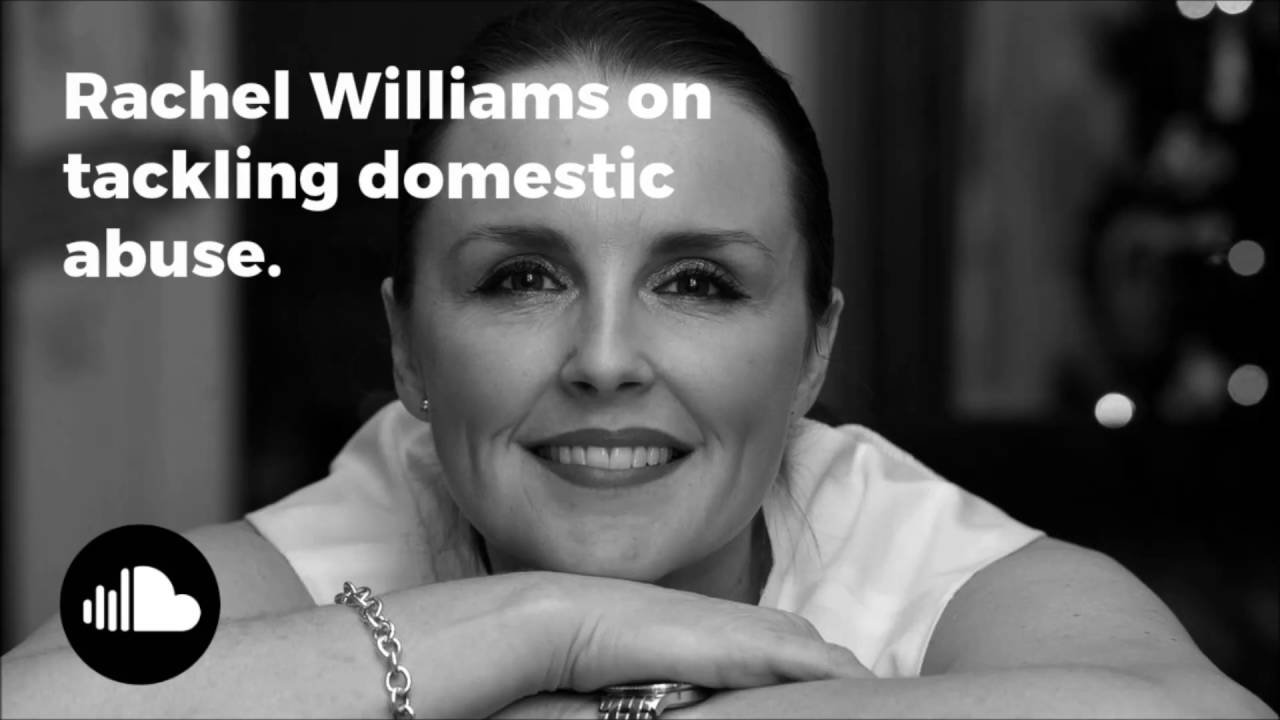
Some advocates for women and girls are not pleased with how we are talking about strangulation. Strangulation is often viewed as a very casual thing these days. Too few appreciate how dangerous it truly is. Until Rachel Williams and I connected on social media, I wasn’t aware of some of these details.
A major report published yesterday focuses on the normalization of so-called sexual “choking” among young people, while criminal-justice systems are increasingly treating non-fatal strangulation as a major lethality warning sign.
As we commonly say these days, “Words mean things.” Choking and strangulation are not medically the same thing. Choking is an internal airway obstruction, such as food. External pressure on the neck is strangulation, even when people casually call it “choking.”
10 startling statistics about strangulation
A woman who has previously been strangled by an intimate partner had about 7.5 times the odds of later being killed by that partner. The landmark case-control study found an odds ratio of 7.48 for completed homicide. This is the research behind the often-repeated “750%” figure.
Prior strangulation was associated with about 6.7 times the odds of an attempted homicide. In other words, strangulation is not merely another form of assault. It can be a powerful marker of escalating lethality.
Among women in that homicide study, 43% of those who were killed had experienced prior non-fatal strangulation. Among women who survived an attempted homicide, the figure was 45%, compared with 10% of the abused control group.
A person can lose consciousness in fewer than 10 seconds. This helps explain why strangulation can become medically catastrophic so quickly.
Death can occur within minutes. A systematic review reports loss of consciousness in roughly 10–15 seconds and death potentially within 3–5 minutes.
It can take only about 4 pounds of pressure to obstruct the jugular veins. Approximately 5–11 pounds can obstruct the carotid arteries. That is one reason the idea that someone can reliably perform “light” or “safe” strangulation is so dangerous.
In specialized strangulation case data, 38% of victims reported losing consciousness and 70% believed they were going to die. The same resource reports that 97% were strangled manually, using hands.
An analysis of 396 published UK Domestic Homicide Reviews found 74 with a history of non-fatal strangulation. In 49% of those cases, the person who had committed the strangulation later killed that same victim. That is a particularly sobering finding for risk assessment.
England and Wales recorded 44,426 strangulation-and-suffocation offences in the year ending June 2025. That was up from 23,817 in the year ending June 2023, although official statistics combine strangulation and suffocation and therefore cannot tell us how many were strangulation alone.
About 9 in 10 strangulation incidents prosecuted in England and Wales are linked to domestic abuse, according to CPS data. Charges under the newer strangulation/suffocation offence climbed from 1,483 in 2022–23 to 8,545 in 2024–25.
The increase in recorded offences and charges does not necessarily mean strangulation itself suddenly increased sixfold. The standalone offence, improved recognition, training and charging practices can bring conduct that was previously hidden or charged differently into the statistics.
Research discussed this week reports that young people may encounter strangulation during sex remarkably early. Researcher Debby Herbenick told The Guardian that when college students were asked when they first learned about it, the average age was 15. Her studies also found some people reporting repeated exposure dozens or even hundreds of times. Researchers are increasingly examining possible neurological consequences of repeated strangulation.
Rachel Williams: Survivor, Advocate and Founder of Stand Up to Domestic Abuse
Rachel came to our attention here on WESurviveAbuse around 2020. Rachel Williams is a Welsh domestic-abuse Survivor, campaigner, qualified Independent Domestic Violence Adviser (IDVA), and founder of Stand Up to Domestic Abuse (SUTDA).
For 18 years, Rachel lived with domestic abuse that included coercive control and serious physical violence. In 2011, after she had left the relationship, her former husband entered the Newport hair salon where she worked and shot her with a shotgun, leaving her with life-altering injuries. He later died by suicide. Weeks after the attack, Rachel’s 16-year-old son, Jack, also died by suicide.
Rachel transformed devastating personal experience into public advocacy. She has campaigned for stronger responses to domestic abuse, greater recognition of coercive control and non-fatal strangulation, and better support for children and families living with the consequences of domestic violence. She founded SUTDA in 2021 and continues to use her experience and professional training to educate the public and push institutions toward earlier, more effective intervention.
Her work carries a difficult but essential message: domestic abuse must be understood as a pattern of escalating behavior, and warning signs such as strangulation, threats, stalking and coercive control must be taken seriously before violence becomes lethal.
(From X): Nonfatal strangulation timeline:
- 6.8 seconds loss of consciousness
- 14 seconds an anoxic seizure
- 15 seconds bladder incontinence
- 30 seconds bowel incontinence
- All deaths between 62-152 seconds
You only need the pressure of a handshake to kill someone.
It’s the second (most likely) cause of homicide in females after stabbing. Note: Stats may differ in the United States where gun violence is a leading cause of injury and death. However, possibly due to more and earlier exposure to pornography it is becoming normalized among young people.
Non fatal strangulation timeline:
6.8 seconds loss of consciousness
14 seconds an anoxic seizure
15 seconds bladder incontinence
30 seconds bowel incontinence
All deaths between 62-152 secondsYou only need the pressure of a handshake to kill someone.
It’s the second cause… pic.twitter.com/v6aK0QTN1R
— Rachel Williams (@Rachel_SUTDA) October 22, 2023