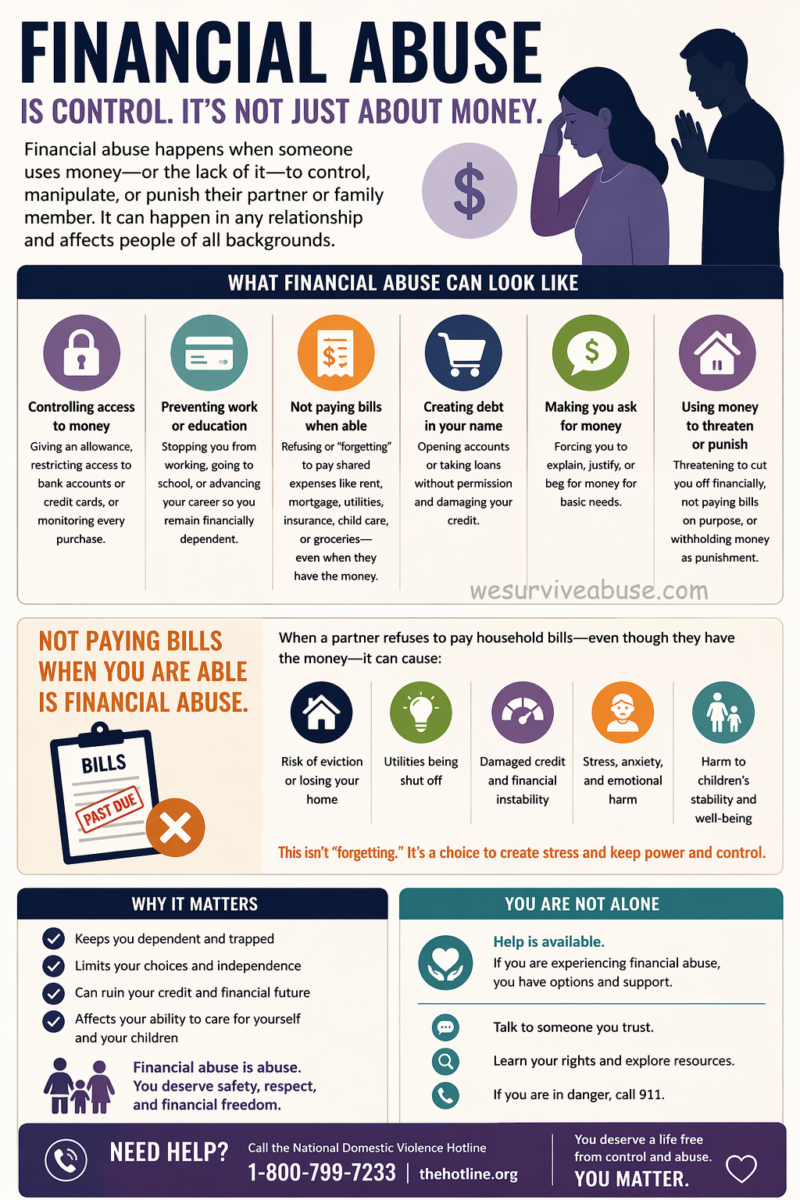
Financial abuse doesn’t always look like taking money. Sometimes it looks like refusing to carry your part—knowing the damage will fall on her and you
Financial abuse doesn’t always look like taking money. Sometimes it looks like refusing to carry your part—knowing the damage will fall on her and your children.
Judge: ‘Mother’s grit’ led to kids’ resilience as Justin Fairfax withdrew
Financial abuse includes refusing to pay bills when someone has the ability to do so—especially when it creates instability, fear, or dependence for the other person.
It’s not just about money. It’s about impact and intent.
When bills go unpaid on purpose, it can:
Damage credit and make it harder to rent or secure housing
Lead to utilities being shut off, creating unsafe living conditions
Force the other person to scramble, cover costs, or go into debt
Create chaos that keeps someone focused on survival instead of leaving.
And there’s a pattern behind it.
The same person may:
Have money for themselves, but not for shared responsibilities
Delay or refuse payments right before something important (court, moving, school, work)
Use unpaid bills as leverage or punishment
That’s not forgetfulness.
That’s control through instability.