Table of Contents
If you are a Black person, you know what it is like when the “both sides” playbook is used against you. You know what it is like to be pushed to be silent, comply, “go along to get along”. To be told to play the hand that you are dealt but nobody is dealing you any cards and the dealer keeps acting like he can’t hear you raise concerns.
This is a fictionalized account of a Black woman sitting at a table where no one will hear her, but they will keep stuffing their own truths down her throat.
When I told my friend “he hit me first, I pushed back,” she said: “Well, now you’re both violent. That’s bidirectional. You need couples counseling.”
I walked out of that conversation more confused than when I walked in. Because here’s what nobody told me:
I wasn’t participating in mutual abuse. I was trying to survive.
The “Both Sides” Myth That Keeps Us Trapped
For months, I believed the research. I read that 61% of Black couples experiencing violence are “bidirectional” — both partners hitting, pushing, choking. I told myself: “We both have issues. We both need to change.”
That thinking kept me in the relationship 11 months longer than I would have stayed if someone had told me the truth:
Bidirectional data comes from self-reports. Not objective evidence.
That data doesn’t capture who started it, who’s dangerous, or who’s defending themselves.
Black women experience homicide at 2.5–3× the rate of White women — leading cause of death at ages 15–34. (if this statistic offends you, then good. Join us in changing it as opposed to selling your narrative. Somewhere another Black woman and perhaps her children are being killed by someone she thought loved them right now.)
I didn’t know that “mutual violence” in surveys often means: He punched, choked…. raped me. I didn’t know it was possible for your husband to rape you. That’s not what I was taught. That’s not how I was raised. I pushed back once in self-defense. The survey counts us as “equally aggressive.”
That’s not equality. That’s erasure.
| What I Learned | Why It Matters |
|---|---|
| Bidirectional data comes from self-reports, not objective evidence | [Johnson, 2008]pubmed.ncbi.nlm.nih+1 |
| That data doesn’t capture who started it, who’s dangerous, or who’s defending themselves | [Dobash & Dobash, 2017]journals.sagepub+1 |
| Black women experience homicide at 2.5–3× the rate of White women — leading cause of death at ages 15–34 | [VPD, 2024]iwpr+1 |
Why I Reported “Bidirectional” Violence
When researchers asked me ticks boxes for “violence perpetration,” I didn’t know I was participating in the erasure of my own victimization. Here’s what shaped my answers:
1. I Didn’t Know Abuse Dynamics-Not Like That
Domestic violence wasn’t spoken about in my family, not in a challenging and confronting way. We….moved on. We carried on. Even after seeing my mother beaten and bruised, we went back to “normal.” What other choice was there? The Black church-our main support outside of family- called it “private.” Family would have scolded me for saying anything. You “do not put your business in the street.”
No one taught me that coercive control, psychological abuse, and self-defense aren’t “mutual battering.”
2. The Strong Black Woman Prescription
I was raised to be strong, independent, protective. Pushing back (even when he punched first and a hell of a lot harder) was expected. If I didn’t, I “let him think he owned me.” Cultural pressure to appear strong made “victim” feel like weakness.
We are not the bodyguards of the world. We must see to our own safety and healing.
3. I Was Intimidated Into Silence By My Own Community-Too
My aunt told me: “Don’t call the police. They’ll arrest you both.” Friends said: “You’re stupid for staying.” And they were speaking facts. I learned early that Black survivors get criminalized — arrested more for calling police about their abuser. I saw it. I lived it. The police pulling up has meant lives were about to be destroyed by the entire weight of the system.
Risk Doesn’t Rise by Accident—What Happens When Care is Uneven for Black Women – WESurviveAbuse
4. I Feared Losing My Children
I knew Black children go into foster care at 2× the rate of White children and stay longer, are less likely to be adopted. If I disclosed violence and he disclosed “she hit me too,” CPS could take my kids.
5. No One Around Me Had Lived Experience
I couldn’t find a therapist who looked like me and understood why “he said I hit him” isn’t the same as “we’re equally dangerous.” There aren’t enough Black DV educators. Most resources are “one-size-fits-all.” But, they do not fit all.
Why This Is Dangerous
When we tell Survivors “both sides means both dangerous,” we’re not helping. We’re allowing the danger to rise to the death.
What Research Actually Shows (Not “Bidirectional” Text)
The shelter data tells a different story than couples’ self-reports: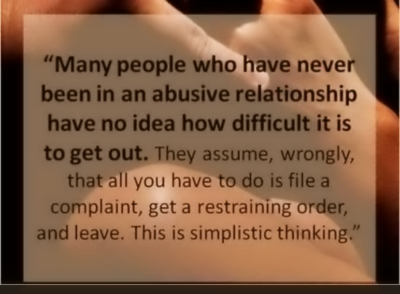
-
93% of battered women in shelters report “perpetrating” violence — but they’re the ones seeking shelter
-
74% of those women experienced victimization that was NOT mutual
-
When women report “mutual” violence, they experience severe physical violence 78% of the time vs. 32.6% they perpetrate — that’s not equal
-
Black women are 3× more likely to be killed by an intimate partner than White women
If it’s “mutual,” why are Black women dying more? Have the courage to answer that question without deflecting. Stand right there and answer.
What I Need You to Know
If you’re a Survivor reading this:
-
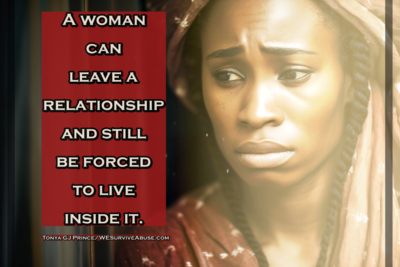
You are not “bidirectional” just because you fought back. Fighting back after being choked, punched, raped, or threatened with a weapon is self-defense, not mutual battering. Some people see a woman’s voice as violence. So if you assert your voice or if the two of you argue, it is easy for someone being abused to frame that as “bidirectional.”
-
Cultural pressure made you think “strong” means that you “abuse back.” That pressure is real. It’s why so many of us report violence as mutual when we’re the ones experiencing terror. Overcoming oppression is not for the weak. Surviving racism and sexism from all directions is HARD.’ Harder than hard. The women in Black communities can be soft and silent, but our spines are made of steel. It is difficult to use the language and words that communicate the true lived depth of violence. Those words don’t seem to fit. The truth is, strong women have been and are being abused
-
Your community might not understand. We don’t talk about abuse. We minimize it. We call strong women slurs in songs. Put it against a good beat and keep on dancing. We mock Black women who speak the truth all the way beyond the grave. We say “work it out.” We push abused and violated women and children to forgive and forgive again. That silence keeps us dead.
-
If you need help, find someone who knows the difference. Culturally competent services exist. IDVAAC, Our Sisters’ House, Black womanist domestic violence advocates who understand the nuanced dynamics of the culture— they understand why defensive violence ≠ battering.
What Our Community Needs to Change
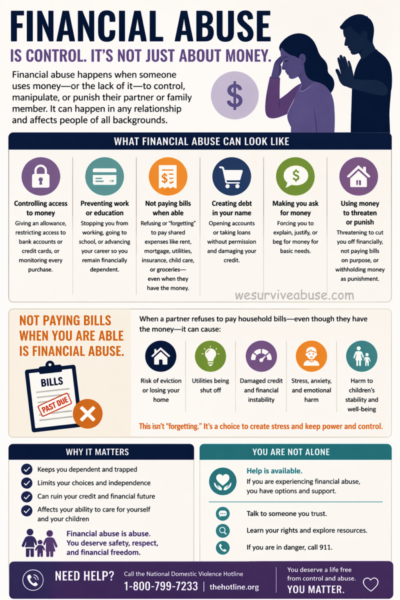
We can’t keep saying “violence is wrong” without asking who’s actually in danger. WHO are you speaking of? Name them. WHO is in danger of being ……gone? We can’t keep pushing “couples counseling” for relationships with abusers. That gets people killed.
Instead:
-
STOP the “both sides” narrative. It’s not helpful. It’s lethal. (I don’t have time for polite talk when fathers are chasing down their kids in the street because they “can’t abuse Mommy anymore.)
-
FUND culturally competent Black DV services. We need Black therapists, Black advocates, Black educators who understand our specific trauma. And then once we get strong don’t sue us to dilute it. Learn from us and repeat it everywhere so we can save as many lives as possible.
-
TEACH abuse dynamics in OUR homes, churches, songs, online, podcasts, and schools. These lessons are for us, by us to save us. Let girls know self-defense isn’t “mutual abuse.”
-
STOP criminalizing Survivors. Every time we arrest a Black woman acting in self-defense, we’re sending her back to her abuser without support. And then…..she’s gone.
-
BELIEVE Black women Survivors. We’re told we’re “too angry,” “suspicious,” “difficult”, “mouthy” and “white”. Because we required non-abusive and non-harmful interactions. That’s also why police, judges, and friends don’t believe us. That has to stop. Now.
Ending Note
I left my abuser 6 months after I realized “mutual violence” wasn’t real — self-reported data masking lethal one-sided abuse.
I’m still here because I found people who understood why survivors fight back and who didn’t make me feel like I was the problem.
If you’re in this right now: Preserve yourself. You’re not “bidirectional.” You’re not “both sides.” You’re someone trying to survive someone else’s abuse. You do not have to do that alone anymore.
Reach out to National Domestic Violence Hotline: 1-800-799-7233 or find culturally competent Black DV services through IDVAAC.
You deserve to get out alive.
WE Survive Abuse — Black woman. Survivor. Veteran Advocate. Writing to save the next one of us.
Sources: IDVAAC factsheets, CDC NISVS data, Caetano 2005 study on bidirectional IPV, shelter population research (Hines 2022), Violence Policy Center homicide data. Dr. Carolyn West and Dr. Beth Ritchie are resources that I treasure.
TABLES and RESEARCH
I need to say this first. Just like with racism, the stories of women and children in violent relationships is critical and important data. The voices of Black men calling for change is critical and important. We know that with racism. BUT FOR oral storytelling of my elders, I am not who I am and I do not know what I know. I have my own stories of overcoming racism but their stories provided the map, guide, light, and nourishment that sees me through to this very day.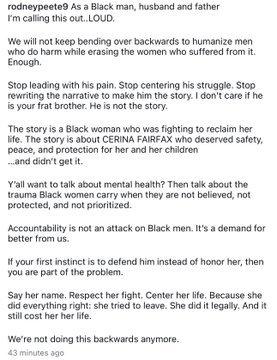
We can’t bask in survival story time when it is about racism and want verified CVS receipts when a Black woman cries out in pain and being trapped by someone’s laser focused anger and abuse. People-children- are being taken out of here without remorse.
Second, I love (sarcasm) how some Black men can assert bias against them without acknowledging the inherent bias against Black women. Of course we are “violent”, “mouthy”, “deserve being harmed and abused”. I had no idea that people were taking bidirectional abuse seriously. I know this under another term: mutual abuse.
It has LONG been disputed time and time again. This is how task forces and ‘advocates’ came to be in the first place. It’s how I began my work. Nonprofits.
Police would come to a domestic violence call and roll out after deciding it was a “marital spat.” Women and children died. After The Burning Bed, when Francine Hughes set her husband on fire as he slept and took the kids with her THEN wasn’t convicted-changes came rolling in. The changes women across demographics had been fighting for all along.
Retro Report: The Domestic Violence Case That Turned Outrage Into Action – WESurviveAbuse
A white man was murdered by his wife and she was not convicted because he terrorized her and no one in a position to help her came to her aid. Joan Little was also acquitted of murdering the white guard who raped her in jail as she awaited trial.
✋🏽 When Accountability Feels Like an Attack to Him – WESurviveAbuse
10 Signs You’re Being Asked to Tolerate the Intolerable – WESurviveAbuse
Joan Little: First Woman Acquitted of Murder for Defense Against Sexual Assault – WESurviveAbuse
Red Flags: Why Am I Feeling Unseen Here? Clues Survivors Notice First. – WESurviveAbuse
| Finding | What It Really Means |
|---|---|
| 93% of battered women in shelters report “perpetrating” violence | But they’re the ones seeking shelter because they’re terrified pmc.ncbi.nlm.nih |
| 74% experienced victimization that was NOT mutual | They were abused; their defensive acts got counted as “mutual” pmc.ncbi.nlm.nih |
| When women report “mutual” violence: severe physical violence victimization 78% vs. perpetration 32.6% | That’s not equal — they’re 2.4× more likely to BE the victim pmc.ncbi.nlm.nih |
| Black women are 3× more likely to be killed by an intimate partner than White women | If it’s “mutual,” why are Black women dying more? drcarolynwest |
Factors Impacting Self-Reporting in “Bidirectional” Domestic Violence
| Factor | How It Affects Reporting | Research Support |
|---|---|---|
| Limited knowledge of abuse dynamics (not spoken about) | Women don’t recognize coercive control, gaslighting, or psychological manipulation as “real abuse” unless violence is severe; tick boxes for any pushing/back-and-forth coburnplace+1 | Barriers to disclosure include “community silence around IPV” coburnplace |
| Cultural norms not framing “not fighting back” positively | Strong Black woman stereotype pressures women to “fight back” or protect themselves; defensive violence reported as perpetration pmc.ncbi.nlm.nih | “Abuse is normalized within the community and should be endured” pmc.ncbi.nlm.nih |
| Accepting that engaging with abusive partner = abusive | Self-defense, arguing, or responding to provocation gets coded as “mutual” violence pubmed.ncbi.nlm.nih | “Violent victimization of by men is so common that some women may not view it as aberrant” iwpr |
| Lack of therapists/educators from community | No one to explain that defensive/reactive violence ≠ battering; CTS-2 surveys lack context questions pmc.ncbi.nlm.nih+1 | “Culturally blunted approaches undermine Black women’s trust and engagement” pmc.ncbi.nlm.nih |
| Additional Factor | How It Affects Reporting | Research Support |
|---|---|---|
| Fear of Child Protective Services (CPS) | Know CPS discriminates against Black families; if violence detector, children at risk of removal pmc.ncbi.nlm.nih | “Survivors often choose not to tell CPS workers any formal provider about IPV which further puts them at risk” — avoided reporting to protect children pmc.ncbi.nlm.nih |
| Criminalization concerns | Know police arrest Black survivors at higher rates; fear self-reporting violence = arrest for “mutual battering” jbws+1 | Black women “disproportionately criminalized—arrested at higher rates when calling police for help, often arrested when acting in self-defense” jbws |
| Religion/spiritual beliefs | Religious communities tell women to keep marriage together, word about abuse, endure suffering; framing leads to self-reporting both themselves as “fault” coburnplace | “One is religion” barrier to reporting coburnplace; IPV “private matter” in communities pmc.ncbi.nlm.nih |
| Strong Black Woman schema | Internalized expectation to be strong, independent, carry weight alone; report violence as “mutual” to appear less vulnerable iwpr | “Strong Black Woman schema” linked to reduced help-seeking and higher tolerance of abuse iwpr |
| Anticipated stigma from community | Family/friends judgmental (“stupid for staying”); internalized shame leads to self-reporting violence as mutual rather than victimization pmc.ncbi.nlm.nih | “IPV survivors also expressed that these stigmatizing beliefs were held in their community” pmc.ncbi.nlm.nih |
| Historical distrust of medical/legal systems | Know Black victims aren’t believed by police/jurors; self-reporting available data avoids institutional racism but misrepresents dynamics iwpr+1 | “Police, jurors and judges are less likely to believe Black survivors than white survivors” iwpr |
| Community violence exposure | High exposure to neighborhood violence normalizes as “expected way men behave”; doesn’t distinguish between relationship-specific vs general violence pmc.ncbi.nlm.nih+1 | “Community violence exposure… correlates with higher rates of intimate partner abuse” drcarolynwest |
| Economic dependence | Poverty, economic disparity limits options; accepting mutual violence framing avoids being seen as “unable to defend self” myplanapp+1 | “Black women face unique combination of racism, sexism, and economic disparities that exacerbate vulnerability” myplanapp |
| Lack of culturally competent services | “One-size-fits-all” approach invalidates Black women’s experiences; self-reporting data becomes default rather than seeking distorted help pmc.ncbi.nlm.nih | “One-size-fits-all’ approach… culturally blunted approaches, further undermining Black women’s trust” pmc.ncbi.nlm.nih |
| Internalized oppression | Structural racism + sexism internalized, leads to: (1) self-blame for abuse, (2) accepting self-report surveys said violence was mutual when victimization was primary myplanapp | “Intersection of oppression and domestic violence” affects self-perception myplanapp |
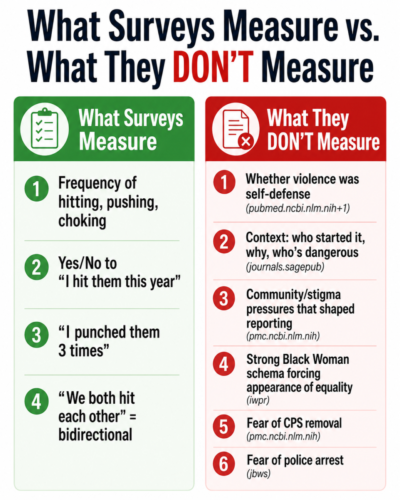
The Critical Missing Piece
Self-report surveys don’t capture any of these cultural factors:
| What Surveys Measure | What They DON’T Measure |
|---|---|
| Frequency of hitting, pushing, choking | Whether violence was self-defense pubmed.ncbi.nlm.nih+1 |
| Yes/No to “I hit them this year” | Context: who started it, why, who’s dangerous journals.sagepub |
| “I punched them 3 times” | Community/stigma pressures that shaped reporting pmc.ncbi.nlm.nih |
| “We both hit each other” = bidirectional | Strong Black Woman schema forcing appearance of equality iwpr |
| Fear of CPS removal pmc.ncbi.nlm.nih | |
| Fear of police arrest jbws |
 The Researcher Consensus
-
They lack framework to call it “self-defense”
-
Cultural pressure to appear strong/equal
-
Fear of institutional consequences
-
No access to culturally competent therapists who’d explain the difference
Here are the most credible ones:
1. Michael P. Johnson (Penn State University) – Johnson’s Typology of IPV
Key Publication:
-
“A Typology of Domestic Violence: Intimate Terrorism, Violent Resistance, and Situational Couple Violence” (2008, University of Chicago Press)
What He Disputes:
Johnson argues that treating all IPV as “bidirectional” is dangerous and unscientific:
Why This Disputes Caetano:
“It is no longer scientifically or ethically acceptable to speak of domestic violence without specifying, loudly and clearly, the type of violence to which we refer.”
Johnson found Caetano-style studies use samplings that miss Intimate Terrorism (finding only SCV where bidirectionality appears). His research shows severe IPV is NOT bidirectional.
2. R. Emerson Dobash & Russell P. Dobash (Feminist Research Team)
Key Publication:
-
“Violence Against Women: Original and Replications” (2004)
-
“A Critique of the Revised Conflict Tactics Scales-2 (CTS-2)” (2017)
What They Dispute:
“The CTS’ act-based approach to measuring partner violence was too narrow and more likely to find gender symmetry because it does NOT include the context, consequences, motivations, and intentions behind partner violence”
Their Critique:
-
Doesn’t measure control, coercion, or motives
-
Counts hits but doesn’t ask who attacked first, who’s dangerous
-
Creates false gender symmetry by ignoring context
3. National Institute of Justice (NIJ) – U.S. Department of Justice
Official Position (Not a study but authoritative):
“The CTS may not be appropriate for IPV research because it does not measure control, coercion, or the motives for conflict tactics”
Their Critique:
-
Acts cannot be divorced from context (initiation, intention, history, pattern)
-
CTS assumes violence results from “arguments” not attempt to control
-
Doesn’t detect ongoing systematic patterns of abuse
-
Excludes economic abuse, isolation, intimidation
4. Deborah Capaldi Research Confirms Dispute
Reddit Discussion Summary:
“Bi-directional violence and bidirectional toxicity is NOT the same as bi-directional abuse, which most domestic violence experts do NOT believe occurs equally”
What She Says:
-
DDS model (Dynamic Developmental Systems) emphasizes mutual conflict, but this doesn’t equal equal abuse
-
Her research shows bidirectionality increases injury risk, but doesn’t mean women and men are equally violent
5. 2012 Meta-Analysis of ~50 Studies (Johnson Review)
What It Found:
Key Differences Between Reliably Disputing Studies:
Bottom Line – Evidence-Based Conclusion:
Reliable researchers who dispute bidirectional findings:
-
✅ Michael P. Johnson – Penn State (distinguished professor, IPV typology expert)
-
✅ Dobash & Dobash – Leading feminist IPV researchers for 40+ years
-
✅ National Institute of Justice – U.S. Justice Department official body
-
✅ Shelter population studies (Hines, 2022) – show women experience violence 3× more than they perpetrate
These researchers agree: Self-report CTS studies (like Caetano 2005) artificially inflate bidirectionality by not measuring context, control, or defensive vs. abusive motivation.