I thought about a woman I once served today. Back when I was serving people with disabilities. She crossed my mind because the day that she became
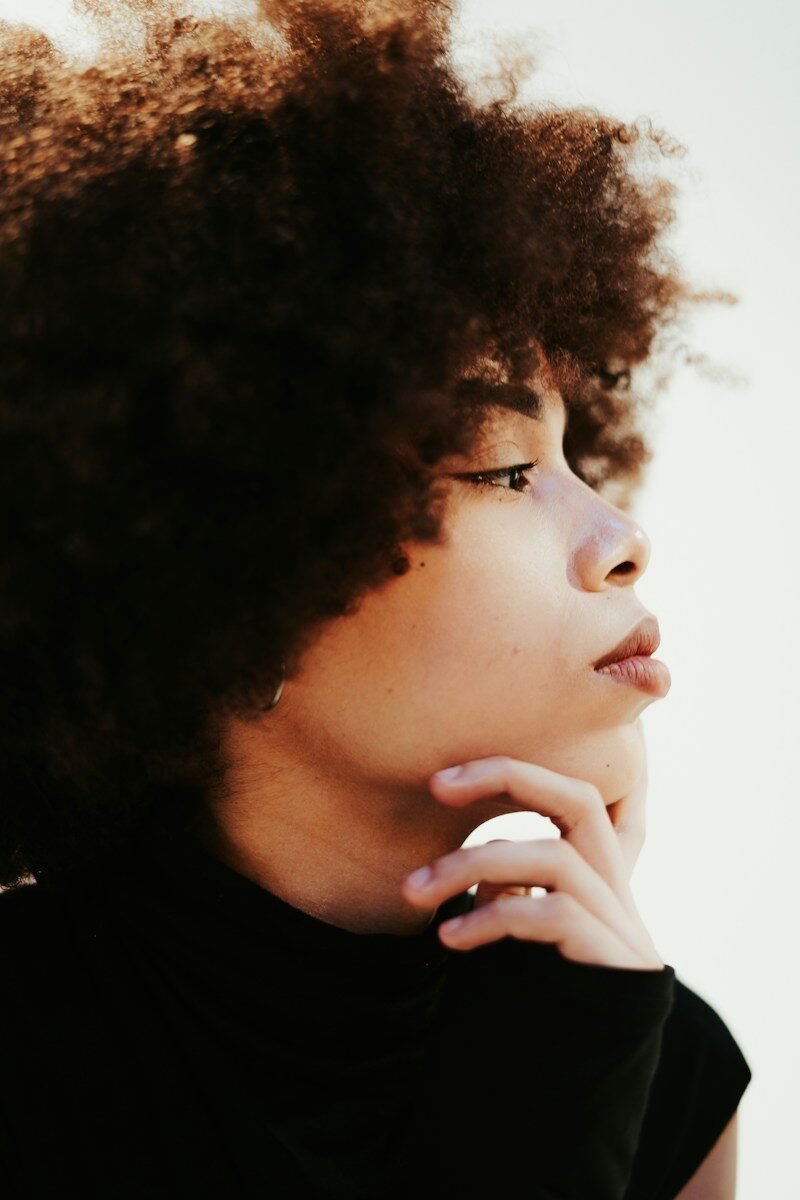
Photo by Gilda Gonzàlez
I thought about a woman I once served today. Back when I was serving people with disabilities. She crossed my mind because the day that she became paralyzed, she was heading to meet a guy for a holiday vacation. I remember our talks about how she was grieving her old life and self.
AND how she was navigating all the changes that come with aging as a woman. Definitely the cancer scares. She frequently crosses my mind during Breast Cancer Awareness Month.
I was young and still idealistic, but the idealism was coming apart at the seams. I remember being so disappointed with life. Hadn’t this woman been through too much already? Life can be rudely unfair. Just openly disrespectful.
There is something I have been struggling to put into words when men say they identify as women. Sometimes what follows is a description of external signs of femininity: clothing, presentation, softness, beauty, mannerisms, being perceived a certain way, or feeling an affinity with things our culture associates with women.
And I keep thinking about the women I have known.
I have worked with women with disabilities who had full lives, personalities, friendships, sexual desires, and dating lives. Some spoke openly with me about something much more complicated than whether they could find a date. They grieved being pursued differently after disability changed their bodies or changed how other people responded to them.
They could talk about that honestly. They did not need anyone to tell them that desirability does not determine womanhood. They knew better than that. But knowing better did not erase the grief of remembering how people once looked at them, flirted with them, chased them, touched them, or responded when they entered a room.
That is part of some women’s lives too. A woman does not become less female when life changes her body.
During Breast Cancer Awareness Month, I also think about women whose bodies have been changed by cancer and its treatment. Some women have undergone mastectomies. Some lose their hair during chemotherapy. Some live with scars, changes in sexual sensation, fertility consequences, weight changes, or an altered relationship with the body they had known for decades.
Some reconstruct their breasts. Some wear prostheses. Some wear their battle scars as is. Some are delighted with their choices, while others grieve what was lost, and many women carry emotions far more complicated than either of those descriptions can hold. A woman who loses her breasts has not lost her membership among women.
None of them needs to perform her way back into being a woman. If your definition of “woman” struggles to recognize women in all of our many beautiful variations, the women are not the problem. Your definition is.
That is where I have difficulty with an understanding of womanhood that appears deeply attached to the socially recognizable parts of being a woman while having remarkably little to say about the breadth of female human experience. I mean, it is so vast.
Women are not simply dresses, breasts, long hair, makeup, softness, curves, femininity, motherhood, heterosexuality, beauty, or being desired by men. We are also women after mastectomy. Women after hysterectomy. Infertile women. Disabled women. Elderly women.
Women with facial hair. Women whose bodies have been scarred. Women who never developed according to somebody else’s expectations. Women who have never been feminine a day in their lives.
Women who warrior on after a scorned lover set them on fire, shot them, or threw acid on them. ….left them with crippling injuries. Women who live in bodies wracked with pain after years of abuse.
Our variation does not require an explanation.
Race Has Already Taught Black Women What Stereotypes Can Do
But race. Right?
Yeah, yeah, yeah….Black female features have sometimes been measured against standards of femininity built around somebody else. And look. Let the somebody else’s be that as fabulously as they know how, while we get to be us. In case it slipped by you, we like to do ‘our’ thing.
Black women do not become less female because somebody else’s limited and knowledge-gapped idea of femininity was built without us in mind.
So when someone reaches for Black women as an example of women who can supposedly “look like men,” I am not willing to wave that away as an unfortunate choice of words. I hear the analysis underneath it. I hear you.
If your understanding of women is that shallow, you have not escaped stereotypes about women. You have walked directly into them, and you have brought racial stereotypes with you in your bag.
Breast Cancer Makes the Question Impossible to Avoid
Perhaps that is why Breast Cancer Awareness Month brings this into such sharp focus for me.
Imagine telling a woman recovering from a double mastectomy that breasts are among the things that make somebody socially recognizable as a woman. Imagine what that analysis sounds like beside the woman learning how to dress her changed body, the woman looking at herself without hair, the woman wondering whether her partner will still desire her, or the woman deciding that she does not want reconstruction at all.
Her breasts did not make her a woman before cancer. Their absence does not make her less of one afterward. She is still a vital female human being.
Women Are Whole Human Beings
So when someone tells me they understand women while their definition seems to recognize only selected pieces of external femininity, I am going to look more closely. Pause and hesitate. Because identifying with what society celebrates about women is not the same thing as understanding or caring about the lives of female human beings.
Why They Call It Identity Politics When We’re Just Naming the Wound – WE Survive Abuse
Who Decided Black Women Weren’t Feminine? – WE Survive Abuse
You Were Always Worth Loving—They Just Weren’t Capable of Giving It – WE Survive Abuse
He Set Her on Fire: Personal Story of Narcissistic Abuse Survival – WE Survive Abuse
Acid Is Not Just a Weapon—It’s a Message Meant to Silence Her Forever – WE Survive Abuse
Centering Safety: Honoring the Right to Request Female Carers – WE Survive Abuse
Dignity Is Not Bitterness: Elder Women Deserve Safety, Too – WE Survive Abuse
10 Signs Someone Is Using Shame to Control You – WE Survive Abuse