One of the most dangerous myths in the world is the belief that only “ignorant” people fall for propaganda.That is not true.Smart people can b
 One of the most dangerous myths in the world is the belief that only “ignorant” people fall for propaganda.
That is not true.
Smart people can be fooled. Educated people can be fooled. Good people can be fooled. People with degrees, titles, awards, ministries, platforms, and polished language can still be moved by fear, shame, belonging, urgency, and repetition.
Propaganda does not knock on the front door wearing a villain costume.
It often arrives dressed as compassion.
It arrives dressed as progress.
It arrives dressed as “everybody decent already agrees.”
It arrives dressed as “you do not want to be one of those people, do you?”
That is how it gets past the gate.
Critical thinking is not the belief that you are too smart to be fooled. Critical thinking is the humble discipline of admitting, “I am human, so I need a process.”
Ida B. Wells understood this deeply. She did not simply argue against lynching with emotion, although the emotion was righteous. She investigated. She gathered records. She interviewed witnesses. She studied the false stories used to justify violence. The Library of Congress notes that Wells traveled through the South investigating lynchings, using eyewitness interviews, family testimony, and records, and that her methods remain central to modern journalism.
Even a PhD does not make a person immune to propaganda.
It usually means they have deep training in a specific field. That is not the same as being equally skilled at spotting manipulation, media framing, emotional coercion, institutional pressure, groupthink, financial incentives, or ideological capture.
A brilliant chemist can be naïve about politics.
A brilliant historian can miss interpersonal manipulation.
A brilliant psychologist can still be shaped by professional culture.
A brilliant professor can still fear being excluded from the “right” circles.
A brilliant writer can still mistake elegant language for truth.
That is the part people do not like to admit.
Education can sharpen the mind, but it can also give people fancier tools for defending what they already want to believe. Some people do not become harder to fool. They become more skilled at explaining why they were never fooled in the first place.
That is the danger.
Propaganda does not only target “ignorant” people. That idea itself is propaganda-adjacent because it makes educated people feel safely above manipulation.
Propaganda often targets identity:
“You are the smart ones.”
“You are the compassionate ones.”
“You are the enlightened ones.”
“You are the brave ones.”
“You are the educated ones.”
“You are not like those other people.”
Once someone accepts that flattering frame, their guard can drop. Now they are not examining the message. They are protecting their self-image.
And academics are still human. They still have:
fear of professional punishment
desire for belonging
career incentives
peer pressure
institutional loyalty
political commitments
blind spots
unhealed wounds
ego
fatigue
social-media exposure
funding pressures
fear of being called harmful, outdated, immoral, or unserious
So yes, a PhD-level person can be fooled.
And sometimes, because of status, they can fool others more effectively without intending to. The difference is not “educated vs. uneducated.”
The difference is whether a person has humility, discipline, evidence standards, pattern recognition, courage, and the willingness to ask:
“Could I be wrong?”
“Am I protecting the truth, or protecting my group?”
“Am I afraid to say what I actually see?”
“Have I mistaken consensus for proof?”
“Who is not allowed to question this?”
That last question will tell you a lot.
Because truth can handle questions.
Propaganda needs protection from them.
That is the lesson.
Propaganda says, “React now.”
Critical thinking says, “Show me the pattern.”
Propaganda says, “Trust our side.”
Critical thinking says, “Truth does not need me to surrender my eyes.”
Propaganda gives you an enemy before it gives you evidence.
Critical thinking asks, “Who benefits from me believing this?”
For Survivors, this matters. Many Survivors have already lived under private propaganda. An abuser can create a whole little world where their version of reality is treated as law. They repeat the same stories. They punish questions. They reward compliance. They isolate people from outside perspective. They turn concern into betrayal.
That is propaganda at the household level.
So when we talk about propaganda, we are not only talking about governments, media, or politics. We are talking about any system that teaches people to distrust their own discernment while trusting someone else’s control.
A grounded proverb fits here:
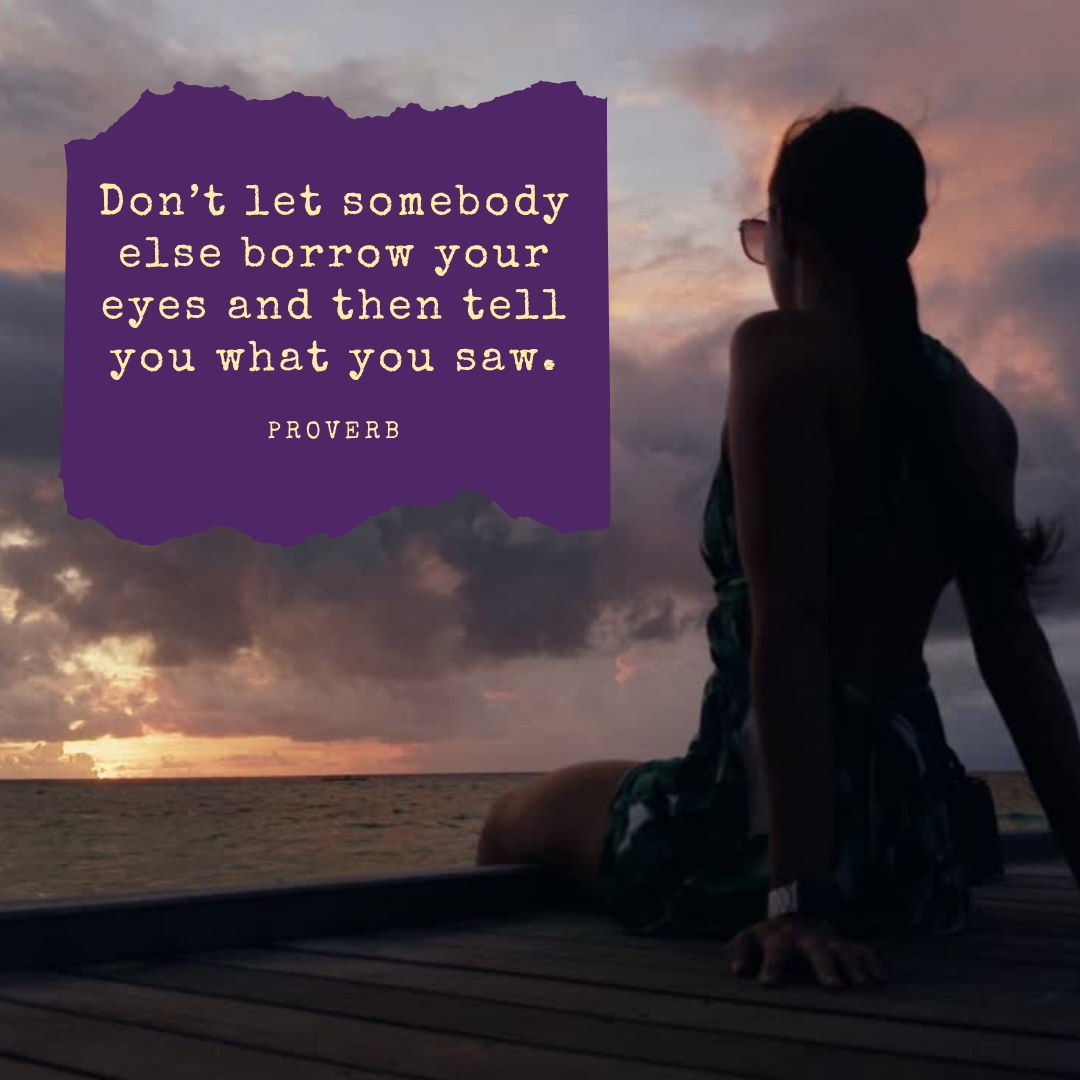
“Don’t let somebody else borrow your eyes and then tell you what you saw.”
That is the work.
Keep your eyes.
Keep your questions.
Keep your pause.
A person does not need to become cold or suspicious of everything. Cynicism is not wisdom. Cynicism says, “Everybody is lying.” Discernment says, “I will examine this before I hand over my belief.”
That is a different spirit.
And it is a life-saving one.
Educated populations have followed the most dangerous leaders in history. There were plenty of smart people in the group but some of them were not listened to. Others believed that they were too smart to fall for what was leading to their destruction.
Intelligence does not protect you from being deceived and manipulated. Critical thinking is rarely taught in schools (hello, banning books just because “I don’t like them”), which is exactly why propaganda works on people who believe they are immune to it. That is the very thing that creates danger.
Why Do So Many Lies Feel True? The Hidden Psychology No One Talks About – WESurviveAbuse
How People Lose Themselves: One Compromise at a Time – WESurviveAbuse