I will help build a culture where doing good is interesting again.There were so many morally bankrupt and inhumane comments about Jason Arday on s
I will help build a culture where doing good is interesting again.
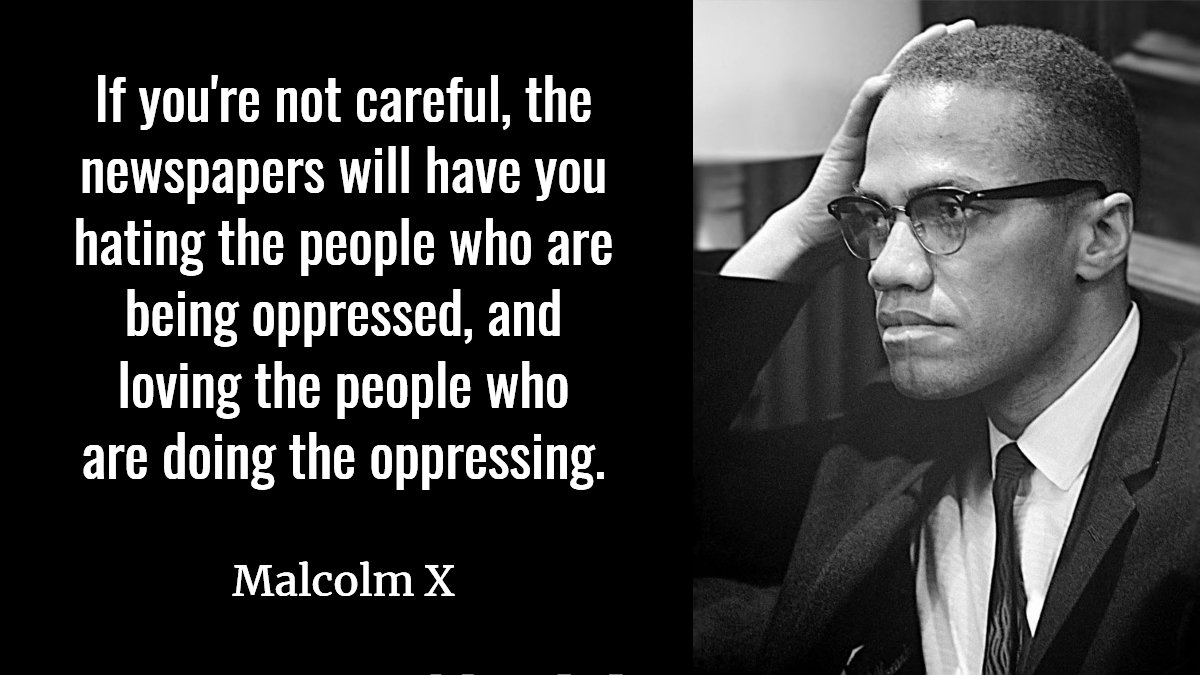
There were so many morally bankrupt and inhumane comments about Jason Arday on social media. One of them was a person who responded to a comment I retweeted, saying the accusations against this phenomenal and accomplished man were worse than a DUI? As in the potential to kill at least one innocent person going about their lives on or along the road. So that was a block. There are disagreements, there are human flaws, and then there are clear indications that the callousness and obduracy has hardened and set in.
Meanwhile, for the rest of this month, watch the words that are used to humanize predators, boundary crossers, child killers, family killers, abusers, silencers, ridiculers, and harmers of women.
- Watch the language reserved for serial killers. The captivation and fascination. The awe.
- Watch who gets words like “prolific,” as though they accomplished something of note and achievement.
- Watch who gets the biography and who gets reduced to a body count.
A culture reveals its loyalties by whose humanity it chooses to explore in detail.
Language tells you what a culture has decided to consider “interesting.”
A man can leave a trail of violated women; frightened children; destroyed families; bodies; warnings ignored; people silenced, and somehow the story begins drifting toward his alleged “complexity.” His “intelligence.” His “charisma.” His difficult childhood. His “fascinating” mind. His “prolific” crimes. His ability to evade capture. The strange “magnetism” he supposedly possessed.
Soon, the person who caused the terror has been given the richest interior life in the room. Everyone else becomes scenery. And not like trees, kind of scenery because trees belong, are beautiful, and have purpose. More like cheaply made furniture scenery. Clutter.
The women become stock “victims.” The children become a number. The family members become people interviewed afterward. The person who tried to warn everybody becomes a footnote. The woman who recognized something was wrong becomes paranoid until the paragraph where we discover she was right.
We have built entire genres around understanding predators while barely developing a vocabulary for understanding the people who recognized them early. (Right now we sit at witches, victims, DEI, the Blacks, diversity hires, women, children, and slurs.)
And the person who did the harming becomes such a fascinating character that hundreds to thousands of in-depth documentaries, films, and books are required to be published and financed. Decade after decade. Meanwhile, studying true history is absolutely forbidden for students all the way through college. Of course, the portions that place certain demographics in the best light are taught on repeat while the rest of history is completely ignored.
Charles Manson, Ted Bundy, Jeffrey Dahmer, John Wayne Gacy, Richard Ramirez, David Berkowitz, Dennis Rader, Ed Gein, Aileen Wuornos, Edmund Kemper, the Zodiac Killer, Gary Ridgway, Henry Lee Lucas, and Albert Fish must never be forgotten.
But the likes of —Garrett Morgan, Granville T. Woods, Lewis Latimer, Marie Van Brittan Brown, Frederick McKinley Jones, Dr. Patricia Bath, Otis Boykin, Alexander Miles, Sarah E. Goode, George Washington Carver, Dr. James E. West, Dr. Mark Dean, Lonnie Johnson, Elijah McCoy, Norbert Rillieux, Jan Ernst Matzeliger, Benjamin Banneker, George Edward Alcorn Jr., Valerie Thomas, Dr. Shirley Ann Jackson, Marian Croak, Lisa Gelobter, Alice H. Parker, Joseph Winters, Henry Blair, Andrew Jackson Beard, Judy W. Reed, Miriam Benjamin, Sarah Boone, Lyda D. Newman, Lloyd Ray, John Lee Love, William Purvis, Robert Flemming Jr., Benjamin Bradley, Thomas L. Jennings, Philip B. Downing, and Frederick Douglass Patterson must be relegated to videos on YouTube, public broadcasting, a few dedicated social media channels, or labeled some form of forbidden “race teachings.”
Watch all of that. In horror. In documentary. In television. In film. In video. In streaming. In mainstream media. Again. On repeat. (Yep, this is what wokeness means—to watch.)
Watch how often cruelty is granted mythology. How easily predation becomes intrigue when enough time has passed, enough episodes have been ordered, and enough documentaries need a compelling central figure. Notice how a boundary crosser becomes “complicated,” while the person with boundaries becomes “difficult.” Notice how someone who humiliates people is called “provocative,” while the person who refuses to participate is humorless. Notice how people who silence others are described as “powerful, commanding, bold, brave, and influential.”
These are not neutral choices.
Words distribute dignity. They tell us whose mind deserves exploring, whose pain deserves lingering over, whose actions count as achievements, and whose life can be compressed into evidence of somebody else’s fascinating darkness.
There is something exhausting about living inside a culture that keeps insisting the dangerous person is the “interesting person.” Never the healing person or the person with the disability. Or the neurodiverse person with a challenging upbringing that isn’t harming anyone.
Perhaps that exhaustion explains something about the growing desire to withdraw.
People say they want peace. They want privacy. They want a small house somewhere. A garden. A few people they trust. Work that does not consume them. Relationships that do not require constant vigilance. They want to turn the phone off. They want to stop explaining why something crossed a line. They want to opt out. They do not want more engagement. They want less.
Sometimes this gets dismissed as escapism, antisocial behavior, lack of ambition, or unwillingness to participate in the future being built.
But what if people are paying attention?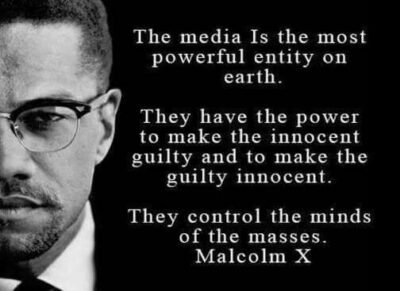
Perhaps they have watched aggression become entertainment, humiliation become content, intrusion become intimacy, notoriety become accomplishment, and cruelty become a personality interesting enough to study for decades.
And they have noticed something else: the person asking to be left alone is increasingly treated as the strange one.
So for the rest of this month, pay attention to the adjectives.
Pay attention to who receives complexity and who receives a label. Or a slur.
Pay attention to who gets described as brilliant, prolific, magnetic, legendary, notorious, troubled, or misunderstood.
And then pay attention to the people quietly saying, “I do not want any part of this.”
Maybe peace is not the absence of ambition.
Maybe, in an age determined to make spectacle out of violation, being left alone has become its own serious idea of freedom.
Not everyone is plotting, manipulating, deceiving, exploiting, or taking. Some people really are trying to leave things better than they found them. Perhaps turning the tide begins when ordinary goodness becomes interesting to us again.
May Jason Arday find peace that he was denied on this side of life.
I will not allow harmful people to become my definition of humanity.
I make room for evidence that people can be decent.
I can protect myself and still believe in goodness.
I celebrate the people who left something useful, beautiful, healing, or liberating behind.
I remember the helpers, protectors, teachers, neighbors, aunties, friends, strangers, and ordinary people who chose to do right.
- I honor the people who survived what was meant to silence them and still found a way to contribute.
- I remember the Overcomers. I remember the contributors. I remember the people who tried to leave humanity better than they found it.
- I believe contribution deserves remembrance.
- I will help build a culture where doing good is interesting again.
I refuse to let the worst among us become the storytellers for all of us.
Costumes of Control: How Some Male Murderers Used Disguise to Harm Women – WE Survive Abuse
Misogynist Gaslighting: The Reversal That Keeps Women Unsafe – WE Survive Abuse
When Belonging Breaks: Surviving in Truth When Cultures Defends Abusers – WE Survive Abuse
We Are Not Trespassing: Black Disability and the Right to Simply Live – WE Survive Abuse