So today we are in the state of Washington because their Department of Corrections has interesting policies that impact women. Language con
So today we are in the state of Washington because their Department of Corrections has interesting policies that impact women.
Language control determines which words institutions permit us to use, which definitions are considered acceptable, and what consequences may follow if we refuse. Respectful communication asks us to treat people with dignity.
Many women have no problem with respectful communication, but medicine, law, education, employment, media, and advocacy have launched this campaign of language control against women to gain full unquestioning compliance.

Photo by Harrison Moore/ Unsplash
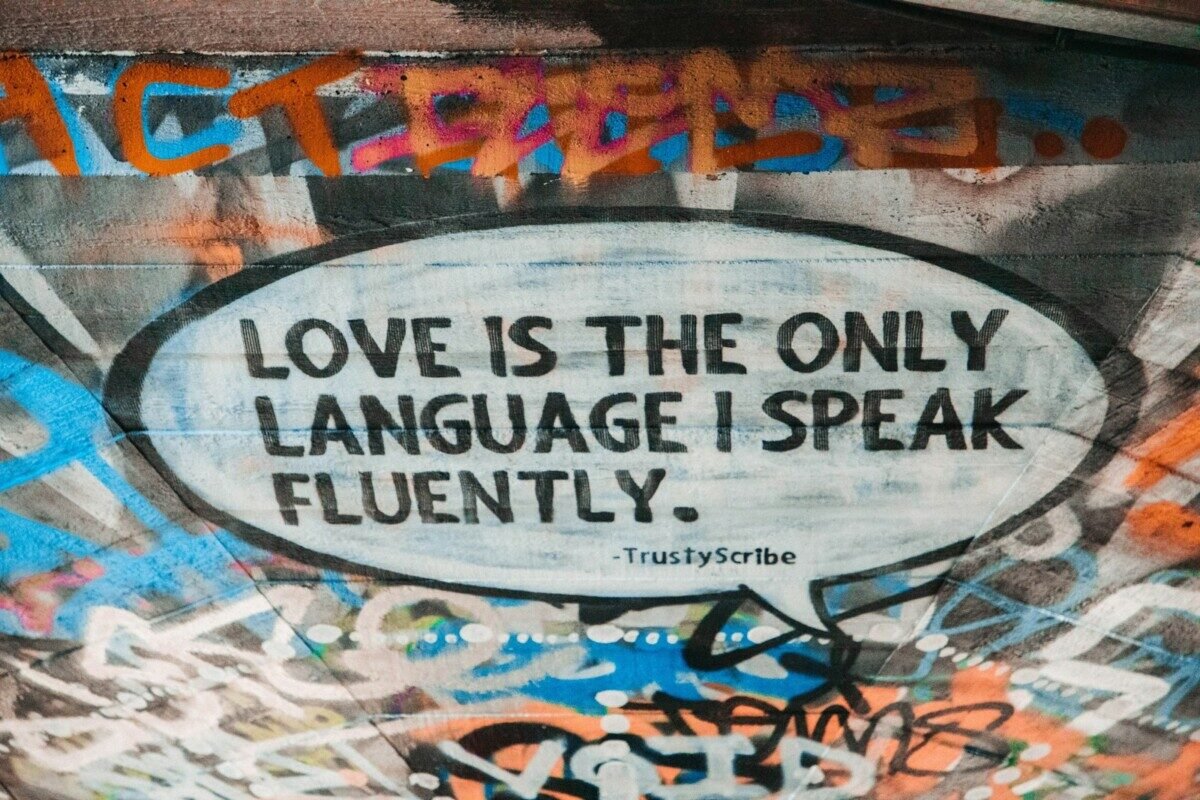
Do not tell me you are speaking “love” if you are telling women to “shut the hell up” about their female-related concerns.
A toxic work environment usually begins at the top. It grows through negligence, weak character, or a lack of integrity, often fueled by a naïve belief that how employees are treated is of secondary importance. Leadership may value productivity, image, or convenience while overlooking the needs, dignity, and safety of some employees. When certain voices are routinely ignored, dismissed, or expected to carry a heavier burden than others, toxicity doesn’t happen by accident. It becomes part of the culture.
Workplace gaslighting is a form of psychological manipulation that can undermine an employee’s confidence and contribute to a toxic work environment. It often occurs when someone in a position of authority, such as a manager or supervisor, causes an employee to question their own thoughts, feelings, memories, or perceptions of what has happened. Over time, this pattern can leave employees feeling confused, anxious, isolated, and less likely to speak up about unfair treatment or workplace problems.
Imagine your town has a rule that says:
“Treat everyone fairly.”
Most people would expect the town council to decide what that means.
But here’s what often happens instead.
The town council passes a broad law.
Then people who were never elected write the detailed rules about what employees must say and do.
Those rules can end up affecting millions of people.
That’s essentially what happened in many places, including Washington.
Here’s the sequence.
- The Legislature passed broad what they referred to as “nondiscrimination laws.”
They added “gender identity” as a protected characteristic.
That is the part elected lawmakers voted on.
- Government agencies then wrote their own workplace rules.
The Department of Corrections looked at the law and said, in effect:
“This is how our employees will follow it.”
So the agency created manuals, employee expectations, training, and disciplinary standards.
The Legislature did not vote on each of those requirements.
- The Washington Supreme Court did something similar for lawyers.
The Court—not the Legislature—decided what professional conduct rules attorneys must follow.
Again, no legislative vote.
“Who decided correctional officers have to use the criminal’s preferred pronouns?”
The answer is:
DOC leadership. (Did y’all elect these people?)
Now let’s answer the harder questions.
Who is at risk when criminals, not biology, determine the pronoun guidelines?
Several groups.
Employees.
A correctional officer, teacher, lawyer, or other professional can face discipline if they violate workplace rules.
Women.
Women who find that these policies make it harder to speak plainly about their lived realities around biological sex in areas such as prisons, sports, shelters, hospital care, or sexual violence. And, hell yeah, women find this pretty convenient and suspicious. You just happened to sneak in some policies that make it more difficult for women to speak about male violence against women and other everyday realities that we face. That is not a coincidence.
The “both can be protected” promise often sounds good on paper. In practice, the test is simple:
Can women say “female,” “male,” “mother,” “women’s bodies,” “male violence,” “female-only,” and “sex-based rights” without being corrected, shamed, disciplined, or reported?
If the answer is no, then women are not being equally protected. They are being managed.
Language Control
The trick is that institutions often call it “inclusion,” but the burden lands on women to erase the words that describe our bodies, our risks, and our history. That is not balance. That is language control.
There’s a difference between respectful communication and language control, but they are very similar. Most workplaces, by necessity (or lawsuit fears), have some level of language control. BUT, if women—female human beings—a historically oppressed group (50% of the population) can’t freely speak about themselves and their relationship to other human beings without being amended or corrected, then there is a problem.
Language control is the deliberate shaping, restricting, or policing of the words people are permitted—or discouraged—to use. It is often used to influence not only how people speak, but also how they think about an issue and what ideas are considered acceptable to express.
It can happen in many settings, including governments, workplaces, schools, religious institutions, families, and social groups.
Some common forms of language control include:
- Requiring certain words or phrases while discouraging or prohibiting others.
- Redefining the meaning of familiar words.
- Replacing longstanding terms with new ones.
- Labeling certain language as offensive, unprofessional, or harmful.
- Rewarding people who adopt preferred language and penalizing those who do not.
Language control is not inherently good or bad. Context matters.
For example, a workplace may prohibit racial slurs or sexual harassment. Most people would view those rules as protecting employees from abuse rather than as improper language control.
On the other hand, concerns arise when people believe language rules prevent accurate discussion of important subjects or discourage legitimate disagreement. Critics may argue that the rules have moved beyond preventing harassment and into regulating viewpoints or limiting clear communication.
In workplaces, language control can look like:
- Employees feeling they cannot describe events using ordinary words because they fear disciplinary consequences.
- Staff being instructed to use only approved terminology in official communications.
- People self-censoring because they worry about complaints, investigations, or damage to their careers.
And this is bad. It is not freedom nor liberation. And if we look at other countries, it is a mixed bag, but sometimes it does not swing in the workplaces favor.
🛑 You Can’t Build Something Sacred on Disrespect – WE Survive Abuse
Researchers in fields such as Sociolinguistics, Organizational Psychology, and Political Science have long studied how language influences culture, authority, identity, and social norms.
Do You Know Where You Are Going To?
The thing about allowing powerful organizations and agencies to establish language and norms is the lack of transparency. It is like getting in the car with a stranger and you have no idea where you are going. No cell phone. No cell service. The doors are child-locked. Some people may say, “Just go ahead.” My stuff is no longer set up like that because I have seen too much now.
So far the female silencing sequence has been….
First, gender identity is added as a protected category.
Second, institutions write conduct rules around “respect,” “harassment,” and “misgendering.”
Third, those rules get interpreted by HR, courts, schools, prisons, hospitals, licensing boards, and professional organizations.
Fourth, women who speak about sex-based reality are told they are creating harm, exclusion, hostility, or a “safety concern.”
Fifth, punishment enters the room. Not always jail. Often softer but still powerful: discipline, investigation, loss of job, loss of platform, loss of professional standing, social shaming, exclusion from meetings, loss of funding, or being labeled hateful.
The question is no longer “Can we include everyone?”
The real question is:
Can female people name themselves without asking institutional permission?
If the answer is no, then women are not included. They are being renamed under supervision.
Why I Resist Diluted Language: Part 3 – WE Survive Abuse
People with religious or philosophical objections.
Some have valid concerns that they could face professional consequences for expressing beliefs about sex and gender in ways that conflict with workplace policies.
Who does not benefit?
People who wanted these questions decided through elections.
If you believe changes this significant should be debated publicly and voted on by elected representatives, then you probably don’t see agency manuals or professional rules as providing that level of democratic accountability.
There is another piece that many people miss.
Government power doesn’t just come from laws.
It also comes from employment.
Suppose there is no law saying:
“You must say X.”
But your employer says:
“If you don’t say X, you can lose your job.”
For that employee, the practical result can feel very similar.
The state doesn’t always have to pass a new law if it already controls your professional license or your employment.
That’s why these policies matter.
Finally, why are people arguing so much about this?
Because they disagree about who should make these decisions.
One view says:
“Agencies and courts are simply carrying out existing civil rights laws.”
Another view says:
“Agencies and courts have gone beyond carrying out the law and are making major social policy without elected lawmakers voting on the specific rules.”
That disagreement isn’t about whether the Legislature voted on every DOC manual or attorney rule—it generally did not. It’s about whether the authority delegated to agencies and courts appropriately covers these kinds of policies, or whether decisions with broad social consequences should return to the legislative process.
Many Americans pay close attention to legislation but much less attention to agency policies and professional rules. As a result, people sometimes experience a significant change in daily life without remembering seeing a bill debated on the evening news. That doesn’t necessarily mean the change was unlawful; it often reflects how much policymaking occurs through institutions other than the Legislature.
Our battles for rights and safety will have to be fought on many fronts:
It is important to remember that there are several ways public policy changes in the United States:
- Legislation: elected lawmakers debate and vote.
- Court decisions: judges interpret constitutions and laws.
- Agency rulemaking and policies: executive agencies decide how to implement existing laws.
- Professional licensing rules: courts or licensing boards establish standards for people in regulated professions.
NHS trust faces £1.5m hit for backing transexual over female nurses | UK | News | Express.co.uk
The Unseen Cage: What Coercive Control Really Looks Like – WE Survive Abuse
Your ‘No’ Isn’t Treated the Same Everywhere – WE Survive Abuse
Why I Resist Diluted Language: Part 3 – WE Survive Abuse
Deanna’s Law: 12 Systemic Failures That Changed 911 Response – WE Survive Abuse
✅ Moral Gaslighting: When Women Asking for Safety Are Treated Like the Problem – WE Survive Abuse
v>