A stereotype is somebody else’s story about women. It should never outrank the truth of women’s lives.
At a time when we are talking so much about myths and stereotypes about women, I think we need to have a much bigger conversation about what happens when those ideas leave ordinary conversation and acquire power.
Women know what it is to have our word fail at several levels at once. A woman can tell the truth about herself and still have her family explain her away. She can tell the truth and have her community prefer a more comfortable story. She can tell the truth and discover that the institution in front of her already has an idea about what a woman like her would do, want, tolerate, fear, remember, wear, choose, or survive.
And sometimes government itself has participated in that failure.
That is why stereotypes about women are not a small matter. They become especially serious when they move from somebody’s private belief into policies, institutional practices, administrative categories, or law.
A stereotype describes what a culture imagines women to be. Women’s lived experience tells us what actually happens to female human beings, including women who resemble none of those stereotypes.
There is an important difference between those two things.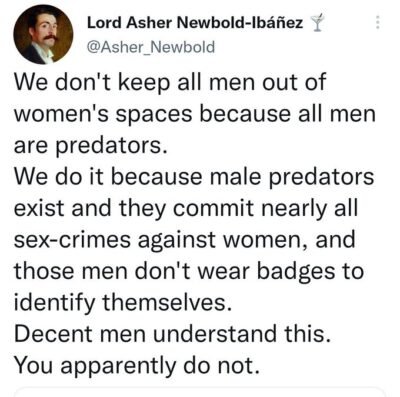
A woman perceived as masculine can experience sex discrimination. A lesbian can experience sex discrimination. A woman who has never been pregnant can experience sex discrimination. A woman with short hair who has never touched makeup can experience sex discrimination. A woman who feels no psychological attachment whatsoever to femininity can experience sex discrimination.
None of these women has to prove that she feels like a woman first.
She does not have to demonstrate femininity. She does not have to dress a particular way, behave a particular way, enjoy particular things, desire men, become a mother, possess a particular personality, or experience some universal female feeling.
There is no universal female feeling.
Women are far too varied for that.
And yet a woman who rejects every stereotype about women can still encounter harm because she is female, or because another person perceives her to be female. Her refusal to perform femininity does not place her beyond the reach of sex discrimination, sexual harassment, reproductive discrimination, or other forms of sex-based harm.
This is something American law is still learning.
In United States v. Virginia, the Supreme Court warned government against relying upon broad generalizations about the talents, capacities, and preferences of males and females. The Court specifically rejected government decision-making built around generalized ideas about “the way women are.”
That principle is bigger than one court case.
Governments should be extraordinarily careful when they turn assumptions about people into rules governing people.
Women have historical reasons to insist upon this.
We have been told that women are naturally
- too delicate for certain professions.
- Too emotional for positions of authority.
- Naturally suited to caregiving.
- Naturally dependent upon men.
- Naturally maternal.
- Naturally modest.
- Naturally heterosexual.
- Naturally passive.
Sometimes these ideas were openly hostile. Sometimes they arrived dressed as compliments or protection.
Either way, women living outside the stereotype still existed.
International women’s-rights law recognizes this problem explicitly. CEDAW addresses social and cultural patterns based upon stereotyped roles for women and men, while UN guidance describes a gender stereotype as a generalized idea about the characteristics or roles women and men supposedly possess or should perform. It also recognizes that apparently benign stereotypes can become discriminatory when they restrict people’s opportunities and choices.
That history should make us careful about the present.
Today, governments are again making consequential decisions about sex, gender identity, gender expression, and the legal meaning and operation of categories such as woman and man. Different countries and American jurisdictions have taken different approaches, and the law remains contested. Not every protection against gender-identity discrimination erases a sex-based protection, and we should not pretend that it does.
But where a policy changes the meaning, boundaries, or operation of a category originally created to address sex-based discrimination, women have every reason to ask questions.
What is the factual basis for this definition?
What is a stereotype, and what is an observable fact?
What happens to the original sex-based protection?
What happens when the interests protected by two different legal categories conflict?
How will the effects upon women and girls be measured?
And perhaps most importantly: Are women being listened to when we describe the harms for which these protections were created?
That question belongs in the room.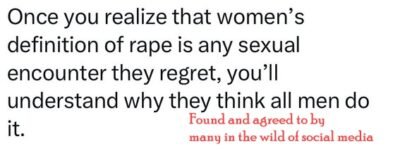
Because protecting people from discrimination based upon gender identity and protecting people from discrimination based upon sex are conceptually distinguishable goals. Governments can recognize multiple protected characteristics. The difficult work begins when policymakers decide how those protections operate when circumstances bring them into tension.
Women should not disappear from that analysis.
We should be especially wary of reasoning that circles back to ideas about how women supposedly feel, present, behave, dress, identify, or move through the world. Those things have never contained the enormous diversity of female lives.
Consider the woman who has never felt feminine in her life.
She may have spent childhood climbing trees and fighting anybody who tried to put her in a dress. She may grow into a woman who works with her hands, loves women, keeps her hair cropped close, never has children, never wears makeup, and feels no special internal sensation she could identify as “womanhood.”
There is nothing missing from her womanhood.
More importantly for public policy, none of those characteristics prevents sex-based harm from reaching her.
This is where women’s lived experience has to remain visible. When a woman says, “This happened to me because I am female,” institutions should not become so attached to theories about womanhood that they lose the ability to recognize the material circumstances she is describing.
We have seen versions of that failure before.
- A woman says she was sexually assaulted, and somebody asks what she was wearing.
- She says she was harassed, and somebody decides she misunderstood friendliness.
- She says she is afraid, and somebody calls her hysterical.
- She says pregnancy changed the way she was treated at work, and somebody decides motherhood made her less committed.
- She says no, and somebody begins looking for the hidden yes.
- Different situations. Same dangerous habit.
Instead of beginning with the woman standing before us and the facts of what happened to her, we reach for a story about what women are supposedly like.
That is why this conversation reaches beyond terminology.
Stereotypes do not become more reliable because they acquire compassionate intentions.
A stereotype cannot tell us what an individual woman thinks. It cannot tell us what she wants. It cannot tell us what she can do. It cannot tell us whether she wants children, dresses, men, makeup, domesticity, toughness, softness, leadership, solitude, or adventure.
And stereotypes are an especially poor foundation for safeguarding.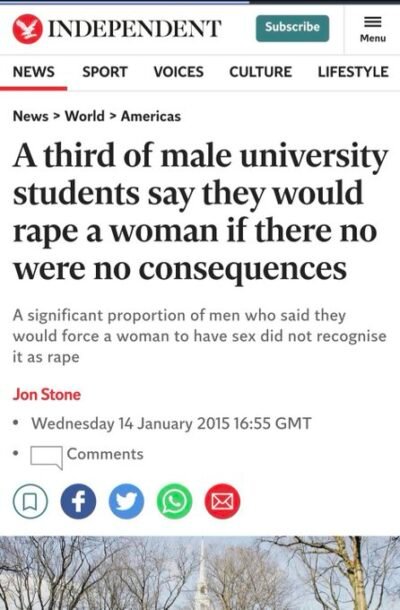
Women and children need policies built upon evidence about actual risks, actual bodies, actual patterns of offending and victimization, actual needs, and actual outcomes. Where competing rights or protections exist, government should acknowledge the conflict plainly, examine evidence, and explain how everyone’s rights are being protected. It should not make women carry the cost of avoiding a difficult conversation.
There is room in a humane society to protect people who are different from us.
There is room to protect people from harassment, cruelty, employment discrimination, housing discrimination, and violence.
There must also remain room to say that women have sex-based rights and interests, and that those interests deserve to be examined on their own terms rather than treated as an inconvenience whenever another policy objective enters the room.
That is not a radical standard for government.
It is a responsible one.
Make law from facts, not myths. Make policy from evidence, not stereotypes. And when women tell institutions what is happening to us, do not replace our lived experience with somebody else’s theory of what a woman is.
Women have already lived through centuries of governments telling us who women are supposed to be.
We should know enough by now to ask women what is actually happening to us.
The Penthouse Lectures and the Ground Floor Reality – WE Survive Abuse
How Abusers Across Time and Place Keep Saying ‘Yes’ to Harm – WE Survive Abuse
Women Built These Spaces: 20 Historical Reasons Single-Sex Spaces Exist – WE Survive Abuse