In recent years, we’ve seen debates play out over whether actors—or anyone in the public eye—should agree to certain scenes, roles, or performances.
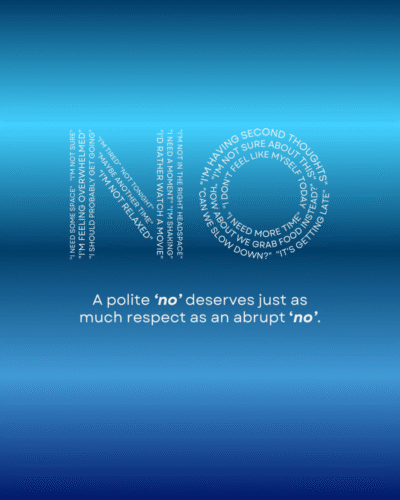 In recent years, we’ve seen debates play out over whether actors—or anyone in the public eye—should agree to certain scenes, roles, or performances. Sometimes, when an actor says “No, I don’t want to do that,” the refusal is twisted into accusations: “They must be hateful,” “They’re closed-minded,” or “They’re toxic.”
But let’s pause and name the truth: the toxicity doesn’t come from the refusal.
It comes from the culture that punishes people for asserting boundaries.
🔹 Consent is Universal
Boundaries aren’t bigoted. They aren’t “hateful.” They are simply the right to decide what you are—and aren’t—comfortable with. Actors, like everyone else, have the human right to say no. No one should be forced to prove their values by pushing past their comfort zone with their body, their art, or their integrity. Remember, we don’t know “why” someone is uncomfortable. It may not be for the reasons that you think at all.
🔹 Where the Real Toxicity Lives
The toxic behavior isn’t in saying no—it’s in:
Mocking people for asserting limits.
Digging into their past to discredit their present “no.”
Shaming them publicly to pressure compliance.
Recasting refusal as hate instead of self-protection.
This is classic manipulation by reversal: the boundary-setter becomes the villain, and the one pushing past the boundary is excused as “progressive” or “open.”
🔹 The Lesson We Need to Learn
If we want a culture rooted in respect and healing, we must get sharper in naming where the real toxicity lies. It isn’t in a woman or many saying no to unwanted attention. It isn’t in an actor refusing a sexual scene. It isn’t in a child who doesn’t want a hug from a relative.
The toxicity is in the system, culture, and individuals who punish people for drawing lines.
🔹 Moving Forward
We have to get better at this.
Better at honoring consent without punishment.
Better at teaching that boundaries are sacred, not selfish.
Better at calling out the manipulation that tries to flip “no” into “hateful.”
When we learn this distinction, we protect not only Survivors, but everyone. Because a culture that tramples boundaries is unsafe for us all.
✨ Affirmation for Readers
“My boundaries are not toxic. They are holy. The toxicity lives in the culture that punishes me for saying no.“