Table of Contents
Someone is telling on themselves…….
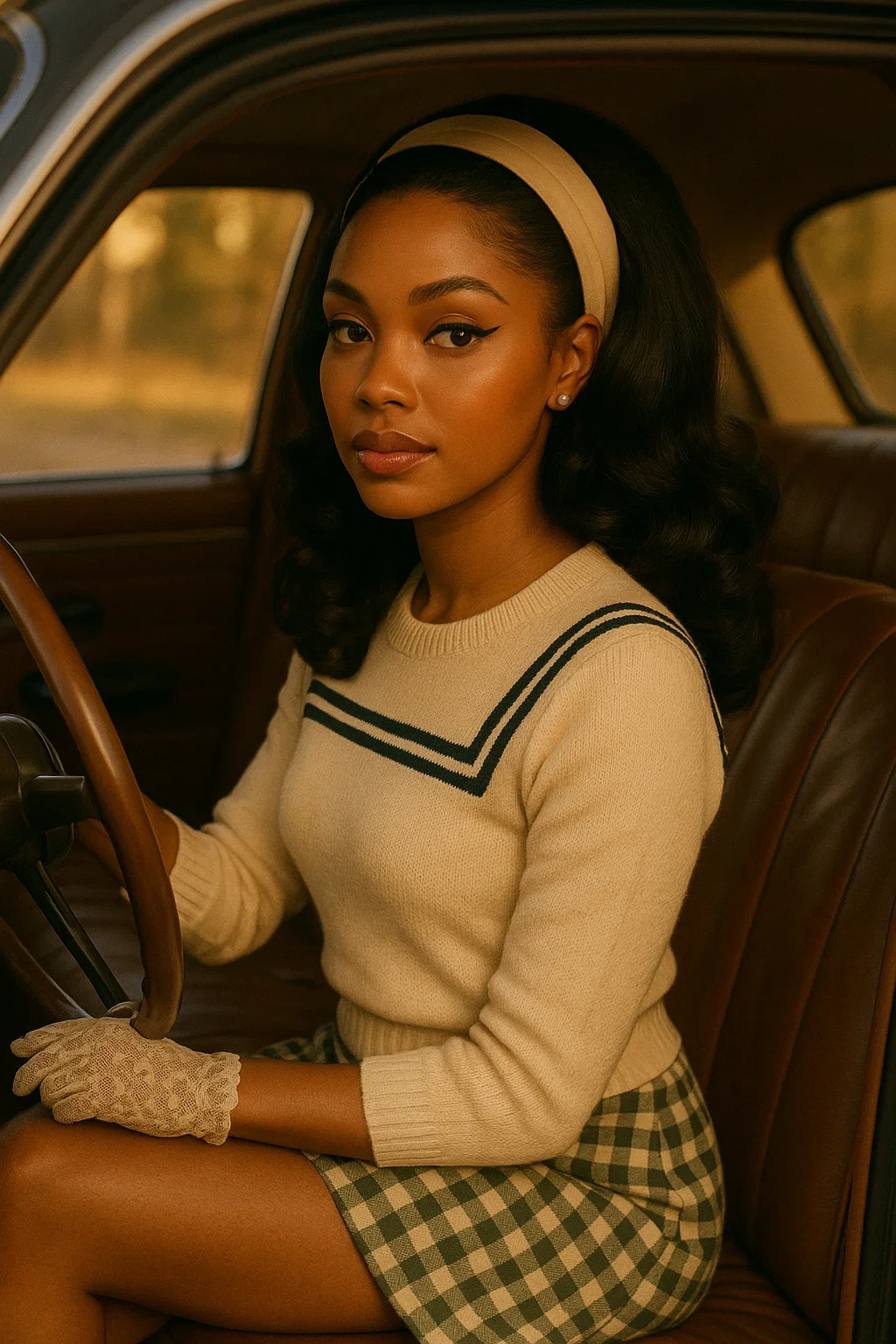
from Sora
In Jim Crow America, Black people—especially Black women and girls—were forbidden from having boundaries:
-
A Black woman couldn’t say no to a white man’s advances without risking death.
-
A Black mother couldn’t protect her child from violence without facing jail or lynching.
-
A Black girl couldn’t demand privacy or dignity.
-
Even looking a white person in the eye could be considered “uppity”—a punishable offense.
Jim Crow wasn’t about too many boundaries.
It was about denying Black people the right to any at all.
✋🏾 That’s Why Comparing Women’s Safety Boundaries to Jim Crow Is So Twisted
Under Jim Crow, Black people—especially women and girls—were:
-
Forced into vulnerability
So when today’s activists or organizations compare sex-based safety boundaries (like women-only spaces) to Jim Crow, they are:
-
Erasing what actually happened to Black women
-
Twisting history to shame women into giving up the very things we were once denied
That’s not just a bad analogy.
It’s historical gaslighting.
Jim Crow is still harming Black families to this very day, especially around violence and abuse. As a Black woman advocate, you often get asked why Black women are ‘silent.’
People are still traumatized. Entire neighborhoods. Entire families. Even further, who is showing themselves to be trusted with heavy truth? What’s being clung to is racism, bias, weaponizing for personal use, victim blaming, uneven justice, myths, more harm, etc….Hardly an atmosphere ready to receive truth.
Synopsis: A Time to Kill and the Afterlife of Jim Crow
The 1996 film A Time to Kill, directed by Joel Schumacher and based on John Grisham’s novel, is not set during the formal Jim Crow era. It takes place in 1980s Mississippi. But the brilliance and brutality of the film is that it shows how a place can be legally past Jim Crow while still feeling governed by Jim Crow’s memory, habits, violence, and racial intimidation.
The story begins with Tonya Hailey, a young Black girl played by Rae’Ven Larrymore Kelly, being abducted and brutally assaulted by two white men, Billy Ray Cobb and Pete Willard.
Her father, “Carl Lee Hailey,” played with grave, unforgettable force by Samuel L. Jackson, does not look at the legal system around him and see certainty. He sees history. He sees a courthouse that may claim fairness but sits inside a town still shaped by racial terror, white male entitlement, and old Southern assumptions about whose pain counts.
Carl Lee’s wife, Gwen Hailey, played by Tonea Stewart, carries the quieter grief of the story. Her presence matters. So much of the public memory of this film centers on the courtroom, the speeches, and Carl Lee’s choice. But at the heart of the wound is a Black mother, a Black father, and a Black child whose body has become the site where the whole town’s morality is tested.
Carl Lee kills the two men before they can stand trial. From there, the film becomes a legal drama, but it is never only a legal drama. It is a story about law, fear, race, sex, fatherhood, motherhood, and the old machinery of Southern power.
“Jake Brigance”, the white defense attorney played by Matthew McConaughey, takes Carl Lee’s case. “Ellen Roark”, played by Sandra Bullock, joins the defense.
“Sheriff Ozzie Walls”, played by Charles S. Dutton, stands as one of the important Black authority figures in the film, navigating a town where law enforcement, public order, and racial intimidation are all under pressure.
“Rufus Buckley,” the ambitious district attorney played by Kevin Spacey, pursues Carl Lee’s conviction.
“Judge Omar Noose” is played by Patrick McGoohan.
“Harry Rex Vonner” is played by Oliver Platt, and “Lucien Wilbanks” is played by Donald Sutherland. “Freddie Lee Cobb,” the brother of one of the slain attackers and a man tied to Klan vengeance, is played by Kiefer Sutherland.
The film’s central tension is not simply, “Did Carl Lee kill those men?” He did. The deeper question is whether the system was ever prepared to see what happened to Tonya Hailey as a full human tragedy.
That is where A Time to Kill becomes more than a courtroom movie. It shows the difference between Jim Crow as law and Jim Crow as atmosphere.
By the 1980s, the formal laws of segregation had changed. Black citizens were not living under the same written legal codes that defined the Jim Crow South. But the film shows how the old order survived in other forms: jury selection, public sympathy, threats, Klan organizing, the racial imagination of the town, and the terror that follows any Black person who dares to demand justice too loudly.
That is why the film still feels like the Jim Crow South. Not because it is literally set in that period.
But because the same old violence is still walking around with new shoes on.
The Klan presence in the film is not decorative. It is not there simply to make the story dramatic. It reminds us that white racial terror did not vanish just because laws changed. It reorganized itself around fear, intimidation, and spectacle. It tried to send the same message it had always sent: stay in your place, accept the system’s version of justice, and do not demand too much for Black life.
But the deepest wound in the film is not only racial violence in the broad sense. It is racial violence committed through the body of a Black girl.
That matters.
Because when people misuse comparisons to the Jim Crow South, they often flatten the history into a symbol. “People were just mean.”
They use “Jim Crow” to mean unfairness, exclusion, public criticism, institutional disagreement, or social discomfort. But Jim Crow was not just an insult, a policy dispute, or a bad feeling. Jim Crow was a racial caste system backed by law, custom, terror, economic punishment, sexual violence, and public humiliation.
And for Black women and girls, Jim Crow carried particular horrors.
Their bodies were made vulnerable by systems that often refused to protect them. They were assaulted, disbelieved, shamed, silenced, and then erased from the main telling of racial history. The pain of Black girls was treated as background noise while the nation argued about politics, property, reputation, and white innocence.
That is why careless comparisons are insulting.
When someone reaches for “Jim Crow” but does not speak with seriousness about violence against Black women and girls, they are borrowing the thunder of Black suffering while stepping around the bodies that carried much of the storm.
They want the emotional force of the phrase without the burden of the truth. The truth is fictional Tonya Hailey’s story continued in spite of great pain. Sure, there may be unspeakable joy and even peace, but there was a real injury.
A Time to Kill forces that truth into the room.
The film is remembered by many for Jake Brigance’s closing argument, where he asks the jury to imagine the victim as white. That moment is powerful, but it is also painful because it reveals the sickness of the town. The story has to ask whether white people can recognize a Black child’s suffering only after mentally replacing her with a white child.
That is not a small thing.
That is the whole indictment.
Tonya Hailey should not have to be imagined as someone else in order to be mourned properly. Her Blackness should not make her pain harder to see. Her girlhood should not become negotiable inside a courtroom. Her suffering should not need translation through whiteness.
And yet, that is the world the film is exposing.
But even with those limits, A Time to Kill remains a brilliant and disturbing film because it understands something many people still avoid:
A society can claim it has moved on while still preserving the emotional architecture of the old order.
The signs can come down.
The courthouse can stay standing.
The laws can change.
And still, a Black girl’s body can become the place where the truth of the town is revealed.
Jim Crow was not just “unfair treatment.” It was an entire world built to control Black life and excuse violence against Black people. Any comparison that does not respect that history, especially the violence endured by Black women and girls, does not clarify the present. It muddies the water.
And muddy water has always been useful to people who do not want the truth seen clearly.
🔄 Flip the Script:
Jim Crow made our bodies open and available without consent.
Sex-based boundaries say: “Not anymore.”
Boundaries are not hate.
Boundaries are not exclusion.
Boundaries are healing. Boundaries are protection. Boundaries are resistance.
Especially for Black women and girls, who have always been told our bodies are communal property.
🧠 TRUTH:
-
“Jim Crow removed boundaries. Sex-based spaces restore them.”
-
“We weren’t allowed to say no then. We’re saying it now—and that’s power.”
-
“The right to safety is not segregation. It’s survival.”
Stay Woke: When a Warning is Turned to a Punchline – WESurviveAbuse
The Montgomery Bus Boycott Was Not a Feel-Good Story. It Was a Power Manual. – WESurviveAbuse
📢 Hidden Herstory: The Leesburg Stockade Girls – WESurviveAbuse
Her Name Is Mary Turner. Her Story Still Speaks. – WESurviveAbuse
Maleness Is Portable Power: 20 Reasons Women Are Still Asked to Move Over – WESurviveAbuse
25 Ways Society Sends Harmful Messages to Black Women About Our Safety and Worth – WESurviveAbuse
Why Are Women Told to Stay Calm About Things That Should Horrify Everyone? – WESurviveAbuse
When Pretending You’re Okay Is Wearing You Down – WESurviveAbuse