Table of Contents
You are seen. You are heard.
Survivors are speaking in this moment.
And when they speak, something important shifts.
Not toward labels.
Not toward debates.
Not toward protecting identities that were never at risk.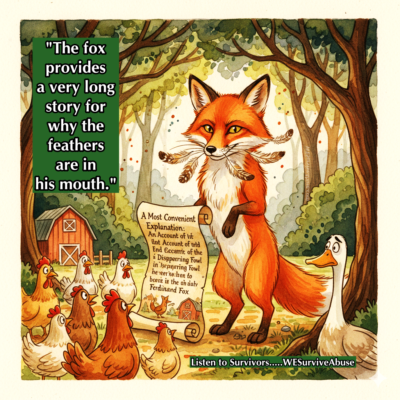
The focus moves where it has always belonged: the impact on the person who was harmed.
When someone survives violation, their primary reality is not the offender’s inner identity.
It is what happened to their body.
Their trust.
Their sense of safety in the world.
The survivor gets to define the behavior.
Not society.
Not institutions.
Not the perpetrator.
1. The Violation Matters More Than the “Why”
When public conversation rushes to ask whether an offender was “really” straight, gay, or bisexual, it recenters the person who caused harm.
That move quietly sidelines the survivor.
A boy says he was sexually assaulted.
And suddenly the room wants to know what the man “identified as.”
That is not curiosity.
That is displacement.
The survivor is not a case study in someone else’s identity debate.
Letting Survivors define what happened keeps the truth intact:
-
Abuse is abuse, even when wrapped in respectability.
-
Assault is assault, even when disguised as mentorship.
-
A theft of childhood is still theft, no matter how it’s explained away.
Healing begins when the harm is named without negotiation.
2. The “Manhood Trap” Is a Second Injury
The mask of heteronormativity doesn’t just protect offenders.
It cages victims.
If the offender is called “straight,” the act gets minimized as “discipline,” “roughness,” or “non-sexual abuse.”
If the offender is called “gay,” the Survivor is left carrying fear, shame, and false identity projections that never belonged to them.
This is how boys are injured twice.
Once by the act.
Again by the story society tells afterward.
Letting Survivors define the behavior cuts the trap open.
It allows this truth to stand:
His identity does not define mine.
His labels do not change what he did.
His orientation does not rewrite my reality.
3. Grooming Relies on Social Cover, Not Desire
Predators understand optics.
They use “straightness” as camouflage.
“I’m a family man.”
“This is how men bond.”
“You can trust me, I’m a father.”
Those are not reassurances.
They are tools.
When Survivors are allowed to define the behavior, the illusion collapses.
What was called bonding becomes manipulation.
What was framed as mentorship becomes coercion.
What was sold as safety is finally named as access.
The mask slips when the mechanics of harm are centered instead of the abuser’s résumé.
4. The Body Knows What Words Tried to Hide
The body never cared about labels.
It remembers the fear.
The freeze.
The confusion.
The moment something crossed a line that no one protected.
Many Survivors were told a story while their body lived another truth.
“You’re safe.”
“This is normal.”
“This means nothing.”
And yet the body recoiled.
The nervous system sounded alarms.
Something inside said no.
Allowing Survivors to define what happened reunites the body with the truth it was forced to swallow.
That reunion is not intellectual.
It is reparative.
The Advocate’s Responsibility
This moment calls for a shift in how we show up.
Less debating.
Less categorizing.
Less explaining harm away.
More listening.
The work is not to correct Survivors.
The work is to follow their language.
-
“How do you describe what happened?”
-
“What words feel true in your body?”
-
“What name restores your power?”
Because justice does not begin with terminology.
It begins with belief.
Survivors are speaking in this moment. And not everyone is comfortable with that.
They want to go back to the boxes that society prescribed over time.
And expect those who have enjoyed the comfort of “social cover” to go hard against the truth.
But, when Survivors define the behavior, the mask cannot survive.
And truth finally has room to breathe.
Listen to Survivors.
Define the Experience in Your Own Language
-
When you describe what happened without softening it, what words come up?
-
Do words like violation, coercion, confusion, invasion, fear, betrayal, or loss resonate?
-
If no one were listening, how would you name it honestly?
-
Does any phrase feel especially true in your body, even if it feels heavy?
- What words would you use if you didn’t feel that you had to protect anyone’s job or reputation?
- How did this experience change your sense of safety, trust, or boundaries?