There are things we understand perfectly well until sexual violence enters the conversation. We understand vulnerability perfectly we
There are things we understand perfectly well until sexual violence enters the conversation.
We understand vulnerability perfectly well when property is involved
Photo by Zalfa Imani
Suppose someone gets drunk at a party, passes out, and another person reaches into her purse and takes $500.
We understand what happened.
We might tell her afterward that getting extremely intoxicated can make a person more vulnerable to theft. We might encourage her to take precautions in the future. Those can be reasonable conversations about safety.
But we would not conclude that the money therefore belonged to the thief.
We would not say, “Well, she got drunk.”
We would not argue that because she voluntarily consumed the alcohol that left her incapacitated, taking her property was now partly her responsibility. Her vulnerability might explain how someone was able to exploit her. It would not explain away the other person’s decision to exploit her.
If someone steals your wallet while you are asleep, the fact that you were asleep does not become their defense.
If someone steals from you while you are unconscious, your unconsciousness does not become permission.
If someone waits until you are impaired because your impairment makes taking something from you easier, we understand exactly where responsibility belongs.
Yet when the thing another human being is accused of violating is not a wallet, phone, jewelry, automobile, or money but a woman’s body, suddenly some people become terribly confused about vulnerability and responsibility.
We should examine that confusion.
There is a difference between asking how intoxicated she was because you are trying to determine what happened and asking why she allowed herself to become intoxicated as though her drinking helps explain why somebody else was entitled to sexually assault her.
That second move has a name.
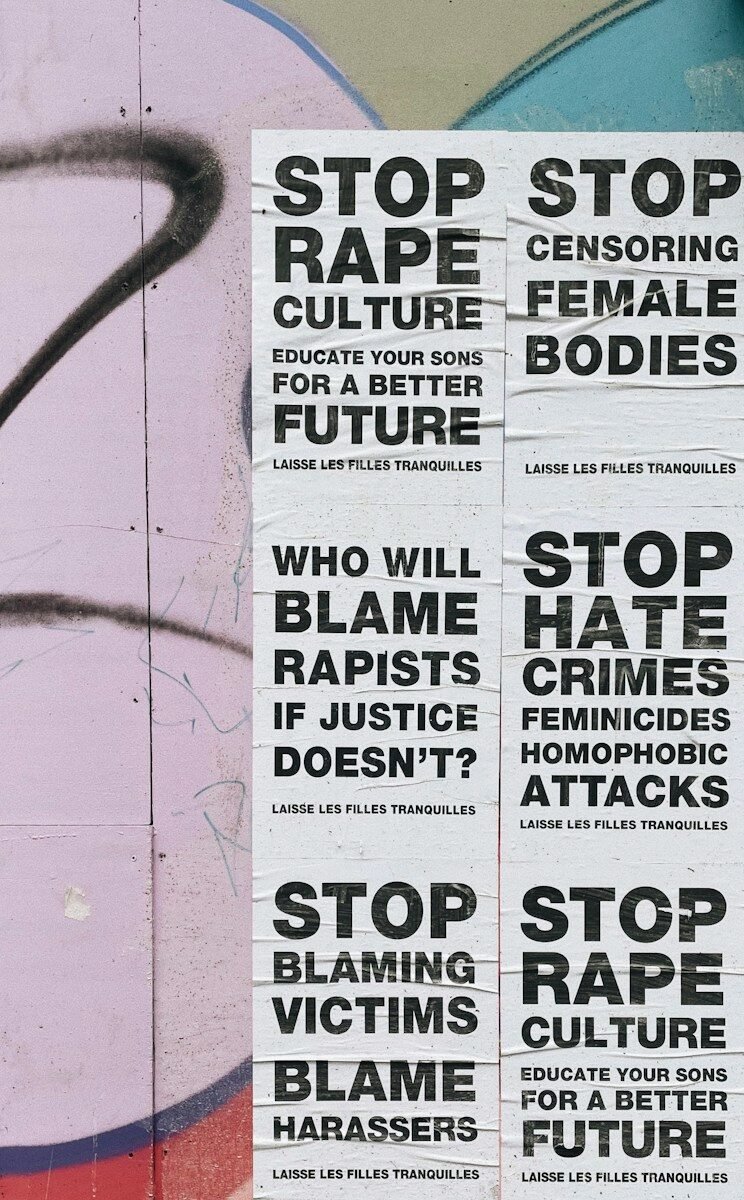
It is victim blaming.
And it is part of what researchers call rape myth acceptance.
Rape myths are false or distorted beliefs about rape, victims, and perpetrators that tend to excuse sexual aggression, minimize what happened, or place responsibility on the person who was harmed. Researchers have been studying these beliefs for decades, including the tendency to assign greater responsibility to women who had been drinking before an assault.
Women didn’t invent this problem because we needed another phrase.
We gave it a name because we kept seeing it.
Try the same reasoning with a wallet
Imagine a woman gets drunk at a party and passes out.
Someone sees her unconscious, reaches into her purse, takes her wallet, removes $500, and walks away.
Who stole the money?
We don’t need a conference. We don’t need a panel discussion. Nobody needs three hours to debate whether she should have drunk the fourth margarita.
The person who took her money stole from her.
Her intoxication may have made the theft easier. It may have made her more vulnerable. It might even be something she decides she never wants to allow to happen again.
None of that changes ownership of the money.
And if the thief deliberately waited until she was too intoxicated to protect her property, we would understand something else too: her vulnerability was useful to the person who wanted to exploit it.
We know how to understand that.
So why does the reasoning suddenly become cloudy when the boundary is sexual?
A woman’s intoxication can make her vulnerable. It cannot make another person’s conduct her responsibility.
Vulnerability is not permission.
You did not have to be perfect to deserve protection
I especially want to say this to women who have carried shame about what happened to them.
Maybe you drank too much.
Maybe you took something voluntarily.
Maybe you went to the party.
Maybe you went upstairs.
Maybe you liked him.
Maybe you kissed him.
Maybe you had a crush on him.
Maybe you consented to something sexual before something else happened that you did not want.
Maybe, looking back, there are ten decisions you wish you had made differently.
You are allowed to wish you had made different choices. You are allowed to learn from an experience. You are allowed to tell younger women what you learned. None of that requires you to pick up responsibility for another person’s decision to violate your boundaries.
We have become so accustomed to asking women how they could have prevented male behavior that sometimes we barely notice ourselves doing it.
I notice.
I spent years working hotlines, responding to women who had been assaulted and injured, and facilitating support groups. I have heard women try to make sense of what happened to them. One thing you learn doing this work is how readily women will search their own behavior for the moment when they supposedly caused someone else’s.
I shouldn’t have gone.
I shouldn’t have trusted him.
I shouldn’t have gotten drunk.
I shouldn’t have stayed.
Sometimes a woman will hand herself more blame than anybody else in the room ever could.
She doesn’t need our help carrying more.
We also need to stop confusing prevention with responsibility
I believe in safety information. I spent too many years in this work not to.
There is nothing wrong with telling people that intoxication can increase vulnerability. There is nothing wrong with women looking out for one another, watching drinks, making plans for getting home, checking on friends, or deciding that they do not want to become incapacitated around people they do not know well.
But we have to know the difference between reducing vulnerability and assigning responsibility for violence.
I lock my doors.
That does not mean a burglar has permission to enter when I forget.
I protect my purse.
That does not mean someone is entitled to take it when I don’t.
I can tell a young woman, “Please be careful with alcohol because there are people who will take advantage of vulnerability,” without ever telling her, “And if somebody does, you helped cause it.”
Those are two entirely different messages.
One gives her information.
The other gives her somebody else’s blame.
This is why rape myths are not harmless
Rape myths don’t stay in textbooks. They walk around among us.
They appear when someone hears about an alleged assault and immediately wants to know what the woman was wearing. They appear when her sexual history becomes more interesting than the accused person’s conduct. They appear when drinking is treated as evidence against her rather than part of the circumstances investigators should examine.
And sometimes they appear inside victims themselves.
A woman can know that something happened to her and still struggle to call it assault because she was drinking. She may think she forfeited the right to object because she initially wanted sexual contact. She may believe she cannot complain because she voluntarily went somewhere private with him.
That is one of the cruelest things about rape myths. Eventually women can learn to use them against themselves.
Research has found connections between rape-myth acceptance and victim blaming, including beliefs concerning alcohol and sexual assault. That body of work helps explain why advocates have spent so many years challenging the idea that drinking somehow transfers responsibility for sexual violence to the person who was drinking.
We already know better
This is what gets me.
We don’t have to invent some new moral principle to understand this.
We already use it.
People sleep in hotel rooms. That doesn’t give staff permission to steal from their luggage.
People become unconscious during surgery. That doesn’t suspend their rights.
People get drunk and leave phones sitting on tables. Those phones don’t become community property.
People make foolish financial decisions. That doesn’t give somebody permission to commit fraud against them.
People are vulnerable every single day.
Our response to vulnerability is supposed to be do not exploit it.
So why, when sexual violence is alleged, are we still having conversations that drift toward whether a woman made herself too vulnerable?
That is not a small question.
It tells us something about how deeply rape myths remain planted in our thinking.
If this happened to you, hear me
If you were drinking when someone sexually assaulted you, the alcohol did not make you deserve it.
If you voluntarily became intoxicated, you did not deserve it.
If you trusted somebody you should not have trusted, you did not deserve it.
If you made choices that you regret today, you did not deserve it.
If you froze, became confused, cannot remember everything, or struggled afterward to understand what happened, none of those things makes another person’s sexual choices yours to carry.
You can learn.
You can change how you move through the world.
You can decide that you will never put yourself in that situation again.
You can teach your daughters, nieces, sons, nephews, students, and friends what you learned.
And still say with your whole chest:
What somebody else chose to do to me was theirs.
That is not avoiding personal responsibility.
That is putting responsibility where it belongs.
We already understand this when somebody steals a purse, empties a bank account, breaks into a home, or takes advantage of an unconscious person to steal something valuable.
A woman’s body should not be the one place where we suddenly forget.
And when we hear ourselves blaming her drinking, her trust, her vulnerability, her sexual history, or her imperfect decisions for another person’s alleged sexual violence, we should recognize what we are hearing.
It is an old rape myth.
Women have named it before.
We can name it again.
The “Cornell Seven” rape case isn’t about the law. It’s about something else entirely.