There is this strange, deeply embedded belief that in order for a woman or girl to be considered a “good person” she must sacrifice her safety for men. Very much a stronghold.
A woman can say,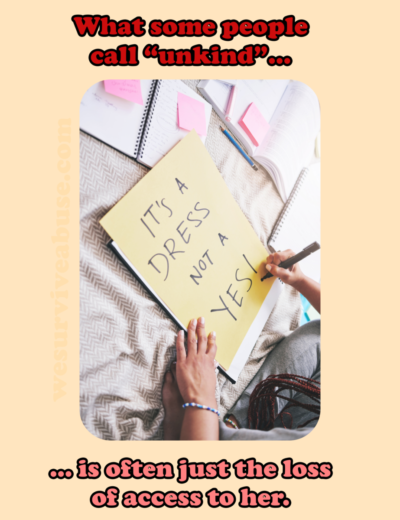
“I don’t want harm to come to you.”
And also say,
“I will not allow harm to come to me.”
Those are not opposites. They sit side by side.
Wanting no harm for others is kindness.
It reflects a steady moral center.
….not seeking punishment
…not wishing violence
……not reducing anyone’s humanity
That matters. It keeps her grounded, not reactive.
Protecting herself is also kindness—directed inward
A woman’s boundary is not an attack.
It is recognition of living facts:
- risk exists in the world
- safety requires awareness, not denial
- her body, space, and well-being are not negotiable
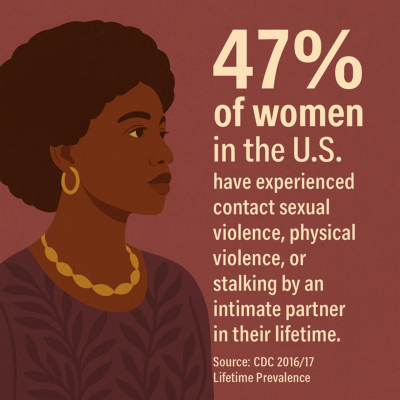
“47% of women in the U.S. have experienced contact sexual violence, physical violence, or stalking by an intimate partner in their lifetime.”
Source: CDC 2016/17 Lifetime Prevalence
When a woman says,
“This is what I need to feel safe,”
she is not being cruel. She is being responsible. She is allowed to notice
She is allowed to:
- see what is happening
- observe patterns over time
- recognize what increases risk
- decide what does not work for her
And she is allowed to conclude, without apology:
“This real and proven risk inhibits my safety.” That is not discrimination.
That is discernment.
Every system that protects human life depends on this same process:
- noticing
- tracking
- recognizing patterns
- making decisions based on those patterns
But when women do it, the rules suddenly shift. Women have the right to speak about harmful patterns. Especially when the world does little to address them effectively. Speaking about facts, reality, and patterns is not an attack. It is just real. It is how people stay aware and stay alive.
In the US everything is tracked. I remember raising my child and a big shocker for me was carrying around with those immunization records. We didn’t move often but when we did, part of his passport to move to another school were those shot records. They were required to accurate and up-to-date. I misplace things but immunization records can’t be one of those things that a parent just loses.
I never saw my mother doing that with ours. Of course she did, but as a kid it was something that I had the luxury of not paying any attention to. I imagine that they are computerized now but in the 1990s I was guarding tattering paper shot records with fading ink.
Tracking in Our Everyday Lives
Healthcare & hospitals
-
Infection control teams track which units, procedures, or behaviors lead to higher infection rates
-
Maternal health data tracks which populations face higher risk during pregnancy and birth
-
Emergency rooms track repeat injury patterns to identify ongoing harm
No one says, “Don’t generalize.” They say, “Pay attention. Adjust. Protect life.”
Insurance (auto, home, life)
-
Premiums are based on patterns: accidents, location, age, claims history
-
Certain behaviors or environments are flagged as higher risk
No one calls that bias. They call it risk assessment.
Workplace safety (OSHA and industry)

Companies track injury reports, near-misses, and hazardous conditions
-
Patterns lead to policy changes, training, or removal of unsafe conditions
No one says, “That’s unfair to the equipment” or “unfair to the role.” They fix what causes harm.
Education systems
-
Schools track patterns in bullying, absenteeism, and disciplinary issues
-
They identify environments or dynamics where harm is more likely
No one says, “Stop noticing patterns.” They intervene—at least in theory.
Public safety & city planning
-
Cities track where accidents happen most often
-
Lighting, traffic signals, and road design are changed based on those patterns
No one says, “Every street is the same.” “All streets matter.” They respond to reality.
Banking & fraud detection
-
Banks flag unusual spending patterns, login locations, or transaction types
-
Accounts are frozen or investigated based on pattern disruption
No one says, “Trust every transaction equally.” They say, “Patterns signal risk.”
Military & national security
-
Threat assessments are built on patterns: behavior, movement, communication
-
Decisions are made based on repeated indicators
No one says, “Ignore patterns to be fair.” They say, “Patterns keep people alive.”
Weather & disaster response
-
Storm patterns, flood zones, wildfire behavior are tracked over time
-
Evacuations and warnings are issued based on those patterns
When it comes to storms at least; no one says, “Wait until it happens again.” They act ahead of time.
No one calls any of that unfair.
But when women name patterns of harm—
especially among male human beings—
the focus shifts:
- her tone is questioned
- her intent is questioned
- her clarity is reframed as cruelty
And the pattern itself gets buried under all of the criticism and debate. That is how accountability is delayed. That is how women lose our lives.
Clarity is not cruelty Women’s boundaries are not harsh. They are protective intelligence in action.
A boundary says:
- I know what I need to stay whole
- I am paying attention to what harms me
- I am choosing clarity over confusion
What some people call “unkind” is often the loss of access.
They are reacting to no longer receiving:
- unlimited time
- emotional labor
- physical proximity
- silence in the face of discomfort
That reaction does not redefine the boundary. A woman does not have to soften her language to be kind.
She can be:
- clear in her words
- steady in her posture
- firm in her decisions
Men are not required to soften in order to be respected or rewarded. They speak plainly, and the world adjusts.
The same adjustment will come when women do the same.
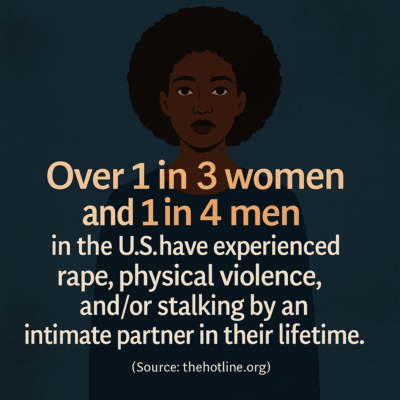
Over 1 in 3 women (35.6 %) and 1 in 4 men (28.5 %) in the U.S. have experienced rape, physical violence, and/or stalking by an intimate partner in their lifetime
The deeper truth holds. She can refuse harm toward others. She can refuse harm toward herself. Both are integrity.
And she carries that right everywhere:
- in public spaces
- in personal spaces
- in personal relationships
- in business relationships
It can all live in one sentence:
“I wish you no harm.
And this does not work for me.”
That is not rejection.
That is alignment.
A woman does not become unkind when she draws a boundary. She becomes clear.
And clarity—once spoken enough times—becomes something the world can no longer ignore.