Risk for harm grows where care is uneven.
And for Black women, care has never been evenly given.
Healthcare didn’t listen. Domestic violence services do not either. Where are Black women supposed to go? And these days, if you get financial resources to address the danger, someone will come along and sue for the helpful resource too. Intentional harm.
(All while others stand outside just watching the fire burn and say, “See how violent they are.”)
At the Hamilton County Courthouse, a Black woman went to file for a protection order. After being told she missed the filing deadline, she became visibly frustrated in the hallway.
Magistrate Michael Bachman, who was in the middle of a hearing, heard the commotion and left his courtroom to intervene himself instead of sending a bailiff.
He followed Jackson into the hallway and placed his hand on her neck/shoulder, guiding her back into the courtroom for about 20 seconds. Once inside, he immediately held her in contempt of court.
She went there for safety. She went there for a protective. order.
The incident quickly drew public and legal criticism. Judges are given contempt powers to maintain order in their courtrooms, but those powers are generally not meant to extend into public hallways or involve physical force.
Within days of the video becoming public, Bachman was told to resign or face termination. He resigned. The Supreme Court of Ohio later ruled that his actions were a misuse of judicial authority and issued a six-month suspension of his law license, which was stayed.
This case raised serious concerns about the limits of judicial power and the treatment of individuals seeking protection within the court system. Legal advocates argued that such behavior discourages victims of domestic violence or harassment from seeking help, as it portrays the courthouse as a place of potential further trauma rather than safety.
Is this …….”help?”
Is this……“safety?”
Because after having to get all of this unnecessary mess straight, who did SHE need safety and protection from? Is SHE okay? Is SHE safe now? She went there that day for help, not more harassment, barriers, and violations.
This is lived experience and reality for Black women. And I say that, having spent time working professionally as an advocate for victims navigating systems, including court.
She was arrested for…talking louder than what he would have preferred in the hallway. Not, “hey this old building needs improvements because these walls are paper thin.”
BUT, people who came here for safety talk too loud.
AND, he kept his hands on her while leading her back to court.
Separating safely from a toxic or violent relationship requires services, resources, and people who care about your well-being. Black women don’t always have the luxury of encountering people who genuinely care about her safety and well-being. Unconditionally.
The same barriers to healing in healthcare exist around violence abuse. In fact, they don’t just exist. They compound risk.
When Black women are dismissed or not taken seriously in healthcare, injuries go undocumented, stress goes untreated, and warning signs get missed.
When those same patterns show up in domestic and sexual violence services, it becomes harder to access protection, advocacy, or even a bed when it matters most.
When both systems fail at the same time, the window to intervene narrows.
That’s how risk increases. Not because of who Black women are, but because of how systems respond.
Being unheard is not neutral. It has consequences.
- If a Black woman reports pain and is ignored, she may stop seeking care.
- If she reports danger and is doubted, she may stop reaching out.
- If she anticipates being misunderstood, she may never enter the system at all.
That silence people later question?
It is often learned.
There is also the weight of perception.
Black women are often read as:
- strong enough to handle more harm, ignorance, decentering in your own life, violence, abuse, and bullying. all the time. 24/7/365.
- less in need of protection
- more responsible for managing harm
So when harm happens, the response is slower, thinner, or conditional.
That is not a small detail. It shapes outcomes.
And then comes the hardest truth to sit with:
Higher risk is not always just about individual choices.
It is also about accumulated barriers. Listening to victims and Survivors -without interruption- will tell you that.
- barriers to being believed
- barriers to safe, culturally aware support
- barriers to timely care
- barriers to rest, recovery, and protection
- barriers to telling her own story, in her own language, her own way
Stacked. One on top of the other, and surrounding her. When those stack up, danger has more room to grow. Expand. And finally, envelope whatever is in its path.
…..women across the Black diaspora
……women moving through systems that were not built with their full safety in mind
And it forces a different kind of question:
Not “why didn’t she leave”
Not “why didn’t she seek help”
But:
“What happens when help is inconsistent, unsafe, or out of reach—and she knows it?”
What happens when “help” has already shown itself to be:

We must make this world habitable for women and girls..
- inconsistent, spotty, unreliable
- difficult to access
- or quietly unsafe
What happens when a woman is doing the math in her head:
Will I be heard this time?
Will this make things better—or more complicated?
For Black women, women across the Black diaspora, and women whose lives have taught them to read a room before they speak, those calculations are not imagined. They are learned. Experienced since girlhood.
And still—despite all of this—Black women keep seeking care. Keep reaching.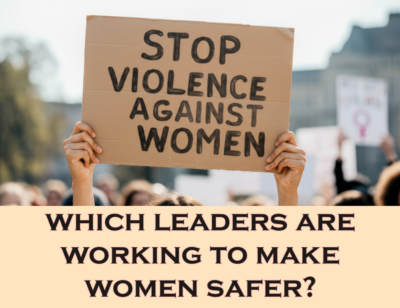
Keep trying to make systems work that were not built with their full safety in mind.
If systems are serious about reducing violence, they have to look at this connection.
They have to ask:
Are we easy to reach in moments of urgency?
Do people feel believed when they arrive?
Are we creating conditions where someone can come back again—or do they leave knowing they won’t return?
Because risk doesn’t grow out of nowhere. It grows in the space between needing help and actually receiving it.
And for Black women, that space has been wide for far too long.
Video links from TikTok
@itsjusttovares LINK We NEED more black people and minorities in general in healthcare. Advocate for your people because some providers couldn’t care less. If you’re offended, kick rocks. 🫶🏾♬ original sound – itsjusttovares
Before You Judge, Listen: Black Men’s Medical Trauma Is Real – WESurviveAbuse
@joelbervell LINK She refused a C-section. So they took her to court. WHILE she was in labor. Can your autonomy be overridden during pregnancy? #medicalmythbuster #healthequity #birthjustice #csection #blackmaternalhealth ♬ original sound – Joel Bervell, MD
@joelbervell LINKEarlier this year, many of you tagged me in this video by Dr. Shannon Clark (@babiesafter35 ), and I had to include it in my video countdown this year. In the video, Dr. Clark shares a story from medical school that is both horrifying and, sadly, not surprising: a Black woman was intentionally given a fourth-degree tear during childbirth so a resident could practice stitching it. Without consent and without medical justification. Stories like this force us to confront uncomfortable truths about medical training and the harm it can cause. Being able to name this as abuse matters. When I last shared this, Dr. Clark faced a significant amount of backlash for speaking out. It’s important to recognize that during the era in which she trained, the culture of medicine often did not allow trainees to question authority or speak up without fear of retaliation. That context makes it all the more meaningful that she is sharing the story now. Thank you, Dr. Clark, for using your voice to calm out injustices in medical training and pushing this conversation forward. I’ve reposted her original video and a follow-up response she shared on my story.♬ original sound – Joel Bervell, MD
She went there for safety. She went there for a protective. order.”
She was arrested for……talking louder than what he would have preferred in the hallway. Not, “hey this old building needs improvements.”
BUT, People who came here for safety talk too loud.
AND, he kept his hands on her while leading her back to court.
Black Women’s Safety Is Not Optional: It’s a Justice Issue – WE Survive Abuse