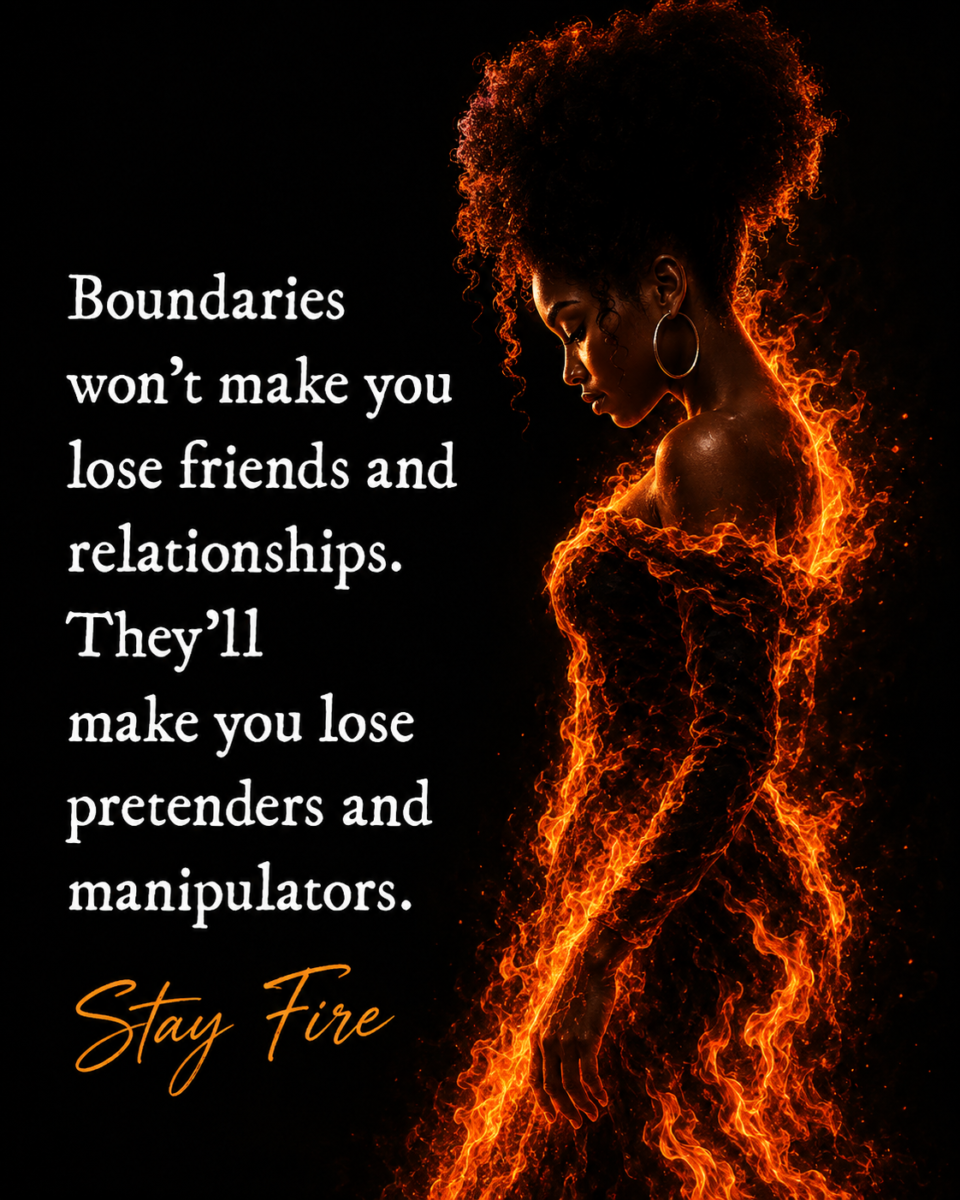
A movement does not become more compassionate by asking the vulnerable to become invisible. True justice makes more room without removing the people w
A movement does not become more compassionate by asking the vulnerable to become invisible. True justice makes more room without removing the people who were already standing there.
Who decided Black women weren’t feminine?
Seriously. Who made that decision?
It wasn’t Black women, so who was it then? As we used to say when we were outside, face-to-face and eyeball-to-eyeball, ready to square up if necessary, “Name names or keep it/shut it down.” (Though I like Monique’s version better.)
Who exactly is this alleged “they” that I’m supposed to bother to give a good damn about when it comes to this extraordinarily unique life journey through Black womanhood I’ve been blessed with.
Who decided our strength meant masculinity? That working hard meant we were built for hardship? That surviving what was done to us proved we could survive anything?
And then, somehow, that story became an obligation.
If Black women are “strong,” we should carry more.
If we are “tough,” we should tolerate more.
If we are supposedly less delicate, then we should labor for everyone else while expecting very little tenderness in return.
But I have another question:
Why are Black women required to organize our lives around somebody else’s definition of our femininity? And specifically Black women? Sounds like a con, a scam, and a setup.
If somebody decided we weren’t feminine enough, why are we still doing the labor to compensate for their judgment?
Why should we prove our womanhood through service to men?
Through exhaustion?
Through cooking, cleaning, caregiving, emotional management, sexual availability, security between men, loyalty, sacrifice, silence?
What if femininity was never something other people had the authority to grant us?
What if Black women stopped auditioning for a category we were deliberately excluded from anyway?
Black women are known for complimenting one another
AND other women and girls. What makes people think that we are using the measuring metrics of outsiders? As the brilliant lyricist Heavy D rapped, “We got our own thang.” And whether other people like it or not, we love it. For ourselves.
It’s just so divine, you know?
The standards of care in grooming, skin care, fragrance choices, makeup or no makeup, and developing my own personal style that were taught to me were FOR ME. For MY personal benefit. Absolutely NOT for male onlookers.
In fact, once when I was a teenager my aunt made my face up, some of my cousins didn’t like it. I was near tears. My aunt, who is a former beauty queen, said, “See, I don’t get dressed and then ask people how I look. I learned that in pageants. Have the confidence to dress in ways that you like without needing anyone else’s approval. She went on to say, “Those girls backstage would have had you sobbing and quitting. (Defeated) Don’t do that.” Don’t let people do you like that.
Hey, what if our own unique category that we were born into IS the ideal category for us? Because that is my personal belief.
Maybe the more interesting question isn’t whether Black women are feminine.
Maybe it is:
Who benefited from convincing us that our womanhood was something we had to earn?
Hello: 10 Issues Black Women Have Been Sounding the Alarm About for Decades – WE Survive Abuse
“Prove You’re Really With Us”: When Allyship Is Measured in Access to Your Body – WE Survive Abuse
Consent Beyond the Bedroom: Women’s Autonomy in Dating and Relationships – WE Survive Abuse
When Giving Up Women’s Rights Is Called Progress: 15 Questions Worth Asking – WE Survive Abuse
WE Survive Abuse Book Club: The Quiet Zone – WE Survive Abuse
When Is a Woman’s “No” Not Considered a Form of Hate? – WE Survive Abuse